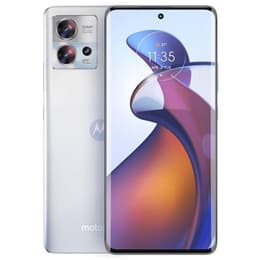

iPhone 16 Plus vs Motorola Edge 30 Fusion

iPhone 16 Plus
iPhone 16 Plus
Starting at

Refurbished price:A$942.00

Versus A$1,599.00 new

See options
Motorola Edge 30 Fusion
Starting at

Refurbished price:A$257.46

Versus A$1,352.00 new

See options

The iPhone 16 Plus, released in late 2024, and the Motorola Edge 30 Fusion, launched in late 2022, represent distinct approaches to smartphone design and functionality. While both are capable devices, they cater to different user preferences, primarily due to their operating systems and the two-year gap in their release timelines. The iPhone 16 Plus operates on Apple's iOS, offering a tightly integrated ecosystem, whereas the Motorola Edge 30 Fusion runs on Android, providing a more open and customizable experience. Key differentiators include their respective performance capabilities, display refresh rates, and camera system philosophies.

Scores

Durability

When considering the practical lifespan of these devices, several factors come into play, including their initial release dates and the manufacturers' software support policies.

  • Release Timeline: The iPhone 16 Plus was introduced in September 2024, making it a more recent device. The Motorola Edge 30 Fusion, released in September 2022, is two years older. This age difference directly impacts the duration of future software updates and overall technological relevance.
  • Software Longevity: Apple typically provides extensive iOS support, often spanning five to seven years from a device's release. The iPhone 16 Plus launched with iOS 18 and is currently running iOS 26.4, indicating a long future of updates and access to new features, including Apple Intelligence. In contrast, Motorola generally offers two to three major Android OS updates and a similar period for security patches. The Edge 30 Fusion launched with Android 12 and has received updates to Android 13, but its update cycle is nearing its end compared to the iPhone.
  • Durability Features: The iPhone 16 Plus features a Ceramic Shield front and an IP68 rating, signifying robust dust and water resistance, capable of submersion up to 6 meters for 30 minutes. The Motorola Edge 30 Fusion uses Corning Gorilla Glass 5 for its front and back panels and carries an IP52 rating, offering protection against dust and splashes but not full submersion.

Release year

2024

2022

Compatible with latest Update

Yes

Yes

Foldable

No

No

Performance

Performance is a critical aspect for daily smartphone use, influencing everything from app responsiveness to demanding tasks like gaming and video editing.

  • Processing Power: The iPhone 16 Plus is equipped with Apple's A18 chip, a contemporary processor optimized for advanced tasks, including generative artificial intelligence. This translates to exceptionally smooth operation, rapid app loading, and efficient handling of complex applications and multitasking. The Motorola Edge 30 Fusion utilizes the Qualcomm Snapdragon 888+ 5G, a flagship-tier processor from late 2021/early 2022. While still capable of handling most everyday applications and moderate gaming smoothly, it may exhibit less headroom for future demanding software or intensive multitasking compared to the newer Apple chip.
  • Multitasking and Storage: The iPhone 16 Plus comes with 8 GB of RAM, contributing to fluid multitasking and app retention in memory. It offers storage options up to 512GB. The Motorola Edge 30 Fusion is available with 8GB or 12GB of RAM, providing ample capacity for multitasking. Its storage options also extend up to 512GB, though it does not support expandable storage via a microSD card.
  • Battery Performance: The iPhone 16 Plus features a 4674 mAh battery, providing up to 27 hours of video playback and 100 hours of audio playback, suggesting extended usage for many users. The Motorola Edge 30 Fusion has a 4400 mAh battery, which users report can last a full day with typical usage, though heavy use, especially with the high refresh rate display, might require more frequent charging.

Memory (GB)

8 GB

8 GB

Screen quality

The display is the primary interface for smartphone interaction, and both devices offer vibrant viewing experiences with distinct characteristics.

  • Display Technology and Clarity: The iPhone 16 Plus features a 6.7-inch Super Retina XDR OLED display, known for its deep blacks, vibrant colors, and excellent contrast. It has a resolution of 2796x1290 pixels, resulting in a sharp image density of approximately 460 pixels per inch. The Motorola Edge 30 Fusion sports a 6.55-inch pOLED display with a resolution of 1080x2400 pixels, offering a clear viewing experience at around 402 pixels per inch.
  • Brightness and Outdoor Visibility: The iPhone 16 Plus achieves a typical brightness of 1000 nits and can reach a peak outdoor brightness of 2000 nits, ensuring excellent visibility even in bright sunlight. The Motorola Edge 30 Fusion offers a peak brightness of up to 1100 nits in auto mode, which provides good visibility in various lighting conditions.
  • Refresh Rate and Smoothness: A notable difference lies in the refresh rates. The iPhone 16 Plus maintains a standard 60 Hz refresh rate. In contrast, the Motorola Edge 30 Fusion boasts a higher 144 Hz refresh rate, which can result in noticeably smoother scrolling and more fluid animations, particularly for users accustomed to higher refresh rate displays.

Resolution

1290 x 2796

1080 x 2400

Screen type

Super Retina XDR OLED

P-OLED

Audiovisual

Camera capabilities are a significant consideration for many users, and both smartphones offer advanced systems for capturing photos and videos.

  • Rear Camera Systems: The iPhone 16 Plus features an advanced dual-camera system, including a 48MP Fusion Main camera with a wide f/1.6 aperture and sensor-shift optical image stabilization (OIS). This main sensor also enables a 2x telephoto option by cropping the high-resolution image. It is complemented by a 12MP ultra-wide camera with a 120-degree field of view. The Motorola Edge 30 Fusion comes with a triple camera setup: a 50MP wide-angle primary camera with OIS, a 13MP ultra-wide camera that also functions for macro photography, and a 2MP depth sensor. The Edge 30 Fusion does not include a dedicated telephoto lens.
  • Photography Performance: The iPhone 16 Plus benefits from Apple's computational photography, offering features like Photonic Engine and Smart HDR 5, which contribute to detailed images with accurate colors and good dynamic range in various lighting conditions. It also introduces a new Camera Control button for more tactile adjustments. The Motorola Edge 30 Fusion's 50MP main sensor captures detailed images, and its Night Vision mode is effective in low-light scenarios. However, some users note that its image processing can sometimes lead to an artificial look, particularly with fine textures.
  • Video Recording: Both devices are capable of high-quality video recording. The iPhone 16 Plus supports 4K Dolby Vision video recording at up to 60 frames per second, along with Cinematic mode and Spatial video recording. The Motorola Edge 30 Fusion can record 8K video at 30 frames per second with its main camera, and 4K video at 30 or 60 frames per second, including HDR10. Its ultra-wide camera also supports 4K video recording.

Main camera

48 megapixels

50 megapixels

Front camera

12 megapixels

32 megapixels

Miscellaneous

Beyond core features, several practical elements contribute to the overall user experience and differentiate these two smartphones.

  • Connectivity and Ports: Both devices support 5G cellular connectivity for fast mobile data. The iPhone 16 Plus features Wi-Fi 7 and Bluetooth 5.3, while the Motorola Edge 30 Fusion includes Wi-Fi 6E and Bluetooth 5.2. Both phones have a USB-C port for charging and data transfer, though the iPhone 16 Plus uses USB 2.0 speeds, while the Edge 30 Fusion supports faster USB 3.1. Neither device includes a 3.5mm headphone jack.
  • Biometric Security and User Interface: The iPhone 16 Plus relies on Face ID for secure facial recognition. It also features the Dynamic Island for interactive alerts and background activities, and an Action Button for customizable shortcuts. The Motorola Edge 30 Fusion incorporates an in-display fingerprint sensor for biometric authentication and offers a near-stock Android experience with Motorola's My UX enhancements, including the 'Ready For' platform for desktop-like connectivity.
  • Design and Handling: The iPhone 16 Plus has an aluminum design with a Ceramic Shield front and color-infused glass back, weighing 199 grams. The Motorola Edge 30 Fusion features a glass front and back (Gorilla Glass 5) with an aluminum frame, weighing 175 grams. Its slimmer profile (7.45 mm) contributes to a comfortable in-hand feel.

Weight

199 oz

168 oz

Screen size (in)

6.7

6,55

Network

5G

5G

SIM card

Physical SIM + eSIM

Dual Physical SIM

Carrier compatibility

Unlocked

Unlocked

The iPhone 16 Plus and Motorola Edge 30 Fusion offer distinct smartphone experiences, each with its own strengths. User feedback for the iPhone 16 Plus often praises its robust battery life, powerful performance for demanding applications, and the advanced capabilities of its camera system, particularly the new Camera Control button. Some users, however, note the 60 Hz display refresh rate as a point of comparison against competitors offering higher rates. The integration of Apple Intelligence is also a frequently highlighted advantage for future-proofing.

For the Motorola Edge 30 Fusion, common praise points include its smooth 144 Hz pOLED display, its comfortable and lightweight design, and the clean, near-stock Android software experience. Users appreciate its fast wired charging capabilities. Criticisms sometimes revolve around its older processor compared to contemporary flagships at its release, and the lack of a dedicated telephoto lens. Its software update longevity is also a consideration for long-term users.

Users prioritizing a long-term software support, a highly integrated ecosystem, and advanced computational photography with robust durability will find the iPhone 16 Plus well-suited to their needs. Conversely, users who value a high refresh rate display for exceptionally smooth visuals, faster wired charging, and a more customizable Android experience may lean toward the Motorola Edge 30 Fusion. Both devices offer compelling features, and choosing between them often comes down to individual preferences for operating system, specific performance priorities, and design aesthetics. Exploring quality-assured refurbished options for either model can provide an eco-friendly alternative for consumers.
See all articles

Our recent comparisons