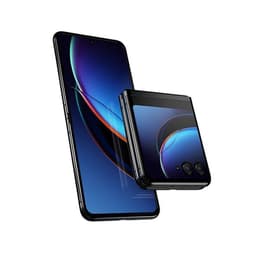

iPhone 12 Pro Max vs Motorola Razr 40 Ultra

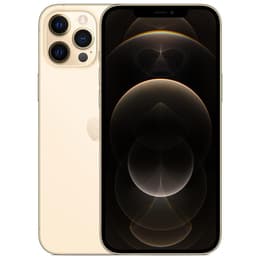
iPhone 12 Pro Max
iPhone 12 Pro Max
Starting at

Refurbished price:A$436.00

Versus A$1,249.00 new

See options
Motorola Razr 40 Ultra
See options

The iPhone 12 Pro Max, released in November 2020, represents Apple's traditional large-screen smartphone, offering a robust ecosystem and a focus on camera capabilities. In contrast, the Motorola Razr 40 Ultra, launched in June 2023, introduces a modern foldable design, prioritizing portability and a unique user experience with its prominent external display. These devices cater to different preferences, with one offering a conventional premium slab design and the other a compact, innovative form factor.

Scores

Durability

The expected lifespan and software support differ between these two devices, largely due to their release dates and manufacturer policies.

  • Release Timeline: The iPhone 12 Pro Max was released in late 2020, making it an older device compared to the Motorola Razr 40 Ultra, which launched in mid-2023. This age difference inherently impacts their remaining support cycles.
  • OS Support: Apple typically provides iOS updates for 5-6 years, meaning the iPhone 12 Pro Max, originally on iOS 14, is expected to receive major updates for a few more years, potentially up to iOS 19 or 20. The Motorola Razr 40 Ultra, launching with Android 13, is promised three major OS updates, extending its support to Android 16, along with four years of security updates. [22]
  • Practical Lifespan: While both devices are built with quality materials, the Razr 40 Ultra's foldable display introduces a mechanical component that may experience different wear patterns over time compared to the rigid screen of the iPhone 12 Pro Max. Users prioritizing the longest possible software support from the point of purchase might find the newer Razr 40 Ultra to have a slightly longer runway for the latest Android features.

Release year

2020

2023

Compatible with latest Update

Yes

Yes

Operating system

iOS

Android

Foldable

No

Yes

Performance

Performance for daily tasks and demanding applications varies between these two smartphones, influenced by their respective processing hardware and software optimization.

  • Processing Power: The iPhone 12 Pro Max is equipped with a powerful processor from its release year, capable of handling demanding applications, complex games, and intensive multitasking smoothly. The Motorola Razr 40 Ultra features a more recent high-end processor, which provides responsive performance for current applications and offers efficient power management. [24]
  • Multitasking and Storage: Both devices offer ample RAM configurations, with the iPhone 12 Pro Max typically featuring 6GB and the Razr 40 Ultra available with 8GB or 12GB, allowing for efficient app switching and background processes. [13, 14, 22] Storage options are generous on both, ranging from 128GB up to 512GB, providing sufficient space for apps, media, and files. [4, 13, 22]
  • Battery Behavior: The iPhone 12 Pro Max includes a substantial battery, which, combined with iOS optimization, generally provides a full day of use for many users. The Motorola Razr 40 Ultra has a slightly larger battery capacity, but its dual-screen setup and high refresh rates can influence its power consumption, with some users reporting moderate battery performance. [20, 23]

Memory (GB)

6 GB

8 GB

Screen quality

The display experience is a significant differentiator, with the iPhone offering a large, traditional screen and the Razr 40 Ultra featuring a unique dual-screen foldable design.

  • Display Technology and Size: The iPhone 12 Pro Max features a 6.7-inch Super Retina XDR OLED display, known for its deep blacks, vibrant colors, and high contrast. [1, 15] The Motorola Razr 40 Ultra boasts a 6.9-inch pOLED main foldable display and a highly functional 3.6-inch pOLED external cover display. [2, 20] The Razr's external screen allows for interaction and notifications without opening the device. [21]
  • Resolution and Brightness: The iPhone 12 Pro Max offers a resolution of 2778x1284 pixels at 458 pixels per inch (ppi), with typical brightness of 800 nits and peak HDR brightness of 1200 nits. [1, 12] The Razr 40 Ultra's main display has a resolution of 1080x2640 pixels and a peak brightness of 1400 nits, while its cover display has a resolution of 1056x1066 pixels and 1100 nits peak brightness. [2, 23, 29]
  • Refresh Rate and Smoothness: The iPhone 12 Pro Max has a standard 60Hz refresh rate. The Motorola Razr 40 Ultra's main display offers a high refresh rate of up to 165Hz, and its cover display up to 144Hz, contributing to smoother scrolling and more fluid animations. [2, 22]

Resolution

1284 x 2778

1080 x 2640

Screen type

Super Retina XDR OLED

Foldable LTPO AMOLED

Audiovisual

Both devices offer capable camera systems, but with different strengths and configurations tailored to their respective designs.

  • Rear Camera Systems: The iPhone 12 Pro Max features a triple 12-megapixel camera system, including a wide, ultra-wide, and telephoto lens. Its wide lens has a larger sensor and sensor-shift optical image stabilization for improved low-light performance and stability. [1, 16, 31] The Motorola Razr 40 Ultra has a dual-camera setup with a 12-megapixel main sensor with optical image stabilization and a 13-megapixel ultra-wide lens that also functions for macro photography. [2, 8, 26] It lacks a dedicated telephoto lens. [8]
  • Photography Performance: The iPhone 12 Pro Max is noted for its consistent image quality, strong low-light capabilities, and advanced computational photography features like Night mode and Smart HDR 3. [1, 31] The Razr 40 Ultra's main camera performs well in good lighting, but its overall camera performance, particularly in challenging conditions, is generally considered to be good but not on par with leading flagships. [33]
  • Video Recording and Front Camera: Both phones support 4K video recording at up to 60 frames per second, with the iPhone 12 Pro Max also offering Dolby Vision HDR video. [1, 31] The iPhone has a 12-megapixel front camera, while the Razr 40 Ultra features a 32-megapixel internal front camera and allows for high-quality selfies using its main rear cameras and the external display as a viewfinder. [1, 2, 21]

Main camera

12 megapixels

12 megapixels

Front camera

12 megapixels

32 megapixels

Miscellaneous

Beyond core specifications, several practical elements contribute to the overall user experience and differentiate these two smartphones.

  • Connectivity and Ports: Both devices support 5G connectivity for fast mobile data. The iPhone 12 Pro Max uses Wi-Fi 6 and Bluetooth 5.0, while the Motorola Razr 40 Ultra supports the newer Wi-Fi 6E and Bluetooth 5.3 standards. [1, 5, 14, 23] The iPhone uses Apple's proprietary Lightning port, whereas the Razr 40 Ultra features a USB-C port. [14, 19] Neither device includes a 3.5mm headphone jack. [19, 33]
  • Biometrics and Sensors: The iPhone 12 Pro Max relies on Face ID for secure facial recognition and includes a LiDAR Scanner for enhanced augmented reality and improved low-light autofocus. [1, 6] The Motorola Razr 40 Ultra incorporates a side-mounted fingerprint sensor and facial recognition for unlocking. [19, 26]
  • Design and Handling: The iPhone 12 Pro Max is a larger, heavier slab-style phone with a premium stainless steel frame and Ceramic Shield front. [4, 18] The Motorola Razr 40 Ultra's clamshell design allows it to fold into a compact form factor, making it highly portable. [21] Its build materials include an aluminum frame and Gorilla Glass Victus for the cover display. [3, 22]

Weight

226 oz

1 oz

Screen size (in)

6,7

6.9

Network

5G

5G

SIM card

Physical SIM + eSIM

Dual Physical SIM

Carrier compatibility

Unlocked

Unlocked

User sentiment for the iPhone 12 Pro Max often highlights its consistent performance, robust camera system, and the reliability of the iOS ecosystem. Many users praise its display quality and the longevity of software support. Common criticisms, particularly in recent years, tend to focus on its aging design compared to newer models and the standard 60Hz refresh rate. [16, 30]

The Motorola Razr 40 Ultra is frequently lauded for its innovative foldable design and the utility of its large external display, which allows for significant interaction without opening the phone. Users appreciate its smooth performance and the modern Android experience. However, some common concerns revolve around its battery life for heavy usage and camera performance, which, while capable, may not always match the top-tier flagships in all scenarios. [20, 22, 33]

Users prioritizing a large, traditional display, a highly refined camera system with strong low-light capabilities, and a long history of software updates may find the iPhone 12 Pro Max well-suited to their needs. Conversely, individuals who value a compact, innovative design, a highly interactive external display, and the latest Android features with high refresh rate screens might lean towards the Motorola Razr 40 Ultra. Both devices offer distinct advantages, catering to different user preferences. For those considering an eco-friendly and quality-assured alternative, exploring refurbished options for either model can provide a sustainable choice.
See all articles

Our recent comparisons