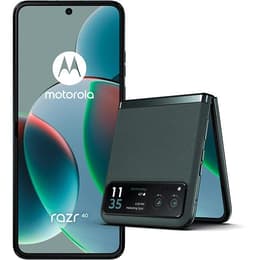

iPhone 12 Pro Max vs Motorola Razr 40

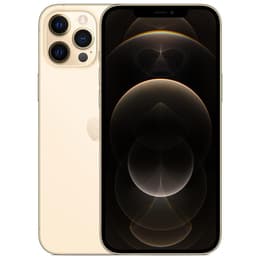
iPhone 12 Pro Max
iPhone 12 Pro Max
Starting at

Refurbished price:A$437.00

Versus A$1,249.00 new

See options
Motorola Razr 40
Motorola Razr 40
See options

Ratings

The iPhone 12 Pro Max, released in November 2020, represents Apple's traditional large-screen smartphone offering, running on iOS. In contrast, the Motorola Razr 40, launched in June 2023, introduces a modern foldable clamshell design powered by Android. The primary distinction between these two devices lies in their form factor and operating system, catering to different user preferences for design and ecosystem.

Scores

Durability

The longevity of a smartphone is influenced by its physical resilience and ongoing software support. These two devices offer different approaches to durability and expected lifespan.

  • Release Timeline and Software Support: The iPhone 12 Pro Max, being an older device from late 2020, has already received several years of iOS updates and is expected to continue receiving major OS updates for approximately 5-6 years from its release. The Motorola Razr 40, released in mid-2023, typically receives 3 major Android OS updates and 4 years of security updates, offering a more current but potentially shorter overall software support window compared to the iPhone.
  • Physical Durability: The iPhone 12 Pro Max features a Ceramic Shield front cover and a stainless steel frame, contributing to its structural integrity and drop resistance. It also boasts an IP68 rating for water and dust resistance, allowing submersion in up to 6 meters of water for 30 minutes. The Motorola Razr 40, with its foldable design, uses an aluminium frame and a plastic back, often with a vegan leather finish. It has an IP52 water-repellent coating, providing splash resistance but not full submersion protection. The inner foldable display of the Razr 40 is generally more susceptible to scratches, and a visible crease is present where the screen folds.
  • Practical Lifespan: Users report the iPhone 12 Pro Max holds up well over time, with its robust build and consistent software updates contributing to a longer practical lifespan for many. The Razr 40's unique hinge mechanism is designed for durability, allowing it to fold flat without a gap, but the long-term resilience of foldable screens is still a consideration for some users.

Release year

2020

2023

Compatible with latest Update

Yes

Yes

Operating system

iOS

Android

Foldable

No

Yes

Performance

Performance is a key factor in daily smartphone use, affecting everything from app responsiveness to multitasking capabilities. Both devices offer capable performance tailored to their respective ecosystems.

  • Processing Power: The iPhone 12 Pro Max is equipped with a powerful processor that ensures smooth operation across various applications and demanding tasks. Users can expect quick app loading times and fluid transitions, even with multiple applications running simultaneously. The Motorola Razr 40 features a processor designed to handle everyday smartphone activities efficiently. While it provides a responsive experience for general use and most applications, it is not positioned as a top-tier performance device for highly intensive tasks like some flagship models.
  • Multitasking and Responsiveness: With its ample memory, the iPhone 12 Pro Max manages multitasking effectively, allowing users to switch between apps without significant slowdowns. The overall system responsiveness remains high, contributing to a consistent user experience. The Motorola Razr 40 also offers sufficient memory to support smooth multitasking, and its high refresh rate display further enhances the perception of fluidity during interactions.
  • Storage Options: The iPhone 12 Pro Max was available with internal storage options up to 512GB, providing generous space for apps, photos, and videos. The Motorola Razr 40 typically comes with 128GB or 256GB of internal storage, which is suitable for many users but may require more careful management for those with extensive media libraries.

Memory (GB)

6 GB

8 GB

Screen quality

The display is a central component of the smartphone experience, and these two devices offer distinct visual characteristics and form factors.

  • Display Technology and Clarity: The iPhone 12 Pro Max features a 6.7-inch Super Retina XDR OLED display, known for its deep blacks, vibrant colors, and high contrast ratio. Its resolution provides sharp and detailed visuals for text and images. The Motorola Razr 40's main display is a 6.9-inch pOLED panel with an extended Full HD resolution, offering good clarity and color accuracy.
  • Brightness and Refresh Rate: The iPhone 12 Pro Max offers a typical brightness of 800 nits, peaking at 1200 nits for HDR content, ensuring good visibility in various lighting conditions. It has a standard 60Hz refresh rate. The Motorola Razr 40's main display boasts a high 144Hz refresh rate, which contributes to smoother scrolling and more fluid animations, and can reach a peak brightness of 1400 nits.
  • Form Factor Impact: The iPhone 12 Pro Max provides a large, uninterrupted display area for media consumption and productivity. The Motorola Razr 40, being a foldable, offers a compact form factor when closed, making it highly portable. When unfolded, its large screen provides an immersive viewing experience, though a subtle crease is present at the fold. It also includes a smaller 1.5-inch external OLED display for quick notifications and controls.

Resolution

1284 x 2778

1080 x 2640

Screen type

Super Retina XDR OLED

Foldable LTPO AMOLED

Audiovisual

Both smartphones offer capable camera systems, but they approach photography and videography with different strengths and features.

  • Rear Camera Systems: The iPhone 12 Pro Max features a versatile triple 12MP camera system, including wide, ultra-wide, and telephoto lenses. It excels in capturing detailed images with good color reproduction and dynamic range, particularly benefiting from sensor-shift optical image stabilization on its wide lens. The Motorola Razr 40 is equipped with a dual-camera setup, featuring a 64MP main sensor with optical image stabilization and a 13MP ultra-wide lens. While it offers a high megapixel count on its main sensor, user experiences suggest that overall image quality can be mixed, performing well in good lighting but sometimes struggling with dynamic range and low-light conditions.
  • Low-Light and Video Performance: The iPhone 12 Pro Max is known for its strong low-light performance, aided by Night mode and its larger sensor. It also supports HDR video recording with Dolby Vision at up to 60 frames per second, providing high-quality video capture. The Motorola Razr 40's main camera can assist in low-light shooting due to OIS, but its overall low-light performance may not match devices with larger sensors or more advanced processing. It records 4K video at 30 frames per second.
  • Front Camera and Audio: The iPhone 12 Pro Max includes a 12MP front camera capable of detailed selfies and video calls. The Motorola Razr 40 has a 32MP front camera, and its foldable design allows users to utilize the higher-quality main rear cameras for selfies via the cover screen, offering more flexibility. Both devices feature stereo speakers, with the iPhone 12 Pro Max delivering clear and loud audio, while the Razr 40 also provides good loudness and clear vocals.

Main camera

12 megapixels

64 megapixels

Front camera

12 megapixels

32 megapixels

Miscellaneous

Beyond core features, several practical elements contribute to the overall user experience and differentiate these two devices.

  • Connectivity and Ports: Both devices support 5G cellular connectivity and Wi-Fi 6 for fast wireless internet. The iPhone 12 Pro Max uses Apple's proprietary Lightning port, which supports USB 2.0 speeds. The Motorola Razr 40 features a USB-C 2.0 port, offering a more universal connection standard. For wireless accessories, the iPhone 12 Pro Max uses Bluetooth 5.0, while the Razr 40 supports the newer Bluetooth 5.3 standard.
  • Biometric Security and Sensors: The iPhone 12 Pro Max relies on Face ID for secure facial recognition. The Motorola Razr 40 offers both face unlock and a side-mounted fingerprint sensor for biometric authentication. Both devices include a range of sensors such as accelerometers, gyroscopes, and compasses.
  • Physical Characteristics: The iPhone 12 Pro Max is a larger, heavier device, weighing 228 grams. The Motorola Razr 40 is lighter at 188.6 grams and offers a unique compact form factor when folded (88.2 x 74 x 15.8 mm), making it highly pocketable. When unfolded, it measures 170.8 x 74 x 7.4 mm. The Razr 40's build materials include an aluminum frame and a plastic back, sometimes with a vegan leather finish, offering a different tactile experience compared to the iPhone's glass and stainless steel construction.

Weight

226 oz

189 oz

Screen size (in)

6,7

6,9

Network

5G

5G

SIM card

Physical SIM + eSIM

Dual Physical SIM + eSIM

Carrier compatibility

Unlocked

Unlocked

The iPhone 12 Pro Max and Motorola Razr 40 cater to distinct user preferences, offering different strengths in their design and functionality. Users often praise the iPhone 12 Pro Max for its robust camera system, consistent performance, and the reliability of the iOS ecosystem. Its large, high-quality display and long-term software support are frequently highlighted as significant advantages. Some users, however, note its larger size and the standard 60Hz refresh rate as areas where newer devices have evolved.

The Motorola Razr 40 is often lauded for its unique foldable design, which provides excellent portability without compromising on screen size when unfolded. Its high refresh rate main display and modern Android experience are also positive points for many users. Criticisms sometimes focus on the camera performance, which can be inconsistent in certain conditions, and the presence of a visible crease on the foldable screen. The software update policy, while improved, is also a consideration for users seeking the longest possible support.

Users prioritizing a traditional smartphone experience with a powerful and reliable camera, long-term software updates, and a large, non-folding display may find the iPhone 12 Pro Max well-suited to their needs. Conversely, those who value a compact, stylish foldable design, a high refresh rate main display, and a modern Android interface, and who appreciate the portability of a clamshell phone, may lean toward the Motorola Razr 40. Both devices offer compelling features for different user profiles, and choosing between them often comes down to individual priorities regarding form factor, operating system, and specific feature sets. For those considering either device, exploring quality-assured refurbished options can be an eco-friendly alternative to extend the life cycle of these electronics.
See all articles

Our recent comparisons