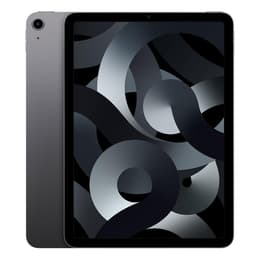
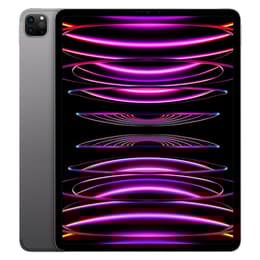
iPad Air 5 (2022, M1 series) vs iPad Pro (2022, M2 series)

iPad Air 5 (2022, M1 series)
Starting at

Refurbished price:A$649.00

Versus A$1,249.00 new

See options
iPad Pro (2022, M2 series)
Starting at

Refurbished price:A$1,071.71

Versus A$1,399.00 new

See options

Ratings

The iPad Air (5th generation), released in March 2022, and the iPad Pro (6th generation), released in October 2022, are two powerful tablets from Apple. While both devices offer a premium tablet experience running on iPadOS, they cater to slightly different user needs through distinctions in their processing power, display technology, and advanced features. This comparison aims to highlight these differences to help users make an informed decision, considering that quality-assured refurbished options are available for both models.

Scores

Durability

When considering the longevity of a tablet, both the iPad Air (2022 M1) and the iPad Pro (2022 M2) are designed for extended use, benefiting from Apple's consistent software support. The practical lifespan of these devices is influenced by their release dates and the typical duration of iPadOS updates.

  • Release Timeline: The iPad Air (5th generation) was released in March 2022, while the iPad Pro (6th generation) followed in October 2022. This seven-month difference means the iPad Pro will likely receive major iPadOS updates for approximately one year longer than the iPad Air.
  • Software Longevity: Apple typically provides iPadOS updates for 5-7 years from a device's release, with security updates often extending beyond that. Both tablets are relatively new, ensuring several years of feature updates and security patches.
  • Repairability: Both models share a similar design philosophy, and their repairability scores are generally comparable within the Apple ecosystem. The robust build quality of both devices contributes to their expected practical lifespan.

Release year

2022

2022

Compatible with latest Update

Yes

Yes

Operating system

iPadOS

iPadOS

Minimum system requirements (iPadOS)

iPadOS 18

iPadOS 18

Performance

The performance of these tablets is a key differentiator, with both offering substantial power for a wide range of tasks, though the iPad Pro holds an edge for the most demanding workflows.

  • Processing Capabilities: The iPad Air (2022) is equipped with a powerful processor that handles demanding applications, multitasking, and graphic-intensive games smoothly. The iPad Pro (2022) features a next-generation processor, offering an increase in CPU and GPU performance, which translates to even faster app loading, more fluid multitasking, and enhanced capabilities for professional-grade applications like video editing and 3D rendering.
  • Storage and RAM: The iPad Air is available with 64GB or 256GB of internal storage and 8GB of RAM. The iPad Pro offers a wider range of storage options, from 128GB up to 2TB, and comes with either 8GB or 16GB of RAM, depending on the storage configuration. This larger RAM capacity in higher-tier iPad Pro models can be beneficial for users who frequently work with very large files or run multiple intensive applications simultaneously.
  • Battery Behavior: Both devices are rated for similar battery life, providing up to 10 hours of web browsing on Wi-Fi or video playback. In real-world usage, battery performance can vary based on the intensity of tasks and display brightness, but both are designed to last through a full day of typical use.

Memory (GB)

8 GB

8 GB

Processor

Apple M1

Apple M2

Screen quality

The visual experience on these tablets is a significant factor, with the iPad Pro offering advanced display technologies that enhance clarity and responsiveness.

  • Display Technology and Clarity: The iPad Air features a 10.9-inch Liquid Retina IPS display with a resolution of 2360 x 1640 pixels, providing clear and vibrant visuals for everyday use. The 11-inch iPad Pro also uses a Liquid Retina IPS display with a slightly higher resolution of 2388 x 1668 pixels, while the 12.9-inch iPad Pro boasts a Liquid Retina XDR mini-LED display, offering significantly deeper blacks, higher contrast, and more precise local dimming.
  • Brightness and Refresh Rate: The iPad Air offers a typical brightness of 500 nits, suitable for most indoor and outdoor conditions. The 11-inch iPad Pro increases this to 600 nits, providing better visibility in brighter environments. A key difference is the iPad Pro's ProMotion technology, which enables an adaptive refresh rate up to 120Hz, resulting in smoother scrolling, more fluid animations, and a more responsive experience, particularly noticeable with the Apple Pencil. The iPad Air has a standard 60Hz refresh rate.
  • Screen Size and Viewing Experience: The iPad Air comes in a 10.9-inch size. The iPad Pro offers both 11-inch and 12.9-inch options, with the larger model providing a more expansive canvas for creative work, media consumption, and multitasking. The 12.9-inch iPad Pro's XDR display is particularly beneficial for HDR content creators and consumers.

Resolution

2360 x 1640

2388 x 1668

True Tone

Yes

Yes

Promotion

No

Yes

Screen type

Liquid Retina display

Liquid Retina XDR

Pixel density

264ppp

264ppp

Brightness

500 nits brightness

600 nits brightness max

Sound quality

Speakers

Stereo speakers

Four speaker audio

Audiovisual

Both tablets are equipped with capable camera systems, but the iPad Pro includes additional features that cater to more advanced photography and videography needs.

  • Rear Camera System: The iPad Air features a single 12MP Wide rear camera, capable of capturing detailed photos and 4K video. The iPad Pro includes a more versatile dual-camera system on the rear, consisting of a 12MP Wide camera and a 10MP Ultra Wide camera, along with a LiDAR Scanner for enhanced augmented reality experiences and improved depth sensing. The iPad Pro also supports ProRes video recording, which is beneficial for professional video workflows.
  • Front Camera and Video Calls: Both devices feature a 12MP Ultra Wide front camera with Center Stage, which automatically keeps the user framed during video calls. The iPad Pro's TrueDepth camera system also enables features like Portrait mode and Face ID, which the Air does not have.
  • Audio Quality: The iPad Air provides stereo speakers, offering a good audio experience for media consumption. The iPad Pro elevates this with a four-speaker audio system, delivering a richer and more immersive sound, and features "studio-quality" microphones for clearer audio recording and calls.

Miscellaneous

Beyond core performance and display, several practical elements differentiate these two tablets, impacting connectivity, security, and overall handling.

  • Connectivity Options: Both tablets support 5G cellular connectivity (on cellular models) and Wi-Fi. The iPad Air supports Wi-Fi 6 and Bluetooth 5.0. The iPad Pro features Wi-Fi 6E and Bluetooth 5.3, offering potentially faster wireless speeds and improved efficiency, especially when connected to compatible routers and accessories.
  • Ports and Sensors: Both devices utilize a USB-C port for charging and accessories. However, the iPad Pro's USB-C port supports Thunderbolt/USB 4, providing significantly faster data transfer speeds for external drives and high-resolution displays compared to the iPad Air's USB 3.2 Gen 2 port. For biometric security, the iPad Air uses Touch ID integrated into the top button, while the iPad Pro features Face ID for secure facial recognition.
  • Weight and Dimensions: The 10.9-inch iPad Air weighs approximately 461 grams and measures 6.1 mm thin. The 11-inch iPad Pro is slightly lighter at around 470 grams and thinner at 5.9 mm, while the 12.9-inch iPad Pro is heavier and thicker. The physical differences are subtle for the 11-inch models, but the 12.9-inch Pro offers a substantially larger footprint.

Weight

462 oz

466 oz

Width

17.85 in

17.85 in

Height

24.76 in

24.76 in

Depth

0.61 in

0.59 in

Screen size (in)

10.9

11

Network

Wi-Fi + 5G

Wi-Fi

Carrier compatibility

Unlocked

Without SIM Port

Wi-Fi version

Wi-Fi 6 802.11ax

Wi-Fi 6 802.11ax

Bluetooth version

Bluetooth 5.0

Bluetooth 5.3

Face ID

No

Yes

Touch ID

Yes

No

Connector

USB Type-C

USB Type-C

User discussions on platforms like Reddit frequently highlight the iPad Air (2022 M1) as an excellent all-around tablet, praised for its strong performance for most users and its balance of features. Many users find its M1 chip more than sufficient for daily tasks, creative projects, and even some demanding applications. Criticisms often revolve around the lack of ProMotion display and the more limited storage options compared to the Pro models.

The iPad Pro (2022 M2), on the other hand, is consistently lauded for its superior display with ProMotion, enhanced audio, advanced camera system with LiDAR, and the faster Thunderbolt port. Users who engage in professional creative work, extensive multitasking, or require the absolute best display technology often find the Pro's additional capabilities justify its position. Some common concerns include its higher cost and the fact that many users may not fully utilize its advanced processing power.

Users prioritizing a smooth visual experience, advanced camera features, and faster data transfer for professional workflows may prefer the iPad Pro (2022 M2). Those who need a powerful and versatile tablet for general productivity, media consumption, and creative tasks without the most advanced display or camera features will find the iPad Air (2022 M1) well-suited to their needs. Both models offer robust performance and a long lifespan, and considering a quality-assured refurbished option can be a sustainable choice for either device.

See all articles

Our recent comparisons