
Compare models
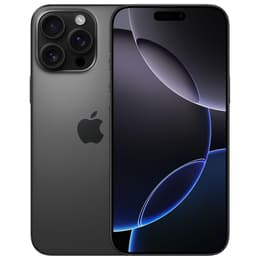
Google Pixel 9a vs iPhone 16 Pro Max
- 1-year warranty
- Free standard shipping
- Free 30-day returns
Differences at a glance
The Google Pixel 9a (2025) and the iPhone 16 Pro Max (2024) represent different approaches to modern smartphone design, catering to distinct user preferences across Android and iOS ecosystems. While the Google Pixel 9a emphasizes streamlined efficiency and everyday practicality, the iPhone 16 Pro Max delivers high-end materials, expansive screen space, and comprehensive photographic capabilities.
Operating on Google's Android and Apple's iOS respectively, these devices offer contrasting software environments alongside their distinct hardware philosophies, making each device suited to very different daily routines.
Available Models
Colour
Storage (GB)
Scores
Durability
When evaluating long-term usability, both devices provide robust support timelines, though their hardware durability and software ecosystems differ in approach.
- Software Support Longevity: Both manufacturers provide multi-year operating system updates and security patches, ensuring both models remain secure and current for an extended portion of their lifecycle.
- Repairability and Build Quality: The Google Pixel 9a features a structured composite rear design, whereas the iPhone 16 Pro Max utilizes a grade-5 titanium frame with textured matte glass, influencing both weight and tactile resilience during accidental drops.
- Expected Practical Lifespan: Thanks to energy-efficient internal hardware and optimized software integration, both devices maintain dependable daily performance over multi-year usage windows, particularly when sourced as quality-assured refurbished options that extend device lifecycles sustainably.
Release year
2025
2024
Foldable
No
No
Performance
System responsiveness and hardware capability dictate how each device handles intensive multitasking, gaming, and everyday utility tasks.
- Multitasking and App Responsiveness: Both devices manage rapid application switching, web browsing, and demanding utility software smoothly, backed by generous memory allocations tailored to their respective operating systems.
- Battery Behavior: The iPhone 16 Pro Max houses a larger physical battery capacity supporting extended media playback, while the Google Pixel 9a balances its power draw efficiently to reliably span a full day of standard mixed usage.
- Storage and Thermal Management: Multiple storage configurations accommodate large media libraries, while internal thermal designs maintain stable processing speeds during sustained tasks like navigation or video rendering.
Screen quality
Display characteristics define the visual experience, impacting media consumption, outdoor legibility, and everyday interaction comfort.
- Panel Technology and Resolution: Both devices incorporate advanced OLED display panels that deliver deep contrast levels, sharp text rendering, and vivid color reproduction for photos and videos.
- Outdoor Brightness: High peak brightness capabilities ensure that screens remain easily legible under direct sunlight, reducing glare during outdoor navigation and reading.
- Refresh Rate and Smoothness: Fluid high-refresh-rate capabilities enable seamless scrolling and responsive touch tracking, though screen dimensions vary significantly between the compact footprint of the Google Pixel 9a and the expansive viewing area of the iPhone 16 Pro Max.
Resolution
1080x2424
1320 x 2868
Screen type
P-OLED
LTPO Super Retina XDR OLED
Audiovisual
Imaging and audio equipment dictate how well each smartphone captures memories and reproduces sound for daily multimedia consumption.
- Camera System Versatility: The iPhone 16 Pro Max offers a flexible multi-lens array including an extended optical zoom telephoto lens, while the Google Pixel 9a focuses on a streamlined dual-lens system powered by advanced computational photography for crisp everyday and low-light shots.
- Video Recording Capabilities: Both models provide stable, high-resolution video capture with advanced stabilization features, making them reliable tools for spontaneous recording or professional-style mobile filmmaking.
- Audio and Speaker Output: Stereo speaker configurations deliver clear voice calls and immersive media audio, while integrated microphone arrays isolate background noise effectively during video calls and voice dictation.
Miscellaneous
Physical dimensions, connectivity standards, and daily ergonomics shape the practical handling experience of each smartphone.
- Ergonomics and Weight: The Google Pixel 9a offers a lighter, more compact profile suited to one-handed operation, whereas the larger footprint and heavier weight of the iPhone 16 Pro Max accommodate a significantly broader viewing space.
- Connectivity and Ports: Both models support modern 5G cellular networks, rapid Wi-Fi standards, and Bluetooth connectivity, utilizing standardized reversible ports for charging and data transfer.
- Security and Sensors: Biometric authentication methods differ between facial recognition on the Apple device and secure fingerprint sensing on the Google alternative, allowing users to choose their preferred method of secure device access.
Weight
186 oz
227 oz
Screen size (in)
6.3
6.9
Network
5G
5G
SIM card
Physical SIM + eSIM
eSIM
Carrier compatibility
Unlocked
Unlocked
What the community thinks
User feedback from online communities highlights distinct preferences for each device based on real-world handling. Owners of the Google Pixel 9a frequently praise its comfortable lightweight handling, reliable software simplicity, and efficient everyday battery management. Conversely, users of the iPhone 16 Pro Max often highlight its expansive display clarity, robust build materials, and versatile zoom photography performance as major daily advantages.
Users prioritizing a compact form factor, straightforward software navigation, and comfortable one-handed use may prefer the Google Pixel 9a, while users prioritizing a larger screen, advanced zoom flexibility, and heavy media consumption will lean toward the iPhone 16 Pro Max. Choosing between them depends on whether physical screen expansion and multi-lens versatility or streamlined ergonomics and platform preference take priority. Opting for a quality-assured refurbished model provides an eco-friendly alternative that supports sustainable consumption without compromising on performance or reliability.