
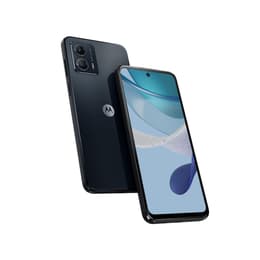

Galaxy A55 vs Motorola Moto G53

Galaxy A55
Galaxy A55
Starting at

Refurbished price:A$339.00

Versus A$699.00 new

See options
Motorola Moto G53
Motorola Moto G53
Starting at

Refurbished price:A$203.77

Versus A$975.00 new

See options

The Samsung Galaxy A55 and the Motorola Moto G53 are both Android smartphones, though they target slightly different user experiences and feature sets. The Galaxy A55, released in March 2024, offers a more premium build and display, alongside a robust software update policy. The Moto G53, launched in December 2022, focuses on delivering a smooth everyday experience with a clean Android interface and extended battery life.

Scores

Durability

When considering the long-term usability of a smartphone, factors like release timeline, software support, and repairability play a significant role.

  • Release Timeline: The Samsung Galaxy A55 was released in March 2024, making it a newer device compared to the Motorola Moto G53, which launched in December 2022. This difference in release date inherently gives the Galaxy A55 a longer potential lifespan in terms of being a current-generation device.
  • Software Longevity: The Galaxy A55 offers a more extensive software support commitment, with Samsung promising four major Android OS updates and five years of security patches. It launched with Android 14 and is expected to receive updates up to Android 18. The Moto G53, which launched with Android 13, has received an update to Android 14. Motorola's policy for budget phones typically includes one OS upgrade and two years of security patches, with security patches for the Moto G53 expected to end around January 2026.
  • Repairability: The Samsung Galaxy A55 has a high repairability score of 8.5 out of 10, indicating that it is designed to be relatively easy to repair, with readily available parts and simpler disassembly processes. While specific repairability scores for the Moto G53 are not widely published, repair services are available for common issues like screen replacement.

Release year

2024

2022

Operating system

Android

Android

Foldable

No

No

Performance

The performance of a smartphone is crucial for daily tasks, app usage, and multitasking. Both devices handle everyday operations, but their underlying capabilities differ.

  • Processor Capabilities: The Samsung Galaxy A55 is equipped with an octa-core processor that provides sufficient power for daily use, including web browsing, social media, and even some demanding games at decent frame rates. The Motorola Moto G53 features an octa-core processor that capably handles normal tasks and ensures apps open quickly, but it may struggle with more intensive applications or heavy gaming.
  • Multitasking and Storage: The Galaxy A55 is available with 8GB or 12GB of RAM, which contributes to smoother multitasking and app management, especially when switching between multiple applications. It also offers 128GB or 256GB of internal storage, expandable via microSD card. The Moto G53 typically comes with 4GB or 6GB of RAM, with some regions offering 8GB, and 64GB or 128GB of storage, also expandable via microSD.
  • Battery Behavior: Both phones feature a 5000mAh battery. The Galaxy A55 generally offers good battery life, with some users reporting 7-8 hours of screen-on time and up to two days of usage for moderate users. The Moto G53 is noted for its excellent battery endurance, often lasting up to two days on a single charge due to its power-efficient components. However, the Galaxy A55 supports faster charging at 25W, while the Moto G53 typically charges at 10W or 18W, meaning a full charge takes longer.

Memory (GB)

8 GB

8 GB

Screen quality

The display is a primary interface for smartphone interaction, and there are notable differences in the screen technology and visual experience offered by these two models.

  • Display Technology and Resolution: The Samsung Galaxy A55 features a 6.6-inch Super AMOLED display with a Full HD+ resolution of 2340x1080 pixels, providing vibrant colors, deep blacks, and sharp details. In contrast, the Motorola Moto G53 has a 6.5-inch IPS LCD panel with a lower HD+ resolution of 1600x720 pixels. This difference means the Galaxy A55 offers a significantly clearer and more detailed viewing experience.
  • Refresh Rate and Brightness: Both devices offer a 120Hz refresh rate, which contributes to smoother scrolling and a more fluid visual experience. However, the Galaxy A55's AMOLED panel can reach a peak brightness of up to 1000 nits, ensuring good visibility even in bright outdoor conditions. The Moto G53's LCD panel typically has lower peak brightness, which might affect outdoor usability.
  • Durability: The Galaxy A55's display is protected by Gorilla Glass Victus+, offering enhanced resistance against scratches and drops. The Moto G53 uses a glass front, but specific Gorilla Glass protection is not consistently mentioned in sources.

Resolution

1080x2340

720x1600

Audiovisual

For many users, the camera system is a key differentiator, influencing how they capture and share moments.

  • Rear Camera Systems: The Samsung Galaxy A55 features a versatile triple-camera setup on the rear, including a 50-megapixel main sensor with optical image stabilization (OIS), a 12-megapixel ultrawide lens, and a 5-megapixel macro lens. The main camera is praised for producing bright, sharp images with accurate colors, and it performs commendably in low-light conditions due to improved AI image processing. The Motorola Moto G53 has a dual-camera system, comprising a 50-megapixel main sensor and a 2-megapixel macro lens. Its main camera delivers decent photos with good detail and true-to-life colors in daylight, but low-light performance can be challenging.
  • Front Camera and Video: The Galaxy A55 is equipped with a 32-megapixel front camera that can record 4K video at 30 frames per second (fps). It also supports 4K@30fps video recording with its main rear camera, benefiting from optical and digital image stabilization. The Moto G53 typically features an 8-megapixel front camera, with some sources mentioning 16MP, and its video recording is limited to 1080p at 30fps.
  • Audio Experience: The Galaxy A55 offers stereo speakers for media consumption. The Moto G53 also includes stereo speakers with Dolby Atmos support, which enhances the audio experience for music and videos.

Miscellaneous

Beyond core specifications, several practical elements contribute to the overall user experience and device handling.

  • Build Materials and Durability: The Samsung Galaxy A55 features a more premium construction with an aluminum frame and a glass back, complemented by IP67 dust and water resistance, offering protection against immersion in water. The Motorola Moto G53 has a plastic back and frame and a water-repellent design, which provides protection against splashes or light rain but lacks a formal IP rating.
  • Dimensions and Handling: The Galaxy A55 measures 161.1 x 77.4 x 8.2mm and weighs 213 grams. The Moto G53 is slightly larger but lighter, at 162.7 x 74.7 x 8.2mm and 183 grams. The Moto G53's lighter build might appeal to users prioritizing a less weighty device.
  • Connectivity and Ports: Both phones support 5G connectivity, Wi-Fi, and Bluetooth. The Galaxy A55 features Wi-Fi 6 and Bluetooth 5.3, while the Moto G53 uses Bluetooth 5.1. Both include a USB Type-C 2.0 port. The Moto G53 also retains a 3.5mm headphone jack, which is absent on the Galaxy A55.
  • Biometric Security: The Galaxy A55 incorporates an in-display fingerprint sensor for secure unlocking. The Moto G53 utilizes a side-mounted fingerprint sensor, integrated into the power button.

Weight

213 oz

183 oz

Screen size (in)

6.6

6.5

Network

5G

5G

SIM card

Physical SIM

Dual Physical SIM

Carrier compatibility

Unlocked

Unlocked

The Samsung Galaxy A55 and Motorola Moto G53 cater to different priorities within the Android smartphone market. User feedback for the Galaxy A55 often highlights its vibrant display, smooth daily performance, and premium build quality as strong points. Some common criticisms include its relatively large bezels and the macro camera being less impactful. The Moto G53 is frequently praised for its excellent battery life, clean Android software experience, and smooth 120Hz display. However, its lower resolution HD+ display and less capable cameras in challenging conditions are often noted as drawbacks.

Users prioritizing a more modern design, a superior display for media consumption, and a longer software support commitment may find the Samsung Galaxy A55 to be a more suitable choice. Its robust build and higher repairability score also contribute to its long-term appeal. Conversely, individuals who value extended battery life, a clean Android interface, and a lighter device for everyday tasks might lean towards the Motorola Moto G53. While its display resolution is lower, its overall responsiveness for general use and strong battery performance are significant advantages.

Both devices represent solid options in their respective segments. For those considering these models, exploring quality-assured refurbished options can provide an eco-friendly alternative, extending the life cycle of these electronic products and offering a sustainable choice.


See all articles

Our recent comparisons