
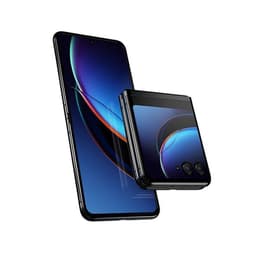

Google Pixel 7 Pro vs Motorola Razr 40 Ultra

Google Pixel 7 Pro
Google Pixel 7 Pro
Starting at

Refurbished price:A$520.00

Versus A$1,219.00 new

See options
Motorola Razr 40 Ultra
See options

The Google Pixel 7 Pro, released in October 2022, and the Motorola Razr 40 Ultra, launched in June 2023, represent distinct approaches to modern smartphone design. The Pixel 7 Pro offers a traditional, high-end slab experience with a strong emphasis on camera capabilities and software integration. In contrast, the Razr 40 Ultra stands out with its foldable clamshell design, featuring a large external display that redefines interaction with a compact device. Both devices run on the Android operating system, providing a familiar software environment, but cater to different user preferences through their form factors and feature sets.

Scores

Durability

When considering the longevity of these devices, several factors come into play, including their release timelines, software support, and physical resilience.

  • Release Timelines: The Google Pixel 7 Pro was released in October 2022, while the Motorola Razr 40 Ultra followed in June 2023. This means the Razr 40 Ultra benefits from a slightly newer hardware foundation and a later starting point for its software support cycle.
  • Software Longevity: Google typically provides a minimum of five years of security updates for its Pixel devices, alongside several major Android version updates, extending the practical software lifespan of the Pixel 7 Pro. The Motorola Razr 40 Ultra generally offers three years of Android updates, which is a reasonable period but shorter than Google's commitment.
  • Physical Durability: The Pixel 7 Pro features an IP68 rating for dust and water resistance, indicating robust protection against immersion. It also uses Corning Gorilla Glass Victus for both its front and back. The Razr 40 Ultra has an IP52 rating, offering splash resistance and some dust protection, but not full water immersion. Its foldable design introduces a hinge mechanism, which, while improved, can be a point of concern for long-term mechanical durability compared to a rigid phone.

Release year

2022

2023

Compatible with latest Update

Yes

Yes

Foldable

No

Yes

Performance

Both smartphones deliver capable performance for daily tasks, though their underlying hardware and battery management differ.

  • Processing Power: The Pixel 7 Pro is equipped with a processor designed by Google, which excels in machine learning tasks and computational photography, ensuring smooth app operation and efficient handling of complex image processing. The Razr 40 Ultra utilizes a powerful processor from a leading chip manufacturer, providing a responsive experience for demanding applications and multitasking.
  • Battery Behavior: The Pixel 7 Pro houses a larger 5000 mAh battery, which, combined with its efficient processor and adaptive battery features, can often last a full day or more for many users. Some users, however, have noted that heavy usage or specific tasks like navigation or extended camera use can lead to quicker battery drain and heat generation. The Razr 40 Ultra has a smaller 3800 mAh battery, which is typical for its foldable form factor. Despite this, its efficient processor and the utility of its external display can help it achieve a full day of use for many, as users may rely less on the main screen.
  • Multitasking and Storage: Both devices offer ample RAM, with the Pixel 7 Pro typically featuring 12GB and the Razr 40 Ultra available in 8GB or 12GB configurations, ensuring smooth transitions between multiple open applications. Storage options are generous on both, ranging from 128GB to 512GB, accommodating a large number of apps, photos, and videos.

Memory (GB)

12 GB

8 GB

Screen quality

The display experience on these two devices is a primary differentiator, not only in technology but also in form factor and interaction.

  • Display Technology and Resolution: The Google Pixel 7 Pro features a 6.7-inch QHD+ LTPO OLED display with a resolution of 3120 x 1440 pixels, offering sharp visuals and deep blacks. The Motorola Razr 40 Ultra boasts a 6.9-inch foldable pOLED main display with a resolution of 2640 x 1080 pixels. Its unique feature is a large 3.6-inch pOLED cover display with a resolution of 1056 x 1066 pixels, which is highly functional for quick interactions.
  • Brightness and Refresh Rate: The Pixel 7 Pro's display offers a 120Hz refresh rate, providing smooth scrolling and responsiveness, with peak brightness levels suitable for outdoor visibility. The Razr 40 Ultra's main display can reach up to a 165Hz refresh rate, offering an exceptionally fluid visual experience, while its cover screen also features a high 144Hz refresh rate. Both displays support HDR content for enhanced contrast and color.
  • Viewing Experience: The Pixel 7 Pro provides an expansive, uninterrupted viewing area ideal for media consumption and productivity. The Razr 40 Ultra's main display, while larger, has a visible crease in the middle due to its folding nature, though many users report it becomes less noticeable with use. The highly capable cover screen on the Razr 40 Ultra allows for many tasks to be performed without opening the phone, offering a unique and convenient interaction method.

Resolution

1440 x 3120

1080 x 2640

Screen type

LTPO AMOLED

Foldable LTPO AMOLED

Audiovisual

Camera capabilities are a significant aspect of both smartphones, though they cater to different photographic priorities.

  • Rear Camera Systems: The Google Pixel 7 Pro features a versatile triple-camera setup, including a 50MP main sensor, a 12MP ultrawide lens with autofocus for macro shots, and a 48MP telephoto lens offering 5x optical zoom and up to 30x Super Res Zoom. This system is renowned for its computational photography, delivering consistently excellent photos across various lighting conditions, including impressive low-light performance and advanced features like Photo Unblur. The Motorola Razr 40 Ultra comes with a dual-camera system on its exterior: a 12MP main camera with a wide f/1.5 aperture and optical image stabilization, and a 13MP ultrawide camera that also functions for macro photography. While capable of producing good images in bright conditions, its overall performance, especially in challenging light or with zoom, is generally not considered on par with dedicated flagship camera phones.
  • Front-Facing Cameras and Video: The Pixel 7 Pro has a 10.8MP front camera that captures detailed selfies and supports 4K video recording. Its video recording capabilities are strong, with various stabilization modes and features like Cinematic Blur. The Razr 40 Ultra includes a 32MP internal selfie camera. A key advantage of the Razr's foldable design is the ability to use the higher-quality main exterior cameras for selfies or video calls by utilizing the cover screen as a viewfinder. Both phones support 4K video recording, with the Pixel generally offering more refined video processing.
  • Audio Experience: Both devices feature stereo speakers, providing an immersive audio experience for media consumption. The Pixel 7 Pro includes features like speech enhancement and wind noise reduction for clearer audio recording.

Main camera

50 megapixels

12 megapixels

Front camera

10.8 megapixels

32 megapixels

Miscellaneous

Beyond core performance and display, several practical elements distinguish these two devices.

  • Connectivity and Ports: Both smartphones support 5G connectivity, Wi-Fi 6E, and Bluetooth 5.2 or 5.3, ensuring fast and reliable wireless connections. The Pixel 7 Pro features a USB-C 3.2 Gen 2 port, offering faster data transfer speeds, while the Razr 40 Ultra uses a USB-C 2.0 port. Neither device includes a traditional 3.5mm headphone jack.
  • Biometrics and Sensors: The Pixel 7 Pro uses an optical in-display fingerprint sensor for secure unlocking, complemented by Face Unlock. The Razr 40 Ultra integrates its fingerprint sensor into the side power button, which some users find convenient, and also offers face recognition. Both include a standard array of sensors such as accelerometers, gyroscopes, and ambient light sensors.
  • Design and Handling: The Pixel 7 Pro has a premium build with an aluminum frame and Gorilla Glass Victus, weighing around 212 grams. Its dimensions make it a substantial device in hand. The Razr 40 Ultra's defining characteristic is its foldable design, allowing it to become significantly more compact when closed (88.4 x 74 x 15.1 mm) compared to when open (170.8 x 74 x 7 mm). It weighs approximately 188 grams, making it lighter than the Pixel 7 Pro. The choice between a traditional slab and a foldable form factor heavily influences portability and one-handed use.
  • Unique Features: The Razr 40 Ultra's large, interactive cover screen is a standout feature, enabling users to run full apps and perform many tasks without unfolding the device, enhancing its utility and potentially conserving battery.

Weight

212 oz

1 oz

Screen size (in)

67

6.9

SIM card

Physical SIM + eSIM

Dual Physical SIM

Carrier compatibility

Unlocked

Unlocked

The Google Pixel 7 Pro and Motorola Razr 40 Ultra cater to distinct user preferences, each excelling in different areas. The Pixel 7 Pro is frequently praised for its exceptional camera system, particularly its computational photography capabilities that deliver high-quality photos and versatile zoom options. Users also appreciate its clean Android experience and consistent software updates. Some criticisms include occasional heating under heavy load and battery life that, while generally good, might not always meet the demands of power users.

The Motorola Razr 40 Ultra garners significant praise for its innovative foldable design and the highly functional external display, which offers a unique and convenient way to interact with the device without constantly opening it. Its compact form factor when folded is a major draw for those prioritizing portability. However, its camera system, while capable for everyday use, is often noted as not reaching the same flagship-tier performance as some competitors. Battery life, while efficient for a foldable, is also a common point of discussion due to its smaller capacity.

Users prioritizing a top-tier camera experience, long-term software support, and a robust, traditional smartphone form factor will likely find the Google Pixel 7 Pro well-suited to their needs. Conversely, individuals who value a highly portable device with a unique, interactive design and are willing to make some trade-offs in camera performance may lean towards the Motorola Razr 40 Ultra. Both devices offer a quality-assured refurbished option, providing an eco-friendly alternative for consumers seeking to make informed and sustainable choices.

See all articles

Our recent comparisons