
Google Pixel 7 Pro vs Motorola Edge 30 Fusion

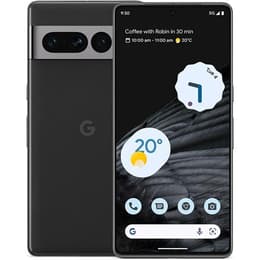
Google Pixel 7 Pro
Google Pixel 7 Pro
Starting at

Refurbished price:A$520.00

Versus A$1,219.00 new

See options
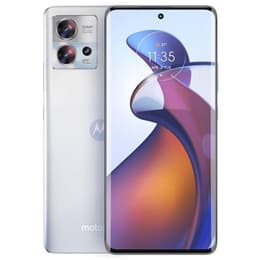
Motorola Edge 30 Fusion
Starting at

Refurbished price:A$257.46

Versus A$1,352.00 new

See options

The Google Pixel 7 Pro (released October 2022) and the Motorola Edge 30 Fusion (released September 2022) are both Android smartphones that entered the market around the same time. While the Pixel 7 Pro focuses on an advanced camera system and extended software support, the Motorola Edge 30 Fusion emphasizes a sleek design and a high refresh rate display. Both devices offer distinct experiences tailored to different user preferences within the Android ecosystem.

Scores

Durability

When considering the long-term usability of these devices, their release timelines and software support policies are key factors.

  • Software Updates: The Google Pixel 7 Pro is expected to receive five years of OS and security updates from its release date, extending its support until October 2027. This provides a longer period of up-to-date features and security. In contrast, the Motorola Edge 30 Fusion typically receives two major OS updates and three years of security updates.
  • Repairability: The Google Pixel 7 Pro has been noted to have a repairability score of 5.5 out of 10 by some teardowns, indicating that while some components like the screen are relatively easy to replace, others like the battery and charging port can be more complex due to strong adhesive and soldered connections. Information regarding the specific repairability score for the Motorola Edge 30 Fusion is less widely available, though user reviews suggest a solid build quality.
  • Practical Lifespan: Given Google's longer software support, the Pixel 7 Pro offers a potentially longer practical lifespan for users who prioritize the latest Android features and security patches. The Motorola Edge 30 Fusion, while robust in build, will see its software support conclude sooner.

Release year

2022

2022

Compatible with latest Update

Yes

Yes

Foldable

No

No

Performance

The performance of a smartphone is crucial for daily tasks, app usage, and overall responsiveness.

  • Processor Capabilities: The Google Pixel 7 Pro is equipped with a current-generation processor designed by Google, which is optimized for AI and machine learning tasks, contributing to features like advanced computational photography and voice processing. The Motorola Edge 30 Fusion features a previous-generation flagship processor, which still delivers strong performance for demanding applications and multitasking.
  • Multitasking and Responsiveness: The Pixel 7 Pro typically comes with 12 GB of RAM, allowing for smooth multitasking and efficient handling of numerous open applications. The Motorola Edge 30 Fusion often includes 8 GB of RAM, which provides a responsive experience for most users, though some heavy multitasking scenarios might see a slight difference compared to devices with more RAM.
  • Storage Options: Both devices offer various internal storage configurations, with the Pixel 7 Pro available in 128 GB, 256 GB, and 512 GB options, and the Motorola Edge 30 Fusion commonly found with 128 GB or 256 GB. Neither device supports expandable storage via a microSD card.
  • Battery Behavior: The Pixel 7 Pro houses a larger 5000 mAh battery, generally providing ample power for a full day of use, though performance can vary with heavy usage and display settings. The Motorola Edge 30 Fusion has a 4400 mAh battery, which users report offers decent battery life, especially considering its high refresh rate display.

Memory (GB)

12 GB

8 GB

Screen quality

The display is a primary interface for smartphone interaction, and both devices offer high-quality viewing experiences.

  • Display Technology and Resolution: The Google Pixel 7 Pro features a 6.7-inch LTPO OLED display with a QHD+ resolution (1440 x 3120 pixels), offering sharp details and vibrant colors. The Motorola Edge 30 Fusion comes with a 6.55-inch P-OLED display with an FHD+ resolution (1080 x 2400 pixels), providing clear visuals and good color reproduction.
  • Refresh Rate and Smoothness: The Pixel 7 Pro offers an adaptive refresh rate of up to 120Hz, which contributes to smooth scrolling and fluid animations. The Edge 30 Fusion boasts a higher 144Hz refresh rate, which can result in an even smoother visual experience, particularly noticeable in fast-paced content and general navigation.
  • Brightness Levels: The Pixel 7 Pro's display can reach a peak brightness of up to 1500 nits, ensuring good visibility even in bright outdoor conditions. The Motorola Edge 30 Fusion offers a peak brightness of up to 1100 nits, which is also suitable for outdoor use, though it may be slightly less bright than the Pixel 7 Pro in direct sunlight.

Resolution

1440 x 3120

1080 x 2400

Screen type

LTPO AMOLED

P-OLED

Audiovisual

For many users, the camera system is a critical component of a modern smartphone, and both devices approach photography with different strengths.

  • Camera System Capabilities: The Google Pixel 7 Pro features a versatile triple camera setup, including a 50 MP main sensor, a 48 MP telephoto lens with 5x optical zoom, and a 12 MP ultrawide lens. This configuration allows for a wide range of photographic styles, from expansive landscapes to detailed distant subjects. The Motorola Edge 30 Fusion also has a triple camera system, with a 50 MP main sensor, a 13 MP ultrawide lens that can also function for macro shots, and a 2 MP depth sensor.
  • Photography Performance: The Pixel 7 Pro is widely recognized for its advanced computational photography, which excels in producing detailed images with accurate colors and strong low-light performance. Users often praise its ability to capture high-quality stills. The Edge 30 Fusion offers good everyday photography, with its main camera performing well in adequate lighting conditions. Its low-light performance is considered solid but may not match the advanced processing of the Pixel.
  • Video Recording Quality: Both devices are capable of recording high-resolution video. The Pixel 7 Pro offers strong video capabilities, though some users have noted areas for improvement in video processing compared to its still photography. The Edge 30 Fusion also provides good video recording, with its front camera supporting up to 4K 30fps.
  • Audio Experience: The Pixel 7 Pro features stereo speakers, providing a balanced audio output for media consumption. The Motorola Edge 30 Fusion also includes dual stereo speakers with Dolby Atmos support, which users have found to deliver a good audio experience.

Main camera

50 megapixels

50 megapixels

Front camera

10.8 megapixels

32 megapixels

Miscellaneous

Beyond core features, several practical elements contribute to the overall user experience.

  • Connectivity Options: Both smartphones support 5G connectivity, Wi-Fi 6E, and Bluetooth 5.2, ensuring fast and reliable wireless connections.
  • Port Types: Both devices utilize a USB-C port for charging and data transfer. Neither includes a traditional 3.5mm headphone jack.
  • Biometric Security: The Google Pixel 7 Pro features an under-display optical fingerprint sensor and Face Unlock for convenient and secure access. The Motorola Edge 30 Fusion also incorporates an under-display optical fingerprint sensor.
  • Weight and Dimensions: The Pixel 7 Pro is larger and heavier, weighing 212 grams with dimensions of 162.9 x 76.6 x 8.9 mm. The Motorola Edge 30 Fusion is notably lighter and slimmer at 168 grams and 158.5 x 71.2 x 7.5 mm, contributing to a more compact in-hand feel.
  • Build Materials: The Pixel 7 Pro uses Gorilla Glass Victus for both its front and back, with an aluminum frame, offering robust protection. The Edge 30 Fusion features Gorilla Glass 5 on the front and back, also with an aluminum frame, providing a premium feel and good durability. The Edge 30 Fusion also has an IP52 rating for dust and splash resistance, while the Pixel 7 Pro has a higher IP68 rating for dust and water resistance.

Weight

212 oz

168 oz

Screen size (in)

67

6,55

SIM card

Physical SIM + eSIM

Dual Physical SIM

Carrier compatibility

Unlocked

Unlocked

User feedback for the Google Pixel 7 Pro frequently highlights its exceptional camera performance, particularly its computational photography capabilities, and the clean, feature-rich Android experience. Users also appreciate its long software support timeline. Some common criticisms include occasional reports of the device getting warm under heavy load and some inconsistencies in video recording quality.

For the Motorola Edge 30 Fusion, users often praise its sleek and lightweight design, the smooth 144Hz display, and its near-stock Android interface. Its fast charging capabilities are also a frequently mentioned positive. Criticisms sometimes point to its camera performance being good but not class-leading, especially in challenging lighting, and a shorter software update commitment compared to some competitors.

Users prioritizing an advanced and versatile camera system, coupled with a longer period of software updates and a robust water resistance rating, may find the Google Pixel 7 Pro well-suited to their needs. Conversely, users who value a lightweight, sleek design, a very high refresh rate display for an exceptionally smooth visual experience, and fast charging might lean towards the Motorola Edge 30 Fusion. Both devices offer compelling features, and choosing between them often comes down to these specific priorities. For those seeking an eco-friendly and quality-assured option, considering refurbished versions of either device can be a sustainable choice.


See all articles

Our recent comparisons