
Google Pixel 6a vs Motorola Moto G53

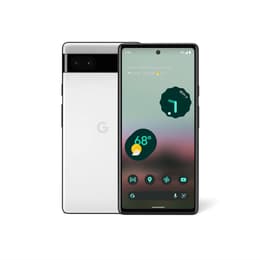
Google Pixel 6a
Google Pixel 6a
Starting at

Refurbished price:A$237.00

Versus A$569.00 new

See options
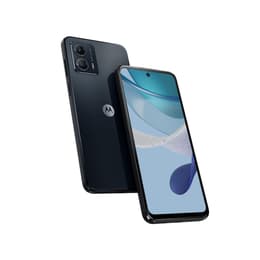
Motorola Moto G53
Motorola Moto G53
See options

The Google Pixel 6a (released July 2022) and the Motorola Moto G53 (released December 2022/January 2023) are both smartphones designed to offer a balanced experience for everyday users. While the Pixel 6a focuses on advanced processing and camera capabilities, the Moto G53 prioritizes a larger display with a higher refresh rate and extended battery life. Both devices run on the Android operating system, providing a familiar user experience with slight variations in their software approaches.

Scores

Durability

When considering the long-term usability of these devices, their release timelines and software support policies are key factors.

  • Release Timeline: The Google Pixel 6a was released in July 2022, while the Motorola Moto G53 followed a few months later, with its global release in January 2023. This difference means the Pixel 6a has been on the market for a slightly longer period.
  • OS Support Duration: The Pixel 6a was initially promised three years of OS updates and five years of security updates. However, Google has extended this, and the Pixel 6a is now expected to receive OS updates until at least July 2025 and security updates until at least July 2027. In contrast, Motorola's budget phones typically receive one major OS upgrade and two years of security patches. The Moto G53 launched with Android 13 and has received an update to Android 14.
  • Practical Lifespan: Users prioritising the latest software features and security patches for an extended period may find the Pixel 6a offers a longer practical lifespan due to Google's extended support. The Moto G53, while receiving updates, has a shorter guaranteed update window.

Release year

2022

2022

Compatible with latest Update

Yes

Yes

Foldable

No

No

Performance

The performance of a smartphone impacts how smoothly applications run, how quickly tasks are completed, and the overall responsiveness of the device.

  • Processor Capabilities: The Google Pixel 6a is equipped with Google's Tensor chip, which allows it to handle demanding applications and multitasking smoothly. This processor also contributes to advanced computational photography features. The Motorola Moto G53 features a Qualcomm Snapdragon 480+ 5G processor, which provides smooth performance for everyday tasks and casual gaming.
  • Multitasking and Responsiveness: The Pixel 6a, with its more powerful processor and 6GB of RAM, generally offers a more responsive experience, especially when switching between multiple applications or running graphically intensive games. The Moto G53, typically available with 4GB or 6GB of RAM, handles common applications and general multitasking without significant lag, though it may show limitations with very demanding games or heavy multitasking.
  • Battery Behavior: The Pixel 6a has a 4410 mAh battery, and while Google states it can last up to 24 hours with typical usage, some users report needing a top-up with heavy use. The Moto G53 features a larger 5000 mAh battery, which often translates to extended usage, with some reports indicating it can last well over a day with moderate use.

Memory (GB)

6 GB

4 GB

Screen quality

The display is a primary interface for smartphone interaction, and its quality significantly influences the user experience.

  • Display Technology and Resolution: The Google Pixel 6a features a 6.1-inch OLED display with a resolution of 2400 x 1080 pixels (FHD+). This OLED technology provides deep blacks and vibrant colours. The Motorola Moto G53 has a larger 6.5-inch IPS LCD display with a resolution of 1600 x 720 pixels (HD+).
  • Refresh Rate and Smoothness: The Pixel 6a's display has a standard 60Hz refresh rate. The Moto G53 offers a higher 120Hz refresh rate, which results in smoother scrolling and a more fluid visual experience, particularly noticeable during navigation and in supported content.
  • Brightness and Clarity: The Pixel 6a's OLED panel generally offers better contrast and brightness for outdoor visibility compared to the Moto G53's LCD. While the Moto G53's display is bright, its lower resolution means content may appear less sharp than on the Pixel 6a.

Resolution

1080 x 2400

720x1600

Audiovisual

For many users, the camera system is a crucial component of a smartphone, influencing how they capture and share moments.

  • Camera System Capabilities: The Google Pixel 6a features a dual-camera system on the rear, consisting of a 12.2 MP wide lens and a 12 MP ultrawide lens. The Motorola Moto G53 also has a dual-camera setup, with a 50 MP main sensor and a 2 MP macro lens.
  • Photography Performance: The Pixel 6a leverages Google's advanced computational photography, allowing it to produce detailed and well-exposed photos in various conditions, including low light, despite its sensor specifications. The Moto G53's 50 MP main camera can capture decent detail in good lighting, but its low-light performance is generally less robust, and some users report challenges with autofocus.
  • Video Recording and Audio: The Pixel 6a can record 4K video at up to 60 frames per second with its rear cameras. The Moto G53 is limited to 1080p video recording at 30 frames per second. Both devices offer adequate microphone quality for calls, and the Pixel 6a's dual speakers are noted for being loud enough for media consumption. The Moto G53 also features stereo speakers.

Front camera

8 megapixels

8 megapixels

Miscellaneous

Beyond core features, several practical elements contribute to the overall user experience and device utility.

  • Connectivity and Ports: Both devices support 5G connectivity. The Pixel 6a includes Wi-Fi 6E and Bluetooth 5.2, while the Moto G53 supports Wi-Fi 5 and Bluetooth 5.1. The Pixel 6a features a USB-C port but lacks a 3.5mm headphone jack. The Moto G53 includes both a USB-C port and a 3.5mm headphone jack.
  • Sensors and Biometrics: The Pixel 6a incorporates an in-display fingerprint sensor for secure unlocking. The Moto G53 uses a side-mounted fingerprint sensor, often integrated into the power button.
  • Build Materials and Handling: The Pixel 6a features a Gorilla Glass 3 front, a plastic back, and an aluminium frame, with an IP67 rating for water and dust resistance. The Moto G53 has a plastic back and frame, and some sources suggest a water-repellent design or IP52 rating for splash resistance. The Pixel 6a is noted for feeling premium despite its plastic back.

Weight

250 oz

183 oz

Screen size (in)

6.1

6.5

SIM card

Physical SIM + eSIM

Dual Physical SIM

Carrier compatibility

Unlocked

Unlocked

The Google Pixel 6a is often praised for its exceptional camera performance, driven by its advanced processing capabilities, which allows it to capture high-quality images even in challenging conditions. Users also appreciate its compact size and the clean, bloatware-free Android experience. Some common criticisms include its 60Hz display refresh rate and, for some, its battery life requiring careful management with heavy use.

The Motorola Moto G53 receives positive feedback for its long-lasting battery and the smooth scrolling experience provided by its 120Hz display. Its clean Android interface is also a highlight. However, frequent criticisms point to its lower-resolution display and the camera's performance, particularly in low light, which may not meet the expectations of photography enthusiasts.

Users who prioritize a superior camera system, a more powerful processor for demanding applications, and a longer software support window will likely find the Google Pixel 6a to be a more suitable choice. Its OLED display also offers a visually richer experience. Conversely, individuals who value extended battery life, a smoother display for everyday navigation, and the convenience of a headphone jack may lean towards the Motorola Moto G53. Both devices offer a solid Android experience, but cater to slightly different user priorities. For those considering these models, exploring quality-assured refurbished options can provide an eco-friendly alternative.

See all articles

Our recent comparisons