
Google Pixel 6a vs Motorola Moto G14

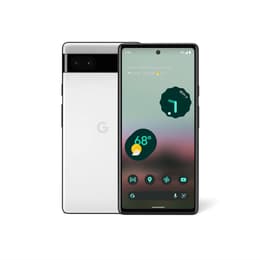
Google Pixel 6a
Google Pixel 6a
Starting at

Refurbished price:A$235.00

Versus A$569.00 new

See options
Motorola Moto G14
Motorola Moto G14
Starting at

Refurbished price:A$182.00

Versus A$271.00 new

See options

Ratings

The Google Pixel 6a (2022) and the Motorola Moto G14 (2023) are both smartphones designed to offer essential features for everyday use. While the Pixel 6a emphasizes advanced computational photography and a compact form factor, the Moto G14 focuses on a larger display and extended battery life. Both devices operate on the Android platform, providing a familiar user experience with distinct approaches to hardware and software integration.

Scores

Durability

When considering the practical lifespan of these devices, several factors come into play, including their release timelines, software support, and physical resilience.

  • Release and Software Support: The Google Pixel 6a, released in July 2022, benefits from Google's commitment to software longevity, typically receiving five years of security updates from its launch. The Motorola Moto G14, launched in August 2023, is guaranteed one major Android OS update and three years of security updates. This means the Pixel 6a is expected to receive software support for a longer duration.
  • Physical Durability: The Pixel 6a features an aluminum frame and a plastic back, with its display protected by Corning Gorilla Glass 3. It also boasts an IP67 rating for dust and water resistance, indicating it can withstand immersion in water up to 1 meter for a limited time. The Moto G14 has a plastic frame and back, with Panda Glass protecting its display, and carries an IP52 rating, making it resistant to dust and light splashes.
  • Expected Practical Lifespan: Users prioritizing extended software updates and a higher degree of water and dust protection may find the Pixel 6a offers a longer practical lifespan. The Moto G14, while offering splash resistance, has a shorter guaranteed software update period.

Release year

2022

2023

Compatible with latest Update

Yes

Yes

Foldable

No

No

Performance

The performance of a smartphone is crucial for daily tasks, from launching applications to managing multiple processes simultaneously. Both the Pixel 6a and Moto G14 offer different experiences in this regard.

  • Processing Power and Responsiveness: The Google Pixel 6a is equipped with a processor designed for efficient handling of demanding applications and advanced features like real-time language translation and computational photography. This results in smooth multitasking and responsive navigation. The Moto G14 features a processor that capably handles everyday tasks and general smartphone usage, though it may exhibit slower performance with more intensive applications or complex games.
  • Memory and Storage: The Pixel 6a comes with 6GB of RAM and 128GB of internal storage, without an option for expansion. This configuration is suitable for most users and provides ample space for apps and media. The Moto G14 offers 4GB of RAM and 128GB of internal storage, with the added flexibility of expandable storage via a microSD card, which can be beneficial for users who require significant space for photos, videos, or other files.
  • Battery Performance: The Pixel 6a houses a 4410 mAh battery, which typically provides a full day of use for most users, and can extend further with battery-saving modes. It supports 18W fast charging. The Moto G14 is equipped with a larger 5000 mAh battery, often lasting a full day even with heavy use, and potentially up to two days with moderate usage. It supports 20W fast charging, though it often ships with a 10W charger.

Memory (GB)

6 GB

4 GB

Screen quality

The display is a primary interface for smartphone interaction, influencing everything from content consumption to daily navigation.

  • Display Technology and Clarity: The Google Pixel 6a features a 6.1-inch OLED display, offering deep blacks, vibrant colors, and excellent contrast. Its resolution of 2400x1080 pixels provides sharp and clear visuals. The Motorola Moto G14 comes with a 6.5-inch IPS LCD screen, also with a 2400x1080 pixel resolution, delivering good clarity and bright colors, though its contrast may not be as pronounced as an OLED panel.
  • Refresh Rate and Smoothness: Both devices feature a standard 60Hz refresh rate. While this is sufficient for most everyday tasks, users accustomed to higher refresh rate displays might notice a difference in scrolling fluidity. The Pixel 6a's software optimization helps ensure a smooth experience despite the 60Hz panel.
  • Brightness and Viewing Experience: The Pixel 6a's OLED panel offers good brightness levels, making it comfortable for outdoor viewing. The Moto G14's IPS LCD also provides good brightness and sunlight legibility, ensuring content remains visible in various lighting conditions.

Resolution

1080 x 2400

1080 x 2400

Screen type

OLED

IPS LCD

Audiovisual

For many users, the camera system is a key differentiator, capturing everyday moments and special occasions.

  • Rear Camera System: The Google Pixel 6a features a dual-camera setup with a 12.2MP main sensor (with optical image stabilization) and a 12MP ultrawide lens. It leverages advanced computational photography to produce detailed images with accurate colors and impressive dynamic range, performing well in various lighting conditions, including low light. The Motorola Moto G14 is equipped with a 50MP main camera (utilizing Quad Pixel technology) and a 2MP macro sensor. It delivers decent daylight photos with good detail, though color reproduction can sometimes be softer. Its low-light performance is acceptable for its category, aided by a dedicated Night mode.
  • Front Camera and Video Recording: Both phones include an 8MP front-facing camera for selfies and video calls. The Pixel 6a can record video at up to 4K resolution at 60 frames per second, offering smooth stabilization and clear audio. The Moto G14 records video at up to 1080p at 30 frames per second.
  • Photography Features: The Pixel 6a includes signature Google features like Magic Eraser, Real Tone, and Night Sight, enhancing photo editing and low-light capabilities. While the Moto G14's camera system is more straightforward, it provides a reliable experience for casual photography.

Main camera

12.2 megapixels

50 megapixels

Front camera

8 megapixels

8 megapixels

Miscellaneous

Beyond the core specifications, several practical elements contribute to the overall user experience and daily convenience.

  • Connectivity and Ports: The Google Pixel 6a supports 5G connectivity, offering faster mobile data speeds where available, and features Wi-Fi 6 (802.11ax). It uses a USB-C port for charging and data transfer but lacks a 3.5mm headphone jack. The Motorola Moto G14 is limited to 4G LTE networks and supports Wi-Fi 5 (802.11ac). It includes both a USB-C port and a 3.5mm headphone jack, which can be a significant advantage for users with wired audio accessories.
  • Biometric Security: The Pixel 6a incorporates an in-display fingerprint sensor for secure unlocking. The Moto G14 features a side-mounted fingerprint sensor, often integrated into the power button, providing a quick and accessible authentication method.
  • Design and Handling: The Pixel 6a has a compact 6.1-inch form factor, making it comfortable for one-handed use and easy to carry. It weighs around 178 grams. The Moto G14 has a slightly larger 6.5-inch display and weighs 177 grams, offering a more expansive screen experience while remaining relatively light. Both phones feature stereo speakers for an enhanced audio experience.

Weight

250 oz

177 oz

Screen size (in)

6.1

6.5

SIM card

Physical SIM + eSIM

Dual Physical SIM

Carrier compatibility

Unlocked

Unlocked

The Google Pixel 6a and Motorola Moto G14 cater to different user priorities, each offering a distinct set of strengths. User feedback for the Pixel 6a often highlights its exceptional camera performance, leveraging Google's advanced software processing to deliver high-quality photos, even with its older sensor hardware. Users also appreciate its smooth software experience and the promise of long-term updates. Some common concerns include the 60Hz display, slower charging speeds compared to some competitors, and occasional reports of the in-display fingerprint sensor being less responsive.

The Motorola Moto G14 is frequently praised for its robust battery life, often lasting a full day or more, and its inclusion of a 3.5mm headphone jack. Its large, clear display and stereo speakers are also noted as positive aspects for media consumption. Criticisms sometimes point to its performance for demanding applications and the limited number of major OS updates. The camera, while capable in good lighting, is generally considered suitable for casual use rather than advanced photography.

Users prioritizing a superior camera experience, extended software support, and a more compact device with 5G connectivity will find the Google Pixel 6a well-suited to their needs. Its advanced processing capabilities make it a strong choice for those who value smart features and a fluid Android experience. Conversely, users who prioritize a larger display, expandable storage, a 3.5mm headphone jack, and exceptional battery longevity, and who primarily engage in everyday tasks and casual media consumption, may lean toward the Motorola Moto G14. Both devices offer a reliable smartphone experience, and considering a quality-assured refurbished option for either model can be an eco-friendly alternative.


See all articles

Our recent comparisons