

Google Pixel 6a vs Google Pixel 8a

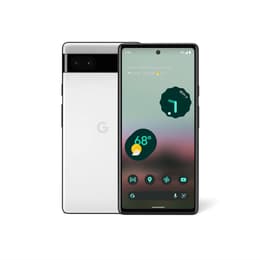
Google Pixel 6a
Google Pixel 6a
Starting at

Refurbished price:A$236.00

Versus A$569.00 new

See options
Google Pixel 8a
Google Pixel 8a
Starting at

Refurbished price:A$464.00

Versus A$938.69 new

See options

Ratings

The Google Pixel 6A, released in July 2022, and the Google Pixel 8A, launched in May 2024, are both mid-range smartphones from Google's Pixel A-series. While they share a similar design philosophy and operate on the Android platform, the Pixel 8A introduces advancements in processing power, display technology, and camera capabilities, alongside a significantly extended software support timeline. Both devices aim to deliver a streamlined Android experience with a focus on computational photography and intelligent features.

Scores

Durability

When considering the long-term usability of a smartphone, factors like release timeline, software support, and physical durability are key. The Pixel 6A and Pixel 8A offer different expectations in these areas.

  • Release Timeline: The Pixel 6A was released in July 2022, making it an older model compared to the Pixel 8A, which launched in May 2024. This difference in release date directly impacts their remaining support windows.
  • Software Longevity: The Pixel 6A is expected to receive OS updates until at least July 2025 and security updates until at least July 2027, providing a solid five years of support from its launch. In contrast, the Pixel 8A boasts an impressive commitment of seven years of OS, security, and feature drop updates from its release date, extending support until May 2031. This makes the Pixel 8A a more future-proof option for users prioritizing extended software support.
  • Physical Durability: Both devices feature a plastic back and an aluminum frame, offering a balance of resilience and a comfortable feel. They both come with an IP67 rating for dust and water resistance, meaning they can withstand immersion in up to 1 meter of water for 30 minutes. The displays on both are protected by Corning Gorilla Glass 3.

Release year

2022

2024

Compatible with latest Update

Yes

Yes

Foldable

No

No

Performance

The performance of a smartphone is largely determined by its internal components, influencing how smoothly apps run, how quickly tasks are completed, and how efficiently power is managed.

  • Processor Capabilities: The Pixel 6A is powered by the first-generation Google Tensor chip, which delivers capable performance for everyday tasks and moderate gaming. The Pixel 8A, however, features the newer Google Tensor G3 chip, offering a noticeable improvement in processing speed and efficiency. This translates to faster app loading, smoother multitasking, and enhanced performance in demanding applications and games.
  • System Responsiveness and RAM: The Pixel 6A comes with 6GB of RAM, which is sufficient for most users to switch between several applications without significant slowdowns. The Pixel 8A upgrades to 8GB of RAM, providing more headroom for intensive multitasking and ensuring a more fluid experience when running numerous apps simultaneously.
  • Battery Behavior: The Pixel 6A houses a 4410 mAh battery, generally providing a full day of use for many users. The Pixel 8A has a slightly larger 4492 mAh battery. User experiences with the Pixel 8A's battery life are varied, with some reporting it lasts a full day with light use, while others find it requires charging by evening with heavier usage. Both devices support 18W fast charging, though some users note that full charging can take a couple of hours.

Memory (GB)

6 GB

8 GB

Screen quality

The visual experience on a smartphone is heavily influenced by its display, affecting everything from text clarity to video playback and outdoor visibility.

  • Display Technology and Resolution: Both the Pixel 6A and Pixel 8A feature a 6.1-inch OLED display with a resolution of 1080 x 2400 pixels, resulting in sharp and clear visuals for text and images. The OLED technology provides deep blacks and vibrant colors on both models.
  • Refresh Rate and Smoothness: A key difference lies in the refresh rate. The Pixel 6A has a standard 60Hz refresh rate, which provides a smooth enough experience for most daily interactions. The Pixel 8A, however, features a 120Hz refresh rate, offering a noticeably smoother scrolling experience and more fluid animations, which can enhance the perception of responsiveness.
  • Brightness Levels: The Pixel 8A's display also offers significantly higher peak brightness, reaching up to 2000 nits. This improved brightness makes the screen more easily viewable in bright outdoor conditions compared to the Pixel 6A.

Resolution

1080 x 2400

1080 x 2400

Screen type

OLED

OLED

Audiovisual

Google's Pixel phones are known for their camera capabilities, often leveraging computational photography to produce high-quality images.

  • Rear Camera System: The Pixel 6A features a dual-camera setup with a 12.2 MP wide lens and a 12 MP ultrawide lens. Users generally praise its ability to capture excellent daytime photos and good low-light images, benefiting from Google's image processing. The Pixel 8A significantly upgrades the main sensor to a 64 MP wide lens with optical image stabilization (OIS) and a 13 MP ultrawide lens. This higher resolution main sensor, combined with advanced processing, allows for more detailed photos and improved performance in various lighting conditions.
  • Front Camera: For selfies and video calls, the Pixel 6A includes an 8 MP front camera. The Pixel 8A features a higher resolution 13 MP front camera, which can capture more detailed self-portraits and offer better quality for video conferencing.
  • Video Recording and Features: Both phones are capable of recording 4K video at 30 or 60 frames per second. The Pixel 8A benefits from the Tensor G3's enhanced capabilities, which can lead to improved video processing and features like Audio Magic Eraser and Best Take, enhancing the overall media creation experience.

Main camera

12.2 megapixels

64 megapixels

Front camera

8 megapixels

13 megapixels

Miscellaneous

Beyond the core specifications, several practical elements contribute to the overall user experience of a smartphone.

  • Connectivity Options: Both the Pixel 6A and Pixel 8A support 5G connectivity for faster mobile data speeds. They also both include Wi-Fi 6E for advanced wireless networking. The Pixel 8A features Bluetooth 5.3, a slight upgrade from the Pixel 6A's Bluetooth 5.2, potentially offering minor improvements in wireless accessory connectivity and efficiency.
  • Ports and Sensors: Both devices utilize a USB-C port for charging and data transfer, with the Pixel 8A featuring the slightly faster USB-C 3.2 compared to the Pixel 6A's USB-C 3.1. Neither phone includes a traditional 3.5mm headphone jack. For security, both have an under-display fingerprint sensor. The Pixel 8A adds Face Unlock as an additional biometric authentication method.
  • Dimensions and Handling: Both phones maintain a compact form factor with a 6.1-inch display. The Pixel 6A weighs 178g, while the Pixel 8A is slightly heavier at 188g. Despite the minor weight difference, both are generally considered comfortable for one-handed use, a preference for many users.

Weight

250 oz

188 oz

Screen size (in)

6.1

6.1

SIM card

Physical SIM + eSIM

Physical SIM + eSIM

Carrier compatibility

Unlocked

Unlocked

The Google Pixel 6A and Pixel 8A both offer a compelling Android experience, but cater to slightly different priorities. The Pixel 6A, as an earlier model, is often praised for its capable camera performance and solid overall experience for its time. Users frequently highlight its compact size and the clean Android software as strong points. Some criticisms noted by users include its 60Hz display, which can feel less fluid compared to higher refresh rate screens, and occasional reports of the device warming up during use.

The Pixel 8A builds upon its predecessor with significant upgrades. Users appreciate its smoother 120Hz display, the enhanced performance from the Tensor G3 chip, and the improved camera system. The extended seven-year software support is a major advantage, offering long-term value and security. However, some users have noted that while the battery life is generally good, it might not always last a full day for heavy users, and charging speeds are not the fastest available.

Users prioritizing extended software longevity, a smoother display experience, and enhanced performance for demanding applications may find the Pixel 8A well-suited to their needs. Its upgraded camera also appeals to those who want the latest in computational photography. Conversely, users who value a more established and still capable device for everyday tasks, and who may not require the absolute latest in performance or the longest software support, might consider the Pixel 6A. Both models, especially when considering quality-assured refurbished options, represent sustainable choices for consumers looking for a reliable Android smartphone.

See all articles

Our recent comparisons