

Compare models

Galaxy Z Fold7 vs Motorola Moto E13

  • 1-year warranty
  • Free standard shipping
  • Free 30-day returns
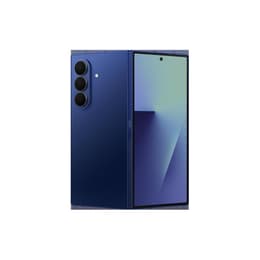
Galaxy Z Fold7
Starting at

Refurbished price:A$1,300.00

Versus A$2,499.00 new

See options

Differences at a glance

The Samsung Galaxy Z Fold7 (2025) and the Motorola Moto E13 (2023) represent fundamentally different device categories in the smartphone market. While the Galaxy Z Fold7 functions as an advanced foldable flagship device with dual screens, the Motorola Moto E13 serves as an ultra-accessible, entry-level slate phone designed for basic daily communication. These two devices diverge sharply in form factor, capability, and target audience, running different generations of the Android operating system.

Available Models

Colour

Storage (GB)

Scores

Durability

The Galaxy Z Fold7 and Motorola Moto E13 occupy different tiers regarding software support timelines and hardware endurance, directly affecting their long-term viability.

  • Software longevity: The Galaxy Z Fold7 provides long-term system updates spanning multiple years, whereas the Motorola Moto E13 relies on lighter operating system editions with shorter support windows.
  • Build engineering: The Galaxy Z Fold7 features complex folding hinge architecture protected by modern reinforced glass, while the Motorola Moto E13 utilizes a traditional rigid plastic body with basic splash resistance.
  • Expected lifespan: Flagship internal components equip the Galaxy Z Fold7 to remain relevant for extensive heavy use, whereas the Motorola Moto E13 suits short-term or temporary usage needs.

Release year

2025

2023

Operating system

Android

Android

Foldable

Yes

No

Performance

Daily operation speeds and multitasking behavior differ vastly due to the contrasting internal hardware configurations of each device.

  • System responsiveness: The Galaxy Z Fold7 handles demanding applications, intense multitasking, and advanced gaming smoothly with its current-generation processor and high RAM capacity. The Motorola Moto E13 handles basic tasks like web browsing and messaging adequately, though heavy applications experience noticeable loading delays.
  • Storage capacity: Generous internal storage tiers on the Galaxy Z Fold7 accommodate large media libraries, while the Motorola Moto E13 offers modest onboard storage paired with expandable card slots for media storage.
  • Battery behavior: The Galaxy Z Fold7 manages power across two separate displays during active use, whereas the Motorola Moto E13 benefits from a large single screen capacity that easily stretches across light daily routines.

Screen quality

Visual output and screen architecture represent the most prominent physical distinction between these two mobile devices.

  • Display technology: The Galaxy Z Fold7 utilizes dual vibrant OLED panels, providing deep contrast and flexible viewing formats, while the Motorola Moto E13 employs a standard flat IPS LCD panel with basic high-definition resolution.
  • Outdoor visibility: High peak brightness levels on the Galaxy Z Fold7 maintain clear legibility under direct sunlight, whereas the Motorola Moto E13 requires manual shade adjustment in bright outdoor environments.
  • Refresh rate: Fluid visual transitions on the Galaxy Z Fold7 contrast with the standard 60 Hz refresh rate found on the Motorola Moto E13 screen.

Resolution

1968x2184

720 x 1600

Audiovisual

Photography capabilities and multimedia reproduction reflect the distinct market tiers of these two models.

  • Imaging systems: The Galaxy Z Fold7 includes a versatile triple-lens rear setup featuring high-resolution main and optical zoom sensors, while the Motorola Moto E13 provides a single basic rear camera suited for casual snapshots.
  • Media audio: Stereo speaker configurations on the Galaxy Z Fold7 deliver immersive sound for videos, whereas the Motorola Moto E13 features a single loudspeaker adequate for routine calls and alerts.
  • Video recording: High-resolution recording capabilities on the Galaxy Z Fold7 capture detailed footage, compared to standard definition recording options on the Motorola Moto E13.

Miscellaneous

Physical dimensions, connectivity standards, and daily handling characteristics vary substantially between the two models.

  • Connectivity: The Galaxy Z Fold7 supports rapid 5G networks and modern wireless standards, whereas the Motorola Moto E13 restricts data connectivity to standard 4G networks.
  • Port architecture: Modern reversible ports handle charging on both handsets, though the Motorola Moto E13 retains a traditional wired headphone jack absent on the foldable flagship.
  • Physical handling: The Galaxy Z Fold7 presents a heavier, dual-screen folding chassis, contrasted by the lightweight, slender profile of the Motorola Moto E13.

Weight

215 oz

181 oz

Screen size (in)

8.0

6.5

Network

5G

4G

SIM card

Dual Physical SIM + eSIM

Dual Physical SIM

Carrier compatibility

Unlocked

Unlocked

What the community thinks

User discussions across public forums highlight distinct sentiments regarding both devices. Owners of the Galaxy Z Fold7 frequently praise its expansive workspace, versatile display formats, and top-tier execution, though some note the physical bulk and complex maintenance associated with folding screens. Conversely, users reviewing the Motorola Moto E13 emphasize its remarkable portability and straightforward simplicity for basic calling, while noting limitations in processing speed and camera flexibility during daily use. Choosing a quality-assured refurbished option through Back Market can also provide an eco-friendly alternative for consumers exploring either device category sustainably.

Users prioritizing maximum productivity, advanced photography, and multitasking versatility will find the Galaxy Z Fold7 well-suited to their requirements, while users seeking a dedicated secondary phone for simple communication will lean toward the Motorola Moto E13. Assessing individual daily workflows remains the most effective method for determining which device configuration aligns with specific personal needs.


Our recent comparisons