
Galaxy Z Fold6 vs Google Pixel 7 Pro

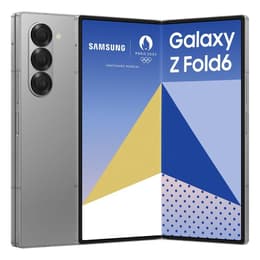
Galaxy Z Fold6
Galaxy Z Fold6
Starting at

Refurbished price:A$1,090.24

Versus A$2,749.00 new

See options
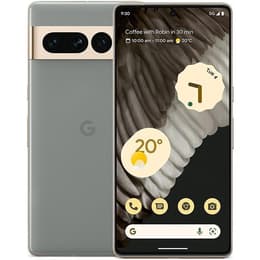
Google Pixel 7 Pro
Google Pixel 7 Pro
Starting at

Refurbished price:A$412.00

Versus A$1,379.00 new

See options

Ratings

The Samsung Galaxy Z Fold6, released in July 2024, and the Google Pixel 7 Pro, launched in October 2022, represent distinct approaches to high-end smartphone design. The Z Fold6 offers a unique foldable form factor that transforms from a traditional smartphone into a larger tablet-like display, while the Pixel 7 Pro maintains a conventional slab design. Both devices operate on the Android platform, with the Z Fold6 featuring Samsung's One UI overlay and the Pixel 7 Pro offering a more stock Android experience with Google's specific enhancements.

Scores

Durability

The expected practical lifespan of a smartphone is influenced by its physical resilience and the duration of software support it receives.

  • Release Timeline and Age: The Galaxy Z Fold6 is a more recent device, released in July 2024, making it newer than the Google Pixel 7 Pro, which launched in October 2022. This difference in release dates means the Z Fold6 has a longer period before it reaches the end of its software support cycle.
  • OS Support Duration: Samsung has committed to providing seven years of OS and security updates for the Galaxy Z Fold6, ensuring long-term software longevity. In contrast, the Google Pixel 7 Pro is slated to receive five years of OS and security updates, with support extending until October 2027.
  • Physical Durability: The Galaxy Z Fold6 features an enhanced Armor Aluminum frame and an IP48 rating for dust and water resistance, though its inner foldable screen is not pure glass and can be susceptible to scratches. User reports indicate the hinge, while durable, might allow some dust ingress over time. The Pixel 7 Pro is protected by Gorilla Glass Victus on both its front and rear, and carries an IP68 rating for water and dust resistance. However, durability tests have shown its camera bar can scratch easily, and the device exhibited significant flex in bend tests, potentially compromising its water resistance.

Release year

2024

2022

Compatible with latest Update

Yes

Yes

Foldable

Yes

No

Performance

Both devices are designed to deliver smooth performance for everyday tasks, but their underlying hardware and real-world usage impacts differ.

  • Processor Capabilities: The Galaxy Z Fold6 is equipped with a current-generation processor, enabling it to handle demanding applications, intensive gaming, and multitasking without noticeable lag or stuttering. Its larger vapor chamber compared to its predecessor aids in thermal management during heavy use. The Pixel 7 Pro features a processor optimized for AI and machine learning tasks, providing a fluid experience for daily operations and app usage. While capable for gaming, it may experience some thermal increase during extended demanding sessions.
  • Multitasking and Responsiveness: Both phones come with 12GB of RAM, which supports efficient multitasking. The Z Fold6's foldable display inherently offers a larger canvas for running multiple applications side-by-side, enhancing productivity. The Pixel 7 Pro also handles app switching and general system responsiveness smoothly.
  • Storage Options: The Galaxy Z Fold6 offers storage configurations of 256GB, 512GB, and 1TB. The Pixel 7 Pro is available with 128GB, 256GB, and 512GB storage options.

Memory (GB)

12 GB

12 GB

Screen quality

The display experience is a primary differentiator, with the Z Fold6 offering a unique adaptable screen and the Pixel 7 Pro providing a high-quality traditional panel.

  • Display Technology and Size: The Galaxy Z Fold6 features a 7.6-inch foldable Dynamic LTPO AMOLED 2X inner display and a 6.3-inch Dynamic LTPO AMOLED 2X cover display, both offering vibrant colors and deep blacks. The Pixel 7 Pro has a single 6.7-inch LTPO OLED display.
  • Resolution and Clarity: The Z Fold6's inner display has a resolution of 2160x1856 pixels, while its cover screen is 968x2376 pixels. The Pixel 7 Pro offers a sharp 3120x1440 pixel (QHD+) resolution. Both provide clear and detailed visuals for various content.
  • Brightness and Refresh Rate: Both devices feature adaptive refresh rates up to 120Hz, ensuring smooth scrolling and responsive interactions. The Z Fold6's displays can reach a peak brightness of 2600 nits, offering excellent visibility in bright outdoor conditions. The Pixel 7 Pro's display can achieve up to 1500 nits peak brightness, which is also suitable for outdoor use.

Resolution

1856 x 2160

1440 x 3120

Screen type

Foldable Dynamic LTPO AMOLED 2X

LTPO AMOLED

Audiovisual

Both smartphones offer advanced camera systems, but they cater to slightly different photographic priorities and user experiences.

  • Rear Camera System: The Galaxy Z Fold6 features a triple camera setup with a 50MP main sensor, a 12MP ultrawide lens, and a 10MP telephoto lens with 3x optical zoom. Its ultrawide camera has been updated for improved low-light performance. The Pixel 7 Pro also has a triple camera system, including a 50MP main sensor, a 12MP ultrawide lens with a wide field of view, and a 48MP telephoto lens capable of 5x optical zoom and 30x Super Res Zoom.
  • Photography Performance: The Pixel 7 Pro is widely praised for its still photography, particularly its ability to capture detailed images with excellent color reproduction and strong low-light performance, including dedicated astrophotography and macro modes. The Z Fold6's camera system is competent for general use, producing good results in most lighting conditions, though some users note its ultrawide can be noisy in very dim environments. It leverages its foldable form factor for unique shooting angles and a larger viewfinder.
  • Video Recording and Selfies: Both devices support high-resolution video recording, with the Z Fold6 capable of 8K@30fps and 4K@60fps. The Pixel 7 Pro offers good video quality up to 4K@60fps, with features like Cinematic Blur, though some users have noted occasional issues with sharpening and exposure shifts. For selfies, the Z Fold6 has a 10MP cover camera and a 4MP under-display camera, while the Pixel 7 Pro features a 10.8MP front-facing camera.

Main camera

50 megapixels

50 megapixels

Front camera

4 megapixels

10.8 megapixels

Miscellaneous

Beyond core performance, several practical features and design elements contribute to the overall user experience of these devices.

  • Connectivity and Ports: Both the Galaxy Z Fold6 and the Google Pixel 7 Pro support 5G connectivity and Wi-Fi 6e for fast wireless internet. They also include Bluetooth for accessory connections. The Z Fold6 additionally supports Ultra-Wideband (UWB). Both devices utilize a USB-C port for charging and data transfer, and neither includes a traditional 3.5mm headphone jack.
  • Biometric Security and Sensors: The Z Fold6 incorporates a side-mounted fingerprint scanner and offers S-Pen support for enhanced interaction. The Pixel 7 Pro features an in-display optical fingerprint scanner and includes 2D image-based face recognition for unlocking.
  • Physical Design and Handling: The Galaxy Z Fold6, weighing 239g, is designed to be lighter and slimmer than its predecessor, offering a unique folding mechanism that provides a compact phone form factor and an expansive tablet experience. The Pixel 7 Pro, at 212g, maintains a more traditional smartphone design with a distinctive camera bar across its rear.

Weight

239 oz

212 oz

Screen size (in)

7.6

67

SIM card

Dual Physical SIM + eSIM

Physical SIM + eSIM

Carrier compatibility

Unlocked

Unlocked

The Samsung Galaxy Z Fold6 and the Google Pixel 7 Pro cater to different user preferences, each excelling in distinct areas. User feedback for the Galaxy Z Fold6 often praises its innovative foldable display, which offers unparalleled versatility for multitasking and media consumption. Many appreciate the larger screen for productivity and entertainment, and its long-term software support is a significant advantage. Some criticisms include concerns about the durability of the inner screen and the hinge's susceptibility to dust ingress, as well as the camera system, while competent, not always matching the performance of traditional flagship phones in all scenarios.

The Google Pixel 7 Pro is frequently lauded for its exceptional camera capabilities, particularly its still photography and advanced computational photography features, which consistently deliver high-quality images across various conditions. Users also value its clean Android experience and the consistent delivery of new features through Pixel Drops. Common concerns include its battery life, which some heavy users find requires more frequent charging, and the physical durability of the camera bar and its structural integrity in bend tests.

Users prioritizing a versatile device that can seamlessly switch between a compact phone and a large tablet-like display for productivity and immersive media will find the Galaxy Z Fold6 well-suited to their needs. Its extended software support also makes it a compelling choice for those seeking long-term device longevity. Conversely, individuals who place a premium on photographic excellence, a streamlined Android experience, and consistent software innovation may lean toward the Google Pixel 7 Pro. When considering either device, exploring quality-assured refurbished options can provide an eco-friendly alternative, offering a sustainable choice for acquiring these advanced smartphones.
See all articles

Our recent comparisons