
Compare models
Galaxy Z Fold5 vs Google Pixel 9a
- 1-year warranty
- Free standard shipping
- Free 30-day returns
Differences at a glance
The Samsung Galaxy Z Fold5 (2023) and the Google Pixel 9a (2025) represent two fundamentally distinct mobile concepts, pairing a pioneering book-style folding smartphone format with a streamlined, conventional slate design. While both run on the Android operating system, they approach daily mobile computing from opposite directions, balancing multi-window productivity against traditional pocket-friendly simplicity. Choosing between them depends on whether physical screen expansion or a standard, lightweight build aligns better with your daily routine.
Available Models
Colour
Storage (GB)
Scores
Durability
When evaluating structural longevity and software support, these devices reflect their different release schedules and hardware architectures.
- Software longevity: The Google Pixel 9a benefits from an extended software support window spanning seven years from its release, while the Samsung Galaxy Z Fold5 operates on a shorter remaining window tied to its 2023 debut.
- Hardware durability: The Galaxy Z Fold5 features specialized folding glass and an engineered hinge mechanism that requires careful handling over years of use, whereas the Pixel 9a utilizes a rigid, traditional unibody construction with robust water resistance.
- Repairability considerations: Traditional slate designs like the Pixel generally present fewer long-term maintenance complexities compared to dual-screen folding assemblies.
Release year
2023
2025
Operating system
Android
Android
Foldable
Yes
No
Performance
Under everyday workloads, both devices deliver swift application launching and dependable multitasking, though their hardware configurations target different user habits.
- Multitasking capacity: The Galaxy Z Fold5 incorporates high RAM capacity suited for running multiple demanding windows simultaneously on its expanded screen, while the Pixel 9a handles standard daily apps, web browsing, and casual gaming smoothly with efficient modern processing.
- Battery behavior: The Pixel 9a features a larger physical battery capacity that easily sustains a full day of standard use, whereas the dual-screen configuration of the Galaxy Z Fold5 results in more frequent power replenishment during heavy usage of the main inner display.
- Storage tiers: Users can select from multiple expansive storage configurations on the folding device, while the conventional model offers standard capacities suited for everyday file storage without expansion slots.
Screen quality
Visual output differs dramatically between the two models, defined entirely by form factor choices and display panel engineering.
- Display technology: The Galaxy Z Fold5 opens to reveal a massive flexible organic light-emitting diode panel designed for tablet-like viewing, complemented by a narrow outer screen, whereas the Pixel 9a presents a single, uniform flat organic light-emitting diode screen with smooth refresh rates.
- Outdoor visibility: Both models achieve high peak brightness levels to maintain clear legibility under bright sunlight conditions, though the Pixel 9a utilizes durable conventional cover glass.
- Viewing experience: The folding device suits media multitasking and split-screen reading exceptionally well, while the conventional display provides a classic, uninterrupted aspect ratio for standard video playback.
Resolution
1812 x 2176
1080x2424
Screen type
Foldable Dynamic AMOLED 2X
P-OLED
Audiovisual
Optics and media reproduction vary to match the distinct physical layouts and intended use cases of each smartphone.
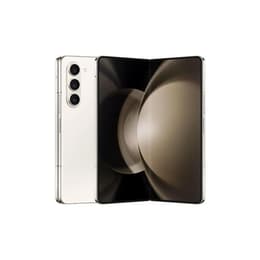
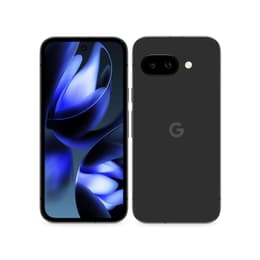
- Camera systems: The Galaxy Z Fold5 employs a versatile triple-lens rear arrangement including a dedicated telephoto zoom lens, while the Pixel 9a relies on a dual-lens setup backed by advanced computational photography algorithms for everyday snapshots and low-light clarity.
- Video and audio: Both handsets record crisp high-resolution video with stable optical stabilization, paired with stereo speakers that deliver balanced audio for calls and casual media consumption.
- Selfie handling: The folding model provides multiple camera angles utilizing both outer and inner lenses for self-portraits, while the conventional device uses a simple, centered front punch-hole camera.
Miscellaneous
Physical dimensions and connectivity standards shape how comfortably each device integrates into daily travel and mobile habits.
- Build and dimensions: The Galaxy Z Fold5 folds into a thick, narrow profile and weighs significantly more due to its dual-screen hardware, whereas the Pixel 9a offers a lightweight, thin slate profile that rests easily in pockets and bags.
- Connectivity: Both models support modern fifth-generation mobile networks, fast wireless standards, and secure biometric authentication through fingerprint or facial recognition sensors.
- Port architecture: Each device relies on a reversible universal serial bus Type-C port for charging and data transfer, omitting legacy audio jacks entirely.
Weight
253 oz
186 oz
Screen size (in)
7.6
6.3
Network
5G
5G
SIM card
Physical SIM + eSIM
Physical SIM + eSIM
Carrier compatibility
Unlocked
Unlocked
What the community thinks
Users prioritizing expanded screen space for split-screen multitasking, reading, and mobile productivity will find the Samsung Galaxy Z Fold5 well-suited to their workflow. Conversely, users prioritizing a lightweight build, simplified daily handling, and extended software update longevity will lean toward the Google Pixel 9a. Both options deliver capable performance within their respective categories, allowing buyers to choose based on form factor preference rather than raw capability alone. Exploring a quality-assured refurbished option through Back Market offers an eco-friendly way to acquire either device while supporting sustainable electronics consumption.