
Galaxy Z Fold4 vs Motorola Moto E13

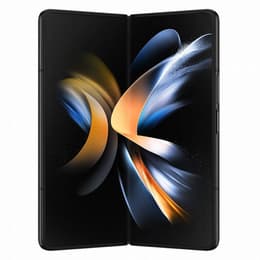
Galaxy Z Fold4
Galaxy Z Fold4
Starting at

Refurbished price:A$734.00

Versus A$3,628.00 new

See options
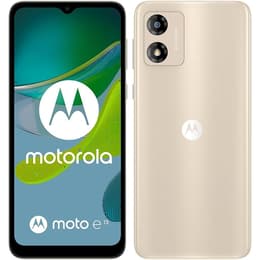
Motorola Moto E13
Motorola Moto E13
Starting at

Refurbished price:A$121.29

Versus A$244.00 new

See options

Ratings

The Samsung Galaxy Z Fold4, released in August 2022, represents a premium foldable smartphone experience, offering a large, adaptable display for enhanced productivity and media consumption. In contrast, the Motorola Moto E13, launched in January 2023, is an entry-level smartphone designed for essential daily tasks and straightforward mobile use. These devices cater to distinctly different user needs, primarily differing in their form factor, processing power, and overall feature sets.

Scores

Durability

The longevity and support for these two devices vary significantly, reflecting their different market positions.

  • Software Support: The Galaxy Z Fold4 launched with Android 12L and is promised four major Android OS updates, extending its software support up to Android 16, along with five years of security updates until 2027. The Moto E13, released with Android 13 Go Edition, has not received any subsequent Android OS updates, indicating a shorter software support lifespan.
  • Physical Durability: The Galaxy Z Fold4 features an IPX8 water resistance rating, meaning it can withstand submersion, though it lacks official dust resistance. Its cover display and rear panel are protected by Corning Gorilla Glass Victus+. The Moto E13 offers IP52 dust and splash resistance, providing protection against light exposure to dust and water.
  • Repairability: While foldable phones generally present complex repair challenges, Samsung has made efforts to reduce screen repair costs for the Z Fold4 with a Samsung Care+ plan. The Moto E13 has a repairability score of 6.5/10, with its battery being relatively accessible, but screen replacement involves disassembling multiple components.

Release year

2022

2023

Compatible with latest Update

Yes

No

Operating system

Android

Android

Foldable

Yes

No

Performance

Performance capabilities differ substantially between these two smartphones, impacting how smoothly they handle various applications and multitasking.

  • Processing Power: The Galaxy Z Fold4 is equipped with a high-performance processor, enabling it to handle demanding applications, intensive multitasking, and graphic-rich gaming with fluidity and responsiveness. The Moto E13 features an entry-level processor, which is suitable for basic daily tasks like browsing, messaging, and light app usage, but may experience slower loading times and occasional stuttering with more complex applications or heavy multitasking.
  • Multitasking and Responsiveness: With 12 GB of RAM, the Galaxy Z Fold4 offers robust multitasking capabilities, allowing users to switch between numerous applications without noticeable slowdowns or app restarts. The Moto E13, available with 2 GB, 4 GB, or 8 GB of RAM, provides a more constrained multitasking experience, particularly with the lower RAM configurations, where apps may need to reload more frequently.
  • Battery Behavior: The Galaxy Z Fold4 houses a 4400 mAh battery, which, despite powering two displays, is reported by users to last a full day with moderate to heavy use. The Moto E13 comes with a larger 5000 mAh battery, and due to its less demanding hardware, it also offers extended battery life, often lasting a full day or more on a single charge with typical usage.

Memory (GB)

12 GB

4 GB

Screen quality

The display experience is a primary differentiator, with the Galaxy Z Fold4 offering a unique adaptable screen compared to the Moto E13's traditional panel.

  • Display Technology and Size: The Galaxy Z Fold4 features two Dynamic AMOLED 2X displays: a 7.6-inch foldable inner screen and a 6.2-inch external cover screen. These displays offer deep blacks and vibrant colors. The Moto E13 has a single 6.5-inch IPS LCD screen, providing a standard viewing experience.
  • Resolution and Clarity: The Z Fold4's inner display boasts a high resolution of 2176 x 1812 pixels (QXGA+), while its cover screen is 2316 x 904 pixels (HD+), both delivering sharp and detailed visuals. The Moto E13's display has a resolution of 1600 x 720 pixels (HD+), which is suitable for everyday content but offers less sharpness compared to the Z Fold4.
  • Refresh Rate and Brightness: Both displays on the Galaxy Z Fold4 support an adaptive 120 Hz refresh rate for smooth scrolling and animations, with the main display reaching up to 1000 nits peak brightness for good outdoor visibility. The Moto E13 features a standard 60 Hz refresh rate, and its brightness levels are adequate for indoor use but may be less visible in bright outdoor conditions.

Resolution

1812 x 2176

720 x 1600

Screen type

Foldable Dynamic AMOLED 2X

IPS LCD

Audiovisual

The camera systems of these devices are designed for different levels of photographic capability and user expectations.

  • Rear Camera System: The Galaxy Z Fold4 features a versatile triple-camera setup on the rear, including a 50 MP wide-angle lens with optical image stabilization (OIS), a 12 MP ultra-wide lens, and a 10 MP telephoto lens with 3x optical zoom and OIS. This system is capable of capturing detailed photos in various lighting conditions, including improved low-light performance. The Moto E13 is equipped with a single 13 MP wide-angle rear camera.
  • Front and Inner Cameras: For selfies and video calls, the Z Fold4 has a 10 MP camera on its cover screen and a 4 MP under-display camera on its inner screen. The Moto E13 features a 5 MP front-facing camera.
  • Photography and Video Performance: The Z Fold4 offers advanced photography features and can record video at up to 8K resolution at 24 frames per second. Users report good photo quality, even in challenging conditions. The Moto E13's camera is suitable for basic photography, producing decent images in good daylight, though it may struggle with dynamic range and low-light scenarios. The camera application can also be slow to launch and process images. Both devices can record video at 1080p at 30 frames per second.

Main camera

50 megapixels

13 megapixels

Front camera

4 megapixels

5 megapixels

Miscellaneous

Beyond core features, several practical elements contribute to the overall user experience and connectivity of these smartphones.

  • Connectivity Standards: The Galaxy Z Fold4 supports 5G networks, Wi-Fi 6 (802.11ax), and Bluetooth 5.2, offering fast wireless speeds and efficient connections. The Moto E13 supports 4G LTE, Wi-Fi 5 (802.11ac), and Bluetooth 5.0, providing reliable but generally slower wireless connectivity.
  • Physical Ports and Sensors: The Z Fold4 features a USB-C 3.2 port for data transfer and charging. It includes a fingerprint scanner, accelerometer, gyroscope, proximity sensor, compass, and barometer. The Moto E13 comes with a USB-C 2.0 port and retains a 3.5mm headphone jack, which is absent on the Z Fold4. It includes a proximity sensor and accelerometer, but lacks a fingerprint sensor.
  • Dimensions and Build: The Galaxy Z Fold4 is a heavier device at 263 grams, with a unique folding design that makes it thicker when closed (14.2-15.8 mm) and very thin when unfolded (6.3 mm). The Moto E13 is lighter at 179.5 grams and has a conventional smartphone form factor with a thickness of 8.47 mm.

Weight

263 oz

179 oz

Screen size (in)

7.6

6.5

Network

5G

4G

SIM card

Physical SIM + eSIM

Dual Physical SIM

Carrier compatibility

Unlocked

Unlocked

The Samsung Galaxy Z Fold4 and Motorola Moto E13 cater to distinct segments of the smartphone market, each excelling in different areas based on their design and intended use. User feedback for the Galaxy Z Fold4 often highlights its exceptional performance, advanced multitasking capabilities facilitated by its dual displays, and significantly improved camera system. Common criticisms include its bulkier form factor and the visible crease on the inner display. For the Moto E13, users frequently praise its long-lasting battery and the inclusion of Android 13 Go Edition for a streamlined experience. However, its camera performance and overall system speed are often noted as areas where it offers a more basic experience.

Users prioritizing a cutting-edge, versatile device for productivity, immersive media, and advanced photography will find the Galaxy Z Fold4 well-suited to their needs. Its foldable design offers a tablet-like experience in a pocketable form. Conversely, individuals seeking a straightforward, reliable smartphone for essential communication, light browsing, and extended battery life will find the Moto E13 to be a practical choice. It serves as a functional device for those who do not require high-end features or intensive performance. Both devices are available as quality-assured refurbished options, providing an eco-friendly alternative for consumers.
See all articles

Our recent comparisons