
Google Pixel 8 Pro vs Motorola Edge 30 Fusion

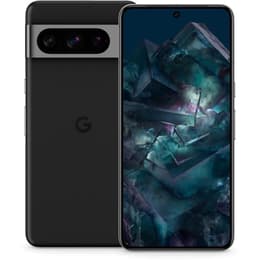
Google Pixel 8 Pro
Google Pixel 8 Pro
Starting at

Refurbished price:A$565.00

Versus A$1,859.00 new

See options
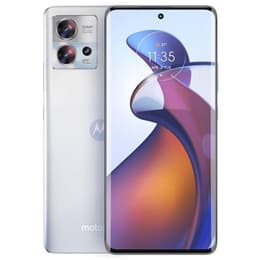
Motorola Edge 30 Fusion
Starting at

Refurbished price:A$257.46

Versus A$1,352.00 new

See options

The Google Pixel 8 Pro, released in October 2023, and the Motorola Edge 30 Fusion, launched in September 2022, are distinct smartphones offering different user experiences. While the Pixel 8 Pro emphasizes advanced computational photography and long-term software support, the Edge 30 Fusion focuses on a sleek design and a high refresh rate display. Both devices operate on the Android platform, but they diverge significantly in their approach to features and longevity.

Scores

Durability

When considering the long-term usability of these devices, their release timelines and software support policies are key differentiators.

  • Software Longevity: The Google Pixel 8 Pro stands out with an exceptional commitment to software updates, promising seven years of operating system and security updates from its October 2023 release. This extended support ensures the device remains current with the latest Android features and security patches for a significantly longer period. The Motorola Edge 30 Fusion, released in September 2022, launched with Android 12 and typically receives fewer major OS updates and security patches compared to Google's flagship Pixel line.
  • Physical Durability: The Pixel 8 Pro features Corning Gorilla Glass Victus 2 on its display and an IP68 rating for dust and water resistance, offering robust protection against daily wear and tear. The Motorola Edge 30 Fusion uses Gorilla Glass 5 for its front and back panels and carries an IP52 rating, indicating protection against dust and splashing water.
  • Repairability: Repairing the Google Pixel 8 Pro can be challenging due to the use of strong adhesives and a soldered charging port, contributing to a lower repairability assessment by some experts. Similarly, the Motorola Edge 30 Fusion is noted for having low repairability, with adhesive used for the back cover and battery, and a complex process for screen replacement.

Release year

2023

2022

Compatible with latest Update

Yes

Yes

Foldable

No

No

Performance

The performance of a smartphone is crucial for daily tasks, from app usage to demanding games and multitasking.

  • Processing Power: The Google Pixel 8 Pro is equipped with Google's Tensor G3 processor, designed to handle demanding applications and multitasking smoothly, with a particular focus on AI-centric features that enhance user experience. The Motorola Edge 30 Fusion utilizes the Qualcomm Snapdragon 888+ processor, which provides snappy performance for everyday tasks and is capable of running most games, though some users have reported heating during prolonged intensive use.
  • Multitasking and Storage: The Pixel 8 Pro typically comes with 12GB of RAM, facilitating seamless multitasking and efficient handling of multiple applications simultaneously. Storage options for the Pixel 8 Pro range from 128GB to 1TB, with the largest option being a US exclusive. The Edge 30 Fusion offers 8GB or 12GB of RAM and storage options including 128GB, 256GB, and 512GB, providing ample space for most users.
  • Battery Performance: The Pixel 8 Pro houses a 5050 mAh battery, which generally provides all-day power for many users, though some report occasional inconsistencies in battery drain. It supports 30W fast charging and wireless charging. The Motorola Edge 30 Fusion features a 4400 mAh battery, offering respectable endurance for its class, with some users noting it lasts between 5 to 6 hours of screen-on time with 4G connectivity. It supports 68W fast charging, capable of reaching a full charge in under an hour, but lacks wireless charging.

Memory (GB)

12 GB

8 GB

Screen quality

The display is a primary interface for smartphone interaction, and both devices offer distinct visual experiences.

  • Display Technology and Size: The Google Pixel 8 Pro features a 6.7-inch LTPO OLED display, which Google refers to as 'Super Actua,' providing vibrant colors and deep blacks. The Motorola Edge 30 Fusion comes with a 6.55-inch pOLED screen, characterized by its curved edges and good color reproduction.
  • Resolution and Clarity: The Pixel 8 Pro offers a higher resolution of 1344 x 2992 pixels (WQHD+), resulting in a very sharp and detailed viewing experience. The Edge 30 Fusion has a resolution of 1080 x 2400 pixels (FHD+), which delivers clear visuals suitable for most content consumption.
  • Brightness and Refresh Rate: The Pixel 8 Pro's display can reach a peak brightness of up to 2150 nits, ensuring excellent visibility even in bright outdoor conditions, and features an adaptive refresh rate that smoothly transitions from 1Hz to 120Hz for fluid scrolling and power efficiency. The Edge 30 Fusion boasts a 144Hz refresh rate for smooth motion and a peak brightness of up to 1100 nits, providing good outdoor visibility.

Resolution

1344 x 2992

1080 x 2400

Screen type

LTPO OLED

P-OLED

Audiovisual

Camera capabilities are a significant factor for many users, and both smartphones offer advanced photographic features.

  • Rear Camera System: The Google Pixel 8 Pro features a versatile triple-camera setup, including a 50MP main sensor with a brighter f/1.68 aperture, a 48MP ultrawide camera, and a 48MP telephoto lens capable of 5x optical zoom. This system is praised for its computational photography, producing images with excellent dynamic range, natural colors, and strong low-light performance. The Motorola Edge 30 Fusion includes a 50MP main camera with OIS, a 13MP ultrawide camera that also handles macro shots, and a 2MP depth sensor. Its main camera performs well in various conditions, and the ultrawide is noted for its quality compared to some other mid-range options.
  • Front Camera and Video: The Pixel 8 Pro has a 10.5MP front camera with autofocus, delivering detailed selfies and 4K 60fps video recording. It also introduces features like Video Boost and Night Sight Video for enhanced video quality. The Edge 30 Fusion is equipped with a 32MP front camera with autofocus, capable of producing detailed selfies and 4K video recordings. Both devices can record 4K video, with the Pixel 8 Pro offering up to 60fps and the Edge 30 Fusion capable of 8K recording on its main camera.
  • Specialized Features: The Pixel 8 Pro offers a Pro mode with manual controls, RAW capture, and high-resolution JPGs from all three cameras, alongside Google's signature Night Sight and Portrait Mode. The Edge 30 Fusion's ultrawide camera can take close-up macro shots, and its main camera performs well in low light, often without needing a dedicated night mode.

Main camera

50 megapixels

50 megapixels

Front camera

10.5 megapixels

32 megapixels

Miscellaneous

Beyond core performance and camera, several practical elements contribute to the overall user experience of a smartphone.

  • Connectivity and Ports: The Google Pixel 8 Pro supports the latest Wi-Fi 7 standard, along with 5G and Bluetooth 5.3, ensuring fast and reliable wireless connections. It features a USB-C port for charging and data transfer. The Motorola Edge 30 Fusion supports 5G, Wi-Fi 6 (ax), and Bluetooth 5.2, providing modern connectivity options. It also includes a USB-C 3.1 port.
  • Biometric Security: Both devices offer secure and convenient unlocking methods. The Pixel 8 Pro includes an in-display fingerprint scanner and Face Unlock. The Edge 30 Fusion also features an in-display optical fingerprint sensor and Face Unlock.
  • Design and Handling: The Pixel 8 Pro has a polished aluminum frame and a matte glass back, weighing 213g with dimensions of 162.6 x 76.5 x 8.8 mm. Its contoured edges contribute to a comfortable in-hand feel. The Motorola Edge 30 Fusion is lighter at 175g (or 168g for the vegan leather variant) and thinner at 7.45 mm, with a curved glass front and back and an aluminum frame, giving it a sleek and premium feel.

Weight

213 oz

168 oz

Screen size (in)

6.7

6,55

Network

5G

5G

SIM card

Physical SIM + eSIM

Dual Physical SIM

Carrier compatibility

Unlocked

Unlocked

The Google Pixel 8 Pro and the Motorola Edge 30 Fusion cater to different user priorities, reflecting their respective release timelines and design philosophies. The Pixel 8 Pro is frequently praised for its exceptional camera capabilities, particularly its computational photography and AI-enhanced features, which consistently deliver high-quality images and videos. Users also appreciate its long-term software support, ensuring the device remains updated and secure for many years. However, some users have noted that while battery life is generally good, it can occasionally be inconsistent.

The Motorola Edge 30 Fusion receives commendation for its elegant design, lightweight build, and vibrant 144Hz pOLED display, which offers a smooth visual experience. Its fast charging capabilities are also a significant advantage, allowing for quick power-ups. Criticisms often point to its average battery life for heavy users and potential heating issues during extended demanding tasks like gaming. Additionally, its software update policy is not as extensive as the Pixel 8 Pro's.

Users prioritizing cutting-edge camera technology, extended software longevity, and a robust, AI-driven experience may find the Google Pixel 8 Pro well-suited to their needs. Conversely, individuals who value a sleek, lightweight design, a very high refresh rate display, and rapid charging, and who are content with a more moderate software update cycle, might lean toward the Motorola Edge 30 Fusion. Both devices offer compelling features, and choosing between them depends on which aspects align best with individual usage patterns and preferences. For those considering an eco-friendly alternative, quality-assured refurbished options for both models are available, providing a sustainable choice.

See all articles

Our recent comparisons