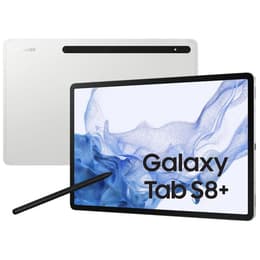
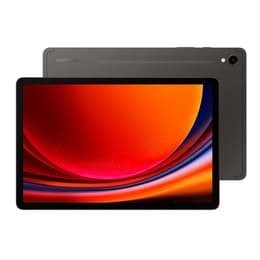

Galaxy Tab S8 (11.0", 2022) vs Galaxy Tab S9 (11.0", 2023)

Galaxy Tab S8 (11.0", 2022)
Starting at

Refurbished price:A$632.00

Versus A$639.00 new

See options
Galaxy Tab S9 (11.0", 2023)
Starting at

Refurbished price:A$869.00

Versus A$2,427.00 new

See options

The Samsung Galaxy Tab S8, released in 2022, and the Samsung Galaxy Tab S9, launched in 2023, represent successive generations of Samsung's flagship Android tablets. While both offer a premium tablet experience with S Pen support and a focus on productivity and entertainment, the Galaxy Tab S9 introduces notable upgrades in display technology, processing power, and durability. Both devices operate on the Android platform, providing a consistent software experience with Samsung's One UI.

Scores

Durability

When considering the longevity of these tablets, several factors come into play, including their release dates, software support, and physical durability.

  • Release Timeline and OS Support: The Galaxy Tab S8 was released in 2022, while the Galaxy Tab S9 followed in 2023. Samsung typically provides several years of major Android OS updates and security updates for its flagship tablets. Since the Tab S9 launched a year later and with Android 13 (compared to the S8's Android 12), it is expected to receive one additional year of major OS updates, extending its software longevity further into the future.
  • Physical Durability: Both tablets feature an Armor Aluminum chassis, contributing to their robust build. A significant difference is the Galaxy Tab S9's IP68 rating for water and dust resistance, a first for the main Galaxy Tab S series. This means the Tab S9 is better protected against accidental spills or exposure to dusty environments, enhancing its practical lifespan in varied usage conditions. The S Pen included with the Tab S9 also carries an IP68 rating. The Tab S8 lacks any official water resistance.
  • Expected Practical Lifespan: Users can expect both tablets to remain functional and receive security updates for a considerable period. However, the Tab S9's extended software support and enhanced ingress protection offer a slightly longer practical lifespan, particularly for users who prioritize maximum software updates and resistance to environmental elements.

Release year

2022

2023

Compatible with latest Update

Yes

Yes

Operating system

Android

Android

Performance

The performance of a tablet is crucial for handling demanding applications, multitasking, and providing a responsive user experience. Both the Galaxy Tab S8 and Tab S9 deliver strong performance, though the newer model offers an upgrade.

  • Processing Power: The Galaxy Tab S8 is equipped with a powerful processor that handles most tasks smoothly, including running multiple applications and playing graphics-intensive games. The Galaxy Tab S9 features a newer generation processor, which provides a modest but meaningful improvement in performance. This translates to even smoother operation, faster app loading times, and enhanced efficiency, particularly noticeable in very demanding applications or during extended gaming sessions.
  • Multitasking and Responsiveness: Both tablets offer ample RAM configurations, allowing for effective multitasking. The Tab S8, with its processor and RAM, ensures a snappy and responsive experience when switching between apps and managing various tasks. The Tab S9, with its upgraded processor and potentially higher RAM configurations in some variants, offers a slight edge in maintaining peak performance under heavier loads, ensuring sustained responsiveness.
  • Battery Behavior: The Galaxy Tab S8 houses an 8,000 mAh battery, providing solid battery life for a full day of mixed usage. The Galaxy Tab S9 comes with a slightly larger 8,400 mAh battery. While the S9's AMOLED display can be more power-hungry, its more efficient processor can help optimize overall battery endurance, potentially leading to comparable or slightly better real-world usage times depending on the tasks.

Memory (GB)

8 GB

12 GB

Processor

Snapdragon 8 Gen 1

Qualcomm SM8550-AC Snapdragon 8 Gen 2

Screen quality

The display is a primary interaction point for tablets, and there are significant differences in screen technology between these two models.

  • Display Technology: The Galaxy Tab S8 features an 11-inch LCD display. While this LCD panel offers good brightness and vibrant colors, it cannot match the contrast and black levels of OLED technology. The Galaxy Tab S9 marks a significant upgrade by incorporating an 11-inch Dynamic AMOLED 2X display. This change brings deeper blacks, higher contrast ratios, and more vibrant colors, enhancing the visual experience for media consumption and creative work.
  • Brightness and Clarity: Both tablets offer a sharp 2560 x 1600 pixel resolution, ensuring clear and detailed visuals. The Tab S8's display can reach a peak brightness suitable for most indoor and some outdoor conditions. The Tab S9's AMOLED panel, however, offers significantly higher peak brightness, particularly for HDR content, which improves visibility in bright environments and enhances the dynamic range of supported media.
  • Refresh Rate and Smoothness: Both the Galaxy Tab S8 and Tab S9 feature an adaptive 120Hz refresh rate. This high refresh rate ensures smooth scrolling, fluid animations, and a responsive experience when interacting with the touch screen and S Pen.

Resolution

1600x2560

1600 x 2560

Pixel density

280ppp

280ppp

Audiovisual

Tablet cameras are generally designed for utility rather than professional photography, focusing on video calls, document scanning, and casual captures. Both the Tab S8 and Tab S9 offer capable camera systems for these purposes.

  • Camera System Capabilities: The Galaxy Tab S8 features a dual-rear camera setup with a 13MP main lens and a 6MP ultrawide lens, alongside a 12MP ultrawide front-facing camera. The Galaxy Tab S9 simplifies its rear camera to a single 13MP main lens, while retaining the 12MP ultrawide front camera. This means the Tab S8 offers more versatility with its ultrawide rear camera.
  • Photography and Video Performance: Both tablets deliver good image quality for video calls, with the front cameras often featuring auto-framing capabilities to keep the user centered. For rear photography, both are suitable for scanning documents or capturing casual photos in good lighting. They can record video at up to 4K resolution. While tablet cameras are not typically designed to rival smartphone cameras, both models perform adequately for their intended use cases.
  • Audio Experience: Both the Galaxy Tab S8 and Tab S9 are equipped with quad stereo speakers tuned by AKG and support Dolby Atmos. This setup provides a rich and immersive audio experience, making them well-suited for media consumption, video calls, and casual gaming.

Miscellaneous

Beyond core performance and display, several other features contribute to the overall user experience and practical utility of these tablets.

  • Connectivity Options: Both the Galaxy Tab S8 and Tab S9 support Wi-Fi 6E for fast wireless internet connections. The Tab S8 features Bluetooth 5.2, while the Tab S9 upgrades to Bluetooth 5.3, offering minor improvements in connectivity efficiency. Both models are available in variants that support 5G cellular connectivity.
  • S Pen and Biometrics: Both tablets come with the S Pen included, providing a versatile tool for note-taking, drawing, and navigation. The Tab S8 features a side-mounted fingerprint scanner. The Tab S9 moves to an under-display fingerprint sensor, offering a more integrated biometric security solution.
  • Design and Portability: Both devices maintain a slim profile and are constructed with an Armor Aluminum frame. The Tab S8 weighs around 503g, and the Tab S9 is slightly lighter at 498g, making both highly portable for their 11-inch screen size. They both utilize a USB-C port for charging and data transfer.

Weight

507 oz

129 oz

Screen size (in)

11.0

11.0

Network

Wi-Fi + 5G

Wi-Fi

Carrier compatibility

Unlocked

Unlocked

Connector

USB Type-C

USB Type-C

User feedback for the Galaxy Tab S8 often praises its robust performance, bright LCD display, and the inclusion of the S Pen as a valuable tool for productivity and creativity. Some users noted that while the LCD was good, it lacked the deep blacks and contrast of AMOLED screens found in other premium tablets. The battery life was generally well-regarded for its endurance. For the Galaxy Tab S9, common praise centers on its vibrant AMOLED display, the enhanced durability provided by the IP68 rating, and the continued strong performance from its updated processor. Some users, however, observed that the battery life, despite a larger capacity, might not always significantly exceed its predecessor due to the more power-intensive AMOLED screen.

Users prioritizing a vibrant, high-contrast display, enhanced durability with water and dust resistance, and the absolute latest in processing power for demanding applications may find the Galaxy Tab S9 to be the more suitable choice. Its AMOLED screen offers a visually richer experience, and the IP68 rating provides peace of mind for use in various environments. Conversely, users seeking a highly capable Android tablet for productivity, media consumption, and creative tasks, who do not require the cutting-edge display technology or water resistance, will find the Galaxy Tab S8 still meets their needs effectively. Both models are available as quality-assured refurbished options, providing an eco-friendly alternative for consumers looking to make informed and sustainable choices.

See all articles

Our recent comparisons