
Galaxy Tab A (8.0", 2018) vs iPad Pro (2020, A12 series)

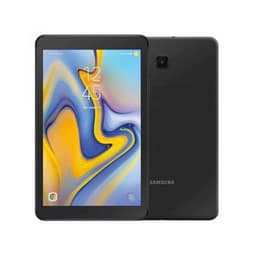
Galaxy Tab A (8.0", 2018)
See options
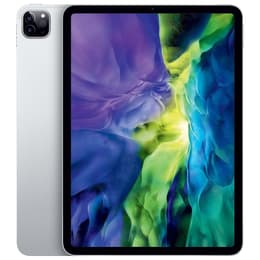
iPad Pro (2020, A12 series)
Starting at

Refurbished price:A$753.00

Versus A$899.00 new

See options

Ratings

The Samsung Galaxy Tab A 8.0 (2018) and the Apple iPad Pro 2020 represent distinct approaches to tablet computing, released in September 2018 and March 2020, respectively. The Galaxy Tab A operates on Android, offering a compact and accessible experience, while the iPad Pro runs on iPadOS, designed for more demanding tasks and a premium user experience. The primary differences lie in their performance capabilities, display technology, and camera systems.

Scores

Durability

The longevity of a tablet is influenced by its initial release date and the manufacturer's software support. The Galaxy Tab A 8.0 (2018), released in September 2018, received updates up to Android 10. The iPad Pro 2020, launched in March 2020, started with iPadOS 13.4 and continues to receive updates, with iPadOS 26.4.1 available as of April 2026. This difference means the iPad Pro 2020 benefits from a longer expected period of software updates.

  • Software Support: The iPad Pro 2020 is expected to receive software updates for a longer duration compared to the Galaxy Tab A 8.0 (2018), which has likely reached the end of its major Android update cycle.
  • Practical Lifespan: Users prioritizing extended software support and access to the latest features will find the iPad Pro 2020 offers a longer practical lifespan.
  • Repairability: The iPad Pro 2020 received a low repairability score of 3 out of 10 from iFixit, indicating challenges in repair procedures due to strong adhesives and complex internal layouts.

Release year

2018

2020

Compatible with latest Update

No

Yes

Operating system

Android

iPadOS

Performance

The performance capabilities of these two tablets cater to different user needs, largely due to their internal components and operating system optimizations. The Galaxy Tab A 8.0 (2018) is equipped for everyday tasks, while the iPad Pro 2020 is designed for intensive applications and multitasking.

  • Everyday Responsiveness: The Galaxy Tab A 8.0 (2018) handles basic web browsing and casual apps adequately, but may experience slower app loading with demanding applications. The iPad Pro 2020 offers significantly faster app launches and smoother transitions, suitable for professional workflows.
  • Storage and Multitasking: The Galaxy Tab A 8.0 (2018) comes with 32GB storage and 2GB RAM, limiting for many files or frequent app switching. The iPad Pro 2020 offers a base storage of 128GB and 6GB RAM, providing ample space and robust multitasking capabilities.
  • Battery Endurance: The Galaxy Tab A 8.0 (2018) features a 5000 mAh battery, providing a full day of moderate use. The iPad Pro 2020, with its larger battery (up to 9720 mAh), offers strong endurance, typically lasting around 10 hours of mixed usage.

Memory (GB)

2 GB

6 GB

Screen quality

The visual experience on these tablets differs considerably, primarily due to their display technology, resolution, and advanced features. The iPad Pro 2020 offers a more advanced and vibrant display compared to the Galaxy Tab A 8.0 (2018).

  • Display Technology and Resolution: The Galaxy Tab A 8.0 (2018) features an 8-inch IPS LCD with 1280 x 800 pixels, providing clear visuals for general use. The iPad Pro 2020, in 11-inch and 12.9-inch sizes, boasts a Liquid Retina IPS LCD with higher resolutions (2388 x 1668 or 2732 x 2048 pixels), offering significantly sharper images.
  • Brightness and Smoothness: The iPad Pro 2020 includes ProMotion technology, enabling an adaptive refresh rate up to 120Hz for exceptionally smooth scrolling and responsive interactions, alongside 600 nits brightness for good outdoor visibility. The Galaxy Tab A 8.0 (2018) has a standard refresh rate and lower brightness.
  • Color Accuracy and Viewing Experience: The iPad Pro 2020 supports wide color (P3) and True Tone technology, resulting in more accurate and natural color reproduction, enhancing the viewing experience for creative work. The Galaxy Tab A 8.0 (2018) provides a standard color gamut.

Resolution

800 x 1280

2388 x 1668

Screen type

IPS LCD

Liquid Retina display

Pixel density

190ppp

264ppp

Audiovisual

The audio and visual capture capabilities are a significant differentiator, with the iPad Pro 2020 offering a more comprehensive and advanced system for both content creation and consumption.

  • Camera System: The Galaxy Tab A 8.0 (2018) includes a 5MP rear camera and a 2MP front camera, suitable for basic photos and video calls. The iPad Pro 2020 features a dual-camera system on the rear (12MP Wide and 10MP Ultra-Wide) along with a LiDAR scanner for enhanced augmented reality. Its 7MP TrueDepth front camera is designed for high-quality video calls and secure facial recognition.
  • Photography and Video Recording: The iPad Pro 2020 delivers sharper and more detailed photos and supports 4K video recording at up to 60 frames per second, offering more versatility for creative users. The Galaxy Tab A 8.0 (2018) records video at 1080p at 30 frames per second.
  • Audio Experience: The iPad Pro 2020 is equipped with a four-speaker audio system that adjusts sound based on orientation, providing a rich and immersive audio experience. It also features five studio-quality microphones for clear audio recording. The Galaxy Tab A 8.0 (2018) has a single speaker, offering a more basic audio output.

Miscellaneous

Beyond core performance and display, several practical features contribute to the overall user experience and device utility, including connectivity, physical ports, and biometric security.

  • Connectivity Standards: The Galaxy Tab A 8.0 (2018) supports Wi-Fi 802.11 a/b/g/n (Wi-Fi 4) and Bluetooth 4.2. The iPad Pro 2020 features more advanced Wi-Fi 6 (802.11ax) and Bluetooth 5.0, offering faster and more stable wireless connections. Both offer optional LTE, but the iPad Pro 2020 also supports 5G in cellular models.
  • Ports and Sensors: The Galaxy Tab A 8.0 (2018) includes a microUSB 2.0 port, a 3.5mm headphone jack, and an accelerometer. The iPad Pro 2020 utilizes a versatile USB-C port for charging, data, and external display output, but lacks a traditional headphone jack. It incorporates advanced sensors like Face ID, a LiDAR scanner, and a three-axis gyro.
  • Design and Build: The Galaxy Tab A 8.0 (2018) has a more traditional tablet design with thicker bezels and a plastic build, weighing 358g. The iPad Pro 2020 features a modern, slim design with thinner bezels, an aluminum frame, and a glass front, weighing between 471g and 643g.

Weight

358 oz

471 oz

Screen size (in)

8.0

11

Network

Wi-Fi + 4G

Wi-Fi

Carrier compatibility

Unlocked

Without SIM Port

User sentiment for the Galaxy Tab A 8.0 (2018) often highlights its reliability as a basic, portable tablet for media consumption and light tasks, with praise for its battery life and expandable storage. Criticisms typically revolve around its modest performance and lower-resolution display compared to more premium devices. The iPad Pro 2020 is frequently lauded for its powerful performance, vibrant display with ProMotion, and advanced camera system, making it a strong tool for creative professionals and power users. Common concerns include its larger size (especially the 12.9-inch model) and the ecosystem's reliance on accessories for a full "laptop-like" experience.

Users prioritizing a compact, straightforward tablet for casual browsing, email, and video streaming will find the Galaxy Tab A 8.0 (2018) well-suited to their needs. Conversely, users who require robust performance for demanding applications, high-quality content creation, advanced display features, and a longer software support window will lean toward the iPad Pro 2020. Both devices offer distinct experiences, and choosing between them depends on the intended use case and feature priorities. For those seeking a more sustainable choice, considering a quality-assured refurbished option for either model can be an eco-friendly alternative.

See all articles

Our recent comparisons