
Compare models
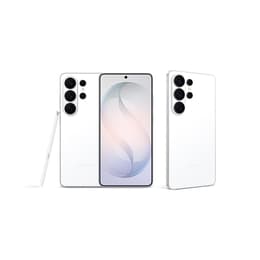
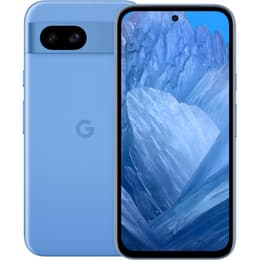
Galaxy S26 Ultra vs Google Pixel 8a
- 1-year warranty
- Free standard shipping
- Free 30-day returns
Differences at a glance
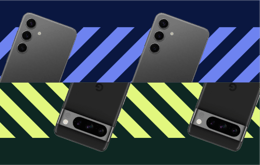
The Samsung Galaxy S26 Ultra (2026) and the Google Pixel 8a (2024) represent two distinct tiers and release periods in the modern smartphone landscape. While the Galaxy S26 Ultra functions as a feature-rich flagship device with a large workspace, the Google Pixel 8a serves as a streamlined, compact alternative focusing on essential everyday tasks. Both run on the Android operating system, though they deliver vastly different physical dimensions and capabilities tailored to contrasting user needs.
Available Models
Colour
Storage
Scores
Durability
When examining longevity and durability, both devices offer robust software support timelines and reliable build quality designed for extended daily use.
- Software support duration: The Galaxy S26 Ultra benefits from a recent 2026 release and extensive update commitments, whereas the Pixel 8a features a 2024 launch date while matching extended multi-year security and platform update schedules.
- Build materials and repairability: The Galaxy S26 Ultra utilizes reinforced glass and titanium framing with high-tier water resistance, while the Pixel 8a employs a matte plastic back and aluminum frame with standard water resistance.
- Expected practical lifespan: Both models maintain high physical durability, though the newer hardware components in the Galaxy S26 Ultra provide additional headroom for long-term software evolution.
Release year
2026
2024
Operating system
Android
Android
Foldable
No
No
Performance
Under everyday workloads, both smartphones handle multitasking, communication apps, and media streaming smoothly while utilizing different internal memory configurations and battery capacities.
- Processor capabilities: The Galaxy S26 Ultra handles demanding 3D gaming and heavy multi-window multitasking effortlessly, while the Pixel 8a manages routine web browsing, social media, and standard applications reliably.
- Memory and storage configurations: The Galaxy S26 Ultra offers high-capacity RAM paired with spacious internal storage options, whereas the Pixel 8a provides moderate memory configurations suitable for standard daily workloads.
- Battery behavior: The Galaxy S26 Ultra includes a large battery pack designed to easily sustain extended periods of heavy use, while the Pixel 8a features a smaller battery capacity that typically requires a daily recharge under intensive usage conditions.
Screen quality
Display characteristics differ significantly between the two models in terms of physical size, maximum brightness, and viewing space.
- Display technology and size: The Galaxy S26 Ultra features an expansive 6.9-inch OLED display providing a wide canvas for productivity, whereas the Pixel 8a uses a compact 6.1-inch OLED screen suited for one-handed operation.
- Refresh rate and smoothness: Both devices support fluid high refresh rates up to 120Hz, ensuring smooth scrolling through web pages and documents.
- Outdoor visibility: Both screens offer high peak brightness levels, allowing content to remain legible and clear even under direct sunlight.
Resolution
1440x3120
1080 x 2400
Audiovisual
Optics and media playback capabilities vary to match the distinct market positioning of each device.
- Camera system versatility: The Galaxy S26 Ultra includes a quad-lens array featuring advanced telephoto zoom capabilities for distant subjects, while the Pixel 8a relies on a dual-lens setup focused on computational photography for everyday snapshots.
- Video and low-light performance: The Galaxy S26 Ultra captures detailed high-resolution video across multiple focal lengths, whereas the Pixel 8a excels at balanced everyday video recording and automated low-light photo enhancement.
- Audio output: Both models feature stereo speaker configurations that deliver clear sound for hands-free calls and casual media consumption.
Miscellaneous
Practical daily usability elements, connectivity standards, and physical dimensions shape how each phone fits into daily routines.
- Connectivity options: Both smartphones support modern 5G networks, fast Wi-Fi standards, and Bluetooth for accessories.
- Biometrics and security: The Galaxy S26 Ultra uses an ultrasonic under-display fingerprint reader and facial recognition, while the Pixel 8a utilizes an optical fingerprint scanner and face unlock.
- Physical handling: The Galaxy S26 Ultra has a larger, heavier footprint that accommodates an integrated stylus, whereas the Pixel 8a offers a lighter, smaller profile that is easy to pocket and hold for long periods.
Weight
214 oz
188 oz
Screen size (in)
6.9
6.1
Network
5G
5G
SIM card
Physical SIM + eSIM
Physical SIM + eSIM
Carrier compatibility
Unlocked
Unlocked
What the community thinks
User feedback from online communities highlights distinct preferences for each device based on lifestyle and utility. Users frequently praise the Galaxy S26 Ultra for its expansive screen real estate, versatile camera zoom, and reliable all-day battery endurance during intensive tasks. Conversely, owners of the Pixel 8a frequently commend its compact handling, straightforward software interface, and dependable everyday performance. Some users note that the Galaxy S26 Ultra can feel bulky in smaller pockets, while others mention that the Pixel 8a has more modest charging speeds.
Users prioritizing maximum screen space, advanced camera zoom features, and high-performance multitasking will find the Galaxy S26 Ultra well-suited to their needs. Meanwhile, users prioritizing a compact form factor, simpler daily handling, and a streamlined experience may lean toward the Pixel 8a. For those exploring sustainable purchasing options, choosing a quality-assured refurbished option provides an eco-friendly alternative that extends device life cycles without compromising performance standards.