
Galaxy S25 vs Motorola Razr 40

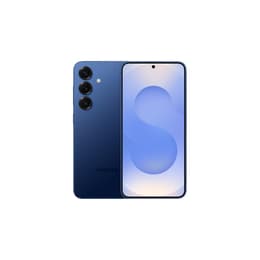
Galaxy S25
Galaxy S25
Starting at

Refurbished price:A$855.00

Versus A$1,399.00 new

See options
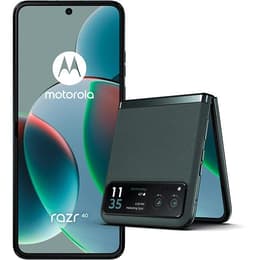
Motorola Razr 40
Motorola Razr 40
See options

Ratings

The Samsung Galaxy S25, released in February 2025, represents a modern flagship smartphone with a traditional slab design, offering advanced internal components and extensive software support. In contrast, the Motorola Razr 40, launched in June 2023, is a foldable clamshell smartphone that prioritizes a compact form factor and a unique user experience. These devices cater to different preferences, with the Galaxy S25 focusing on raw performance and longevity, while the Razr 40 emphasizes portability and a distinct design.

Scores

Durability

The expected practical lifespan of a smartphone is significantly influenced by its release timeline, software support, and physical durability features.

  • Release Timeline and OS Support: The Galaxy S25, released in February 2025, benefits from Samsung's commitment to providing seven years of Android OS upgrades and seven years of security updates, launching with Android 15. This extended support ensures the device remains current and secure for a considerable period. The Motorola Razr 40, released in June 2023 with Android 13, is slated to receive three major Android OS upgrades and four years of bi-monthly security updates, meaning it will update up to Android 16.
  • Durability and Repairability: The Galaxy S25 features an IP68 rating, indicating it is dust-tight and can withstand submersion in up to 1.5 meters of fresh water for 30 minutes. It is constructed with Gorilla Glass Victus 2 on both the front and back, along with an Armor Aluminum frame, contributing to its overall robustness. The Motorola Razr 40 has an IP52 rating, offering protection against light splashing water and dust ingress, and features a water-repellent coating. Its foldable design introduces a hinge mechanism and a flexible internal screen, which present different considerations for long-term durability compared to a rigid slab phone.
  • Expected Practical Lifespan: Users prioritizing the longest possible software longevity and robust water and dust protection will find the Galaxy S25's offerings more extensive. The Razr 40, while offering a unique form factor, has a shorter software support window and a lower ingress protection rating, which might influence its practical lifespan for users in demanding environments.

Release year

2025

2023

Operating system

Android

Android

Foldable

No

Yes

Performance

Performance differences between these two devices are notable, largely due to their respective release dates and target segments.

  • Processor Capabilities: The Galaxy S25 is equipped with a current-generation processor, the Snapdragon 8 Elite for Galaxy, which provides substantial power for demanding applications and multitasking. This allows for smooth operation, efficient handling of complex tasks, and a responsive user experience. The Motorola Razr 40 utilizes a mid-range processor, the Qualcomm Snapdragon 7 Gen 1. While capable for everyday use, it offers less performance headroom compared to the Galaxy S25's flagship-tier chip.
  • System Responsiveness and Multitasking: With its powerful processor and typically higher RAM configurations (12GB), the Galaxy S25 handles multiple applications simultaneously and transitions between them with fluidity. Users can expect quick app loading times and a generally seamless experience, even with graphically intensive games. The Razr 40, with 8GB or 12GB of RAM, provides adequate performance for general smartphone tasks and moderate multitasking, but may exhibit slower loading times or less consistent frame rates in very demanding applications or games.
  • Battery Behavior: The Galaxy S25 features a 4000 mAh battery, which, combined with its efficient processor, can provide a full day of use for many users under light to moderate conditions. Heavy usage, such as extended gaming or 4K video recording, will naturally reduce battery life more quickly. The Motorola Razr 40 has a 4200 mAh battery. Despite its larger capacity, some users report that its less efficient processor can lead to comparable or even slightly less endurance than devices with more optimized chipsets, particularly under heavy load.

Memory (GB)

12 GB

8 GB

Screen quality

The display experience on these two smartphones differs significantly due to their form factors and display technologies.

  • Display Technology and Clarity: The Galaxy S25 features a 6.2-inch Dynamic LTPO AMOLED 2X display with an FHD+ resolution (2340x1080 pixels). This technology delivers deep blacks, vibrant colors, and excellent contrast, providing a clear and immersive viewing experience for various content. The Motorola Razr 40 boasts a 6.9-inch foldable LTPO AMOLED main display with a resolution of 1080x2640 pixels. Its flexible nature allows for the unique clamshell design, and the LTPO technology enables adaptive refresh rates.
  • Brightness and Refresh Rate: The Galaxy S25's display can reach a peak brightness of up to 2600 nits, ensuring good visibility even in bright outdoor conditions. It also offers a 120Hz refresh rate for smooth scrolling and responsive interactions. The Razr 40's main display has a 144Hz refresh rate, contributing to very smooth operation, and a peak brightness of 1400 nits, which is generally sufficient for most indoor and outdoor environments.
  • Screen Size and Viewing Experience: The Galaxy S25 offers a compact and traditional smartphone screen, well-suited for one-handed use and general media consumption. The Razr 40's larger 6.9-inch foldable display provides an expansive canvas when unfolded, ideal for media viewing and productivity tasks. It also features a smaller 1.5-inch AMOLED cover display for quick glances at notifications and essential information without opening the phone.

Resolution

1080x2340

1080 x 2640

Audiovisual

The camera systems on the Galaxy S25 and Motorola Razr 40 offer different capabilities and user experiences.

  • Rear Camera System: The Galaxy S25 features a versatile triple-camera setup on the rear, including a 50MP wide-angle lens, a 10MP telephoto lens, and a 12MP ultrawide lens. This configuration allows for a range of photographic options, from detailed wide shots to optical zoom. The Motorola Razr 40 is equipped with a dual-camera system on the rear, comprising a 64MP wide-angle lens with optical image stabilization (OIS) and a 13MP ultrawide lens.
  • Photography Performance: Users generally report the Galaxy S25's camera to deliver dependable quality with vibrant and detailed photos, though some comparisons suggest it might have compromises in dynamic range, low-light exposure, and color accuracy compared to some competitors. The Razr 40's main camera can capture nice shots with good sharpness in adequate lighting, but may not match the detail and overall quality of high-end smartphones, particularly in challenging conditions. Its HDR optimization can sometimes be inconsistent.
  • Video Recording and Front Camera: The Galaxy S25 supports video recording up to 8K at 30 frames per second, with strong performance in 1080p and 4K modes, and features a 12MP front camera. The Razr 40 can record videos in 4K at a maximum of 30 frames per second, with 60 frames per second available at lower resolutions. Its video stabilization is noted to be less effective than some higher-end devices, potentially due to processor limitations. It includes a 32MP front camera.

Miscellaneous

Beyond core performance and display, several practical elements differentiate these two smartphones in daily use.

  • Connectivity and Ports: Both devices support 5G connectivity, ensuring access to modern cellular networks. The Galaxy S25 features Bluetooth 5.4, while the Razr 40 uses Bluetooth 5.3. Both phones utilize USB-C for charging and data transfer.
  • Biometric Security and Sensors: The Galaxy S25 incorporates an ultrasonic in-screen fingerprint sensor for secure and convenient unlocking. The Motorola Razr 40 features a side-mounted fingerprint sensor. Both devices also offer face unlock capabilities.
  • Design and Handling: The Galaxy S25 has a traditional slab design, measuring 146.9mm x 70.5mm x 7.2mm and weighing 162g. Users often describe it as light and comfortable to hold. The Motorola Razr 40's clamshell design allows it to fold into a compact form (88.2 x 74 x 15.8 mm) from an unfolded state of 170.8 x 74 x 7.4 mm, weighing 188.6g. This makes it highly portable when folded, fitting easily into smaller pockets. The Razr 40 also features stereo speakers for an enhanced audio experience.

Weight

162 oz

189 oz

Screen size (in)

6.2

6,9

Network

5G

5G

SIM card

Physical SIM + eSIM

Dual Physical SIM + eSIM

Carrier compatibility

Unlocked

Unlocked

The Samsung Galaxy S25 and Motorola Razr 40 cater to distinct user preferences, each offering a unique set of advantages. The Galaxy S25 is often praised for its powerful performance, driven by a current-generation processor, and its extensive software support, promising seven years of updates. Users appreciate its bright and vibrant display, comfortable in-hand feel, and dependable camera system. Criticisms sometimes point to its camera, while capable, not always matching the absolute best in certain conditions, and its charging speeds being average.

The Motorola Razr 40 receives commendation for its innovative foldable design, offering a compact and stylish form factor when closed. Its large internal display and functional cover screen are also frequently highlighted as positive aspects. However, common concerns include its mid-range processor, which can lead to less fluid performance in demanding tasks compared to flagship devices, and its camera system, which, while good for everyday use, may not satisfy users seeking top-tier photography. Its IP52 rating also offers less water and dust protection than many traditional smartphones.

Users prioritizing cutting-edge performance, long-term software support, and robust durability in a traditional smartphone form factor may find the Samsung Galaxy S25 well-suited to their needs. Conversely, individuals who value a highly portable, unique design, and a distinct user experience, and who engage in moderate smartphone usage, might lean towards the Motorola Razr 40. Both devices, especially when considering a quality-assured refurbished option, provide an eco-friendly alternative for consumers looking to make informed and sustainable choices.


See all articles

Our recent comparisons