
Compare models

Galaxy S25 vs Galaxy Z Fold7

  • 1-year warranty
  • Free standard shipping
  • Free 30-day returns
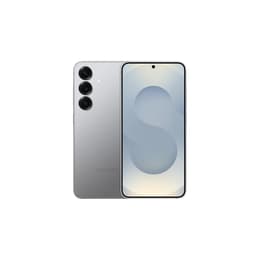
Galaxy S25
Starting at

Refurbished price:A$748.00

Versus A$1,399.00 new

See options
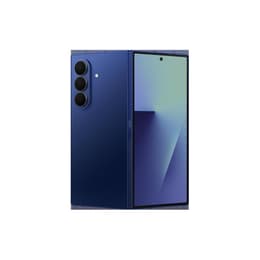
Galaxy Z Fold7
Starting at

Refurbished price:A$1,300.00

Versus A$2,499.00 new

See options

Differences at a glance

The Samsung Galaxy S25 (2025) and the Samsung Galaxy Z Fold7 (2025) represent two distinct approaches to modern mobile engineering within Samsung's smartphone lineup. While the Galaxy S25 follows a traditional slate form factor focused on compact daily usability, the Galaxy Z Fold7 introduces a book-style foldable design that transforms from a standard handheld phone into a tablet-sized workspace. Both devices run on Android and share core generational processing technology, but their physical design and display capabilities set them apart for different everyday workflows.

Available Models

Colour

Storage (GB)

Scores

Durability

Both devices launched in 2025, positioning them similarly regarding generational release age, software support timelines, and hardware resilience.

  • Software longevity: Both models benefit from extended software update commitments, ensuring years of regular security patches and system upgrades.
  • Repairability and physical resilience: The Galaxy S25 relies on a traditional solid-state chassis with standard water-resistance ratings, while the Galaxy Z Fold7 incorporates a complex hinge mechanism requiring careful handling over long-term multi-year deployment.
  • Expected practical lifespan: Traditional slate devices like the Galaxy S25 generally experience fewer mechanical stress points over time compared to foldable alternatives like the Galaxy Z Fold7.

Release year

2025

2025

Operating system

Android

Android

Foldable

No

Yes

Performance

Equipped with current-generation hardware architecture, both devices handle intensive daily operations, multitasking, and mobile gaming with high efficiency.

  • Storage configurations: Both models provide flexible internal storage tiers starting from baseline capacities up to extensive room for large file libraries.
  • Multitasking and system speed: The Galaxy Z Fold7 typically pairs its processing power with higher baseline RAM to support running multiple apps simultaneously on its expansive screen, whereas the Galaxy S25 balances quick app switching with a streamlined single-screen interface.
  • Battery behavior: The Galaxy S25 features a smaller physical footprint housing a compact battery capacity suited for standard daily routines, while the Galaxy Z Fold7 manages a larger energy reserve to support its dual-screen configuration during heavy multi-window use.

Screen quality

Display technology represents the most prominent operational difference between the two models, changing how media and documents are consumed.

  • Display architecture: The Galaxy S25 utilizes a single, vibrant OLED panel with sharp pixel density, while the Galaxy Z Fold7 features a flexible inner OLED screen paired with a wider, practical outer cover display.
  • Brightness and outdoor visibility: Both models achieve high peak brightness levels to maintain clear legibility under bright ambient daylight.
  • Refresh rate and fluidity: Both screens support adaptive high refresh rates, ensuring smooth scrolling through web pages, system menus, and supported applications.

Resolution

1080x2340

1968x2184

Audiovisual

Imaging capabilities across both devices deliver reliable photography and video performance for everyday moments and travel memories.

  • Camera hardware: The Galaxy Z Fold7 incorporates a high-resolution main sensor alongside versatile ultra-wide and optical zoom lenses, while the Galaxy S25 employs a balanced multi-lens array tuned for everyday capture reliability.
  • Low-light and video performance: Advanced image processing engines on both smartphones help reduce visual noise in dimly lit environments and stabilize handheld video recording.
  • Media consumption and audio: The Galaxy Z Fold7 provides an immersive stereo speaker output optimized for widescreen video playback when unfolded, whereas the Galaxy S25 offers clear, focused audio suited for casual media listening and voice calls.

Miscellaneous

Physical dimensions and connectivity standards define how comfortably each device integrates into pockets, bags, and daily travel routines.

  • Connectivity standards: Both smartphones support fast 5G cellular networks, modern Wi-Fi protocols, and dependable Bluetooth accessory pairing.
  • Biometrics and ports: Each model utilizes secure biometric authentication methods alongside reversible USB-C ports for charging and data transfer.
  • Size and handling: The Galaxy S25 offers a lightweight, narrow slate build that easily fits into small pockets, whereas the Galaxy Z Fold7 is noticeably wider when opened and heavier to carry due to its folding screen mechanism.

Weight

162 oz

215 oz

Screen size (in)

6.2

8.0

Network

5G

5G

SIM card

Physical SIM + eSIM

Dual Physical SIM + eSIM

Carrier compatibility

Unlocked

Unlocked

What the community thinks

User feedback from public forums indicates that the Galaxy S25 receives frequent praise for its lightweight ergonomics, reliable everyday battery life, and pocket-friendly dimensions. Common discussions note that its traditional form factor appeals to users who want a straightforward, no-fuss mobile experience. On the other hand, users frequently highlight the Galaxy Z Fold7 for its transformative multitasking space and expansive viewing area, though some community discussions note the heavier weight and folded thickness as routine trade-offs.

Users prioritizing pocket convenience, simple one-handed operation, and a lightweight build will find the Galaxy S25 well-suited to their daily needs. Conversely, users prioritizing a tablet-sized workspace for document editing, split-screen multitasking, and immersive media consumption may lean toward the Galaxy Z Fold7. For those aiming to make an eco-conscious purchasing decision, exploring quality-assured refurbished options provides a sustainable choice that extends device lifecycles without compromising on modern performance standards.