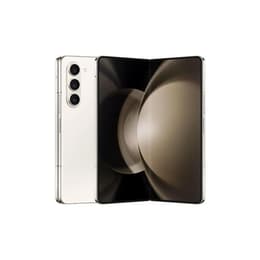

Galaxy S25 vs Galaxy Z Fold5

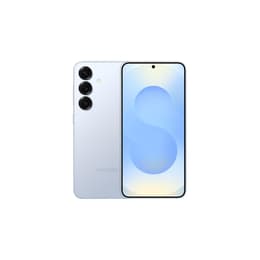
Galaxy S25
Galaxy S25
Starting at

Refurbished price:A$855.00

Versus A$1,399.00 new

See options
Galaxy Z Fold5
Galaxy Z Fold5
Starting at

Refurbished price:A$759.00

Versus A$1,194.95 new

See options

Ratings

The Samsung Galaxy S25, released in early 2025, represents the latest iteration of Samsung's traditional flagship smartphone line, offering a refined experience in a familiar form factor. In contrast, the Samsung Galaxy Z Fold5, launched in mid-2023, stands out with its innovative foldable design, transforming from a compact smartphone into a larger tablet-like display. These devices cater to different user preferences, primarily distinguished by their form factor and the unique functionalities that arise from it, both running on the Android operating system with Samsung's One UI overlay.

Scores

Durability

When considering the longevity of these devices, several factors come into play, including their release timelines, software support, and physical resilience.

  • Software Support: The Galaxy S25 benefits from Samsung's extended commitment to software updates, promising seven generations of Android OS upgrades and seven years of security updates, starting with Android 15. This means the S25 is expected to receive updates up to Android 22, with support concluding around 2032. [3, 8, 43] The Galaxy Z Fold5, released earlier, typically follows Samsung's previous policy of around four to five years of major OS updates and security patches, starting with Android 13. [22]
  • Physical Durability: The Galaxy S25 (and S25+) features an aluminum body and Gorilla Glass Victus 2 on both the front and back, providing robust protection against everyday wear and tear. [1, 20] The S25 Ultra variant further enhances durability with a titanium frame and Gorilla Glass Armor 2. [1, 38, 39] The Galaxy Z Fold5, while featuring Gorilla Glass Victus 2 on its cover screen and an IPX8 water resistance rating, [10, 22] introduces the complexities of a folding mechanism and a flexible main display, which inherently presents different durability considerations compared to a traditional slab phone.
  • Repairability: The Galaxy S25 Ultra has shown improvements in repairability, earning a provisional iFixit score of 5 out of 10, partly due to easier battery swaps and modular camera components. [4, 6, 9, 11, 12] While specific repairability scores for the Z Fold5 are less common, foldable devices generally present more intricate repair challenges due to their complex hinge designs and dual-screen architecture.

Release year

2025

2023

Operating system

Android

Android

Foldable

No

Yes

Performance

The performance of both devices is driven by powerful processors, though they belong to different generations, impacting their overall responsiveness and efficiency.

  • Processing Power: The Galaxy S25 is equipped with the Snapdragon 8 Elite, a custom version of Qualcomm's latest flagship chipset, manufactured on a 3nm process. [1] This processor delivers enhanced speeds and efficiency, ensuring smooth operation for demanding applications and multitasking. [18] The Galaxy Z Fold5 utilizes the Snapdragon 8 Gen 2 for Galaxy, which was a top-tier processor at its release, providing robust performance for a wide range of tasks and optimized for the foldable form factor. [2, 17, 22, 29, 32]
  • Multitasking and Storage: The Galaxy S25 offers 8GB of RAM in its base model, with 12GB available in the S25+ and S25 Ultra variants, supporting efficient multitasking. [16, 30] Storage options for the S25 range from 128GB to 512GB. [5, 16, 30] The Galaxy Z Fold5 comes with a generous 12GB of RAM as standard, facilitating seamless transitions between numerous open applications, and offers storage configurations up to 1TB. [2, 17, 22, 29, 32]
  • Battery Behavior: The standard Galaxy S25 features a 4000 mAh battery, capable of lasting a full day with mixed usage, typically providing around six hours of screen-on time. [5, 7, 16, 20, 44] The Galaxy Z Fold5 has a 4400 mAh battery, which generally offers decent battery life for a full day of use, considering its dual-screen functionality. [2, 10, 19, 32]

Memory (GB)

12 GB

12 GB

Screen quality

The display experience is a primary differentiator, with the Galaxy S25 offering a traditional, high-quality flat screen, while the Z Fold5 provides a unique, expansive foldable display.

  • Display Technology and Clarity: The Galaxy S25 features a 6.2-inch Dynamic LTPO AMOLED 2X display with a resolution of 2340 x 1080 pixels, delivering sharp text and vibrant colors. [1, 5, 16, 18, 20, 21, 30, 33] The Galaxy Z Fold5 boasts a 7.6-inch foldable Dynamic AMOLED 2X main screen with a higher resolution of 2176 x 1812 pixels, offering an immersive viewing experience. [2, 17, 22, 29, 32, 34] Its cover screen is a 6.2-inch Dynamic AMOLED 2X display with a resolution of 2316 x 904 pixels. [17, 22, 32, 34]
  • Brightness and Smoothness: Both devices feature a 120Hz adaptive refresh rate, ensuring smooth scrolling and responsive interactions. [1, 17, 22, 29, 30, 32, 34] The Galaxy S25's display can reach a peak brightness of up to 2600 nits, providing excellent visibility even in bright outdoor conditions. [1, 18, 21, 30, 33] The Z Fold5's main display offers a peak brightness of 1750 nits, which is also suitable for outdoor use. [32]
  • Viewing Experience: The Galaxy S25 provides a consistent, high-quality viewing experience on a single, durable screen. The Z Fold5 offers the versatility of a large, tablet-like display for media consumption and productivity when unfolded, alongside a functional cover screen for quick tasks. A visible crease is present on the Z Fold5's main foldable screen. [34]

Resolution

1080x2340

1812x2176

Audiovisual

Both smartphones offer capable camera systems, but their strengths and features are tailored to their respective designs and target users.

  • Rear Camera Systems: The Galaxy S25 features a triple rear camera setup, including a 50 MP wide-angle main sensor with optical image stabilization (OIS), a 12 MP ultra-wide camera, and a 10 MP telephoto lens with 3x optical zoom. [1, 5, 15, 20, 21, 24] The Galaxy Z Fold5 also has a triple rear camera system, comprising a 50 MP wide-angle main sensor with OIS, a 12 MP ultra-wide camera, and a 10 MP telephoto lens with 3x optical zoom. [10, 14, 17, 22, 23, 26, 32] While the hardware specifications appear similar, the S25 benefits from a newer processor and Samsung's ProVisual Engine, which enhances image processing, natural skin tones, and low-light performance. [15, 24]
  • Photography Performance: The S25's main camera performs well in daylight, capturing natural colors and balanced dynamic range, with good portrait shots and sharp selfies. [27] Its 3x zoom is effective in good lighting, and low-light photos from the main sensor are decent with Night mode. [27] The Z Fold5 delivers good point-and-shoot results in ample lighting, producing warm and vibrant images, though some users might find the colors oversaturated. [10] Its main camera is generally preferred for night shots. [10]
  • Video and Selfie Capabilities: Both devices support video recording up to 8K resolution at 30 frames per second from their main cameras. [10, 14, 20, 24, 32] The S25 also introduces LOG video mode for advanced color grading. [24] For selfies, the S25 has a 12 MP front-facing camera. [1, 15, 20, 21] The Z Fold5 has a 10 MP selfie camera on its cover screen and a 4 MP under-display camera on its main foldable screen, with the latter being primarily suited for video calls rather than high-quality photos. [10, 14, 17, 22, 23]

Miscellaneous

Beyond core specifications, several practical elements contribute to the overall user experience and differentiate these two Samsung smartphones.

  • Connectivity and Ports: Both the Galaxy S25 and Galaxy Z Fold5 support 5G connectivity and modern Wi-Fi standards, including Wi-Fi 6 (ax), ensuring fast and reliable wireless communication. [2] Both devices feature a USB-C port for charging and data transfer, which is standard across contemporary Samsung flagships.
  • Biometric Security: The Galaxy S25 incorporates an ultrasonic in-screen fingerprint sensor for secure and convenient unlocking. [1] The Galaxy Z Fold5 typically uses a side-mounted fingerprint sensor integrated into the power button. Both devices also offer face recognition for unlocking.
  • Design and Handling: The Galaxy S25, with its traditional slab design, is lighter and more compact, with the base model weighing 162.0g and measuring 146.9 x 70.5 x 7.2 mm. [20] This makes it easier for one-handed use and pocketability. The Galaxy Z Fold5, while being the thinnest and lightest Fold to date at 253g, [17, 22, 32] has a significantly different form factor. When folded, it measures 67.1 x 154.9 x 13.4mm, and when unfolded, it expands to 129.9 x 154.9 x 6.1mm. [17] This larger, heavier design, especially when unfolded, offers a different handling experience, favoring a two-handed approach for its main display.

Weight

162 oz

253 oz

Screen size (in)

6.2

7.6

Network

5G

5G

SIM card

Physical SIM + eSIM

Physical SIM + eSIM

Carrier compatibility

Unlocked

Unlocked

The choice between the Samsung Galaxy S25 and the Galaxy Z Fold5 largely depends on individual priorities regarding form factor, longevity, and usage patterns. Users who prioritize a traditional, compact smartphone experience with the latest processing power and an extended software support timeline will find the Galaxy S25 well-suited to their needs. Its robust camera system, bright display, and commitment to seven years of updates make it a compelling option for those seeking a long-lasting, reliable device. [3, 8, 43]

On the other hand, the Galaxy Z Fold5 caters to users who desire the versatility of a large, tablet-like display in a portable format. Its unique folding mechanism offers enhanced screen real estate for productivity, media consumption, and creative tasks, making it ideal for those who frequently multitask or enjoy an expansive viewing experience on the go. While its software support is not as extensive as the S25, its innovative design and powerful performance remain attractive. [10, 22]

Common user sentiment for the Galaxy S25 often praises its overall performance, improved camera capabilities, and the significant commitment to software updates, which enhances its long-term value. [18, 27] Some users, however, might note that the camera hardware, while improved by software, doesn't always represent a massive leap from previous generations in the base model. [24, 31] For the Galaxy Z Fold5, users frequently highlight the immersive main display and the practical benefits of its foldable design for multitasking. [29, 32] Criticisms sometimes point to the visible crease on the main screen and the less-than-ideal quality of the under-display camera. [10, 14, 34]

Ultimately, if a cutting-edge, long-supported traditional smartphone is the goal, the Galaxy S25 is a strong contender. If the flexibility of a large, foldable screen for enhanced productivity and entertainment is paramount, the Galaxy Z Fold5 offers a distinct advantage. Both devices, whether new or as a quality-assured refurbished option, provide a premium Android experience, allowing consumers to make an informed and sustainable choice.


See all articles

Our recent comparisons