
Compare models

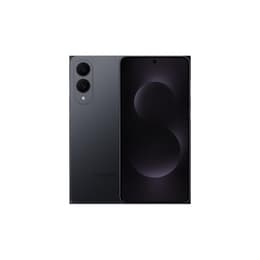
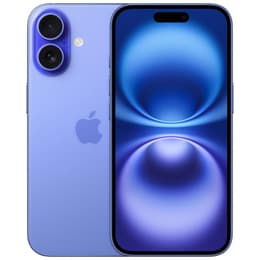
Galaxy S25 Edge vs iPhone 16

  • 1-year warranty
  • Free standard shipping
  • Free 30-day returns
Galaxy S25 Edge
Starting at

Refurbished price:A$799.00

Versus A$2,149.00 new

See options
iPhone 16
Starting at

Refurbished price:A$953.00

Versus A$1,349.00 new

See options

Differences at a glance

The Samsung Galaxy S25 Edge (2025) and the Apple iPhone 16 (2024) represent two distinct approaches to modern flagship smartphone design, catering to users seeking portable computing power. While the Galaxy S25 Edge focuses on an exceptionally slender profile and an expansive display, the iPhone 16 centers its experience on a compact form factor backed by optimized hardware. These devices operate on different software ecosystems—Android and iOS respectively—influencing their interface design and app integration.

Available Models

Colour

Storage (GB)

Scores

Durability

Both manufacturers support their hardware with long-term software updates, though their release schedules and hardware resilience shape different expectations for longevity.

  • Software longevity: Both devices receive multi-year operating system updates and security patches, helping maintain software relevance over an extended ownership period.
  • Build resilience: The Galaxy S25 Edge utilizes a titanium frame and reinforced glass, whereas the iPhone 16 employs aerospace-grade aluminum and color-infused back glass with scratch-resistant front shielding.
  • Repair infrastructure: Both manufacturers provide structured repair programs and component availability, influencing how easily screens or batteries can be replaced over time. For those seeking a quality-assured refurbished option, both models maintain steady parts availability through independent and manufacturer channels.

Release year

2025

2024

Foldable

No

No

Performance

Everyday system responsiveness and multitasking capabilities differ due to varying memory capacities and internal system architectures across both ecosystems.

  • App loading and multitasking: The Galaxy S25 Edge features ample random access memory to keep multiple demanding applications active simultaneously, while the iPhone 16 relies on tightly integrated hardware and software efficiency to manage background tasks smoothly.
  • Storage configurations: Base storage tiers differ between the models, impacting how many media files and offline applications can be stored locally without cloud reliance.
  • Battery behavior: The Galaxy S25 Edge balances its slim chassis against a moderate battery capacity requiring daily charging under heavy workloads, whereas the iPhone 16 optimizes power consumption to sustain standard daily usage patterns.

Screen quality

Display characteristics vary significantly in physical dimensions, maximum brightness output, and panel technology, directly affecting media consumption and readability.

  • Display size and immersion: The Galaxy S25 Edge offers a larger 6.7-inch panel well-suited for split-screen multitasking and media viewing, while the iPhone 16 provides a more compact 6.1-inch screen that improves one-handed reachability.
  • Panel clarity: Both models use advanced OLED display technology that delivers deep black levels, high contrast ratios, and sharp text rendering for daily reading.
  • Outdoor visibility: High peak brightness levels on both screens ensure content remains legible under direct sunlight, supported by adaptive refresh rates that scale down during static viewing to conserve power.

Resolution

1440x3120

1179 x 2556

Audiovisual

Optics and media capture capabilities emphasize different sensor resolutions and software processing styles for photography and video recording.

  • Still photography: The Galaxy S25 Edge incorporates a high-resolution main sensor capable of capturing fine details in daylight, while the iPhone 16 utilizes a dual-lens system optimized for balanced color reproduction and consistent low-light performance.
  • Video recording: Both devices offer stable video capture with high dynamic range, though audio capture quality and stabilization modes differ slightly depending on user movement and environmental noise.
  • Audio output: Built-in stereo speakers on both models deliver clear sound for hands-free calls and casual media streaming, omitting traditional headphone jacks in favor of wireless audio solutions.

Miscellaneous

Physical dimensions, weight distribution, and connectivity standards dictate how each device integrates into daily travel and accessory ecosystems.

  • Handling and dimensions: The Galaxy S25 Edge prioritizes an ultra-thin profile that distributes weight across a wider chassis, whereas the iPhone 16 features a narrower, traditional footprint that rests comfortably in smaller pockets.
  • Connectivity standards: Both smartphones support current-generation 5G networks, high-speed Wi-Fi standards, and Bluetooth for accessory pairing.
  • Biometric security: The Galaxy S25 Edge relies on an in-display fingerprint sensor and facial recognition, while the iPhone 16 exclusively utilizes secure facial authentication housed within its display cutout.

Weight

163 oz

170 oz

Screen size (in)

6.7

6.1

Network

5G

5G

SIM card

Physical SIM + eSIM

Physical SIM + eSIM

Carrier compatibility

Unlocked

Unlocked

What the community thinks

Choosing between the Samsung Galaxy S25 Edge and the iPhone 16 ultimately depends on personal ecosystem preferences and hardware priorities rather than raw performance disparities. Users prioritizing a larger display canvas, an exceptionally slim titanium build, and flexible multitasking storage configurations may find the Galaxy S25 Edge well-suited to their daily routine. Conversely, users preferring a compact, easily managed form factor, streamlined software integration, and consistent one-handed ergonomics often lean toward the iPhone 16.

Reviewers and everyday owners frequently praise the Galaxy S25 Edge for its slender footprint and expansive screen estate, though some note that its slim profile limits physical battery capacity. Meanwhile, the iPhone 16 receives positive feedback for its balanced ergonomics and reliable daily endurance, though its smaller base storage configuration requires closer data management. Exploring a quality-assured refurbished option provides an eco-friendly alternative for acquiring either device while supporting sustainable technology choices.