
Galaxy S24 Ultra vs Nokia X30

Galaxy S24 Ultra
Galaxy S24 Ultra
Starting at

Refurbished price:A$825.00

Versus A$1,899.00 new

See options
Nokia X30
Nokia X30
Starting at

Refurbished price:A$299.00

Versus A$965.00 new

See options

The Samsung Galaxy S24 Ultra (released January 2024) and the Nokia X30 (released September 2022) are both Android smartphones, yet they cater to different segments of the market. The Galaxy S24 Ultra stands out with its advanced camera system, integrated S Pen, and extended software support, while the Nokia X30 emphasizes sustainability and a balanced user experience in a more compact form factor. Both devices run on the Android operating system, offering a familiar interface for users.

Scores

Durability

The longevity of a smartphone is influenced by its release date, software support, and physical durability. These two devices present different propositions in terms of their expected practical lifespan.

  • Release Timeline: The Samsung Galaxy S24 Ultra, launched in January 2024, is a more recent device compared to the Nokia X30, which was released in September 2022. This difference in release year inherently gives the S24 Ultra a longer potential lifespan from a software perspective.
  • Software Longevity: Samsung has committed to an extensive seven years of OS upgrades and security updates for the Galaxy S24 Ultra, ensuring it remains current with the latest Android features and security patches for a considerable period. In contrast, the Nokia X30 offers three years of OS upgrades and three years of monthly security updates.
  • Durability Features: The Galaxy S24 Ultra features a titanium frame and Gorilla Glass Armor on its display, contributing to its robust build and scratch resistance. It also boasts an IP68 rating for dust and water resistance. The Nokia X30 is built with an aluminum frame made from 100% recycled material and a back cover from 65% recycled plastic, protected by Gorilla Glass Victus on the front, and carries an IP67 rating for dust and water resistance. The Galaxy S24 Ultra has also received high repairability scores, with some sources giving it a 9/10, noting easy battery removal.

Release year

2024

2022

Compatible with latest Update

Yes

No

Operating system

Android

Android

Foldable

No

No

Performance

Performance varies significantly between these two smartphones, impacting how they handle demanding applications and multitasking.

  • Processing Power: The Samsung Galaxy S24 Ultra is equipped with a current-generation processor designed to handle demanding applications, intensive multitasking, and advanced gaming smoothly. Users can expect rapid app loading and seamless transitions between tasks. The Nokia X30 features a mid-range processor, which provides a capable experience for everyday tasks and lighter applications.
  • Multitasking and Storage: The Galaxy S24 Ultra typically comes with 12GB of RAM, supporting extensive multitasking and keeping numerous applications open in the background without performance degradation. It offers storage options up to 1TB. The Nokia X30 is available with 6GB or 8GB of RAM, which is suitable for general use and moderate multitasking. Its storage options go up to 256GB.
  • Battery Endurance: The Galaxy S24 Ultra houses a 5000 mAh battery, providing strong endurance that can last more than a full day even with intensive use. The Nokia X30 has a 4200 mAh battery, which is rated for up to two days of typical use.

Memory (GB)

12 GB

8 GB

Screen quality

The visual experience on both devices is delivered through AMOLED technology, but with distinct differences in specifications and capabilities.

  • Display Technology and Clarity: The Samsung Galaxy S24 Ultra features a 6.8-inch Dynamic LTPO AMOLED 2X display with a QHD+ resolution (3120x1440 pixels), resulting in a very sharp and detailed image. The Nokia X30 has a 6.43-inch AMOLED display with an FHD+ resolution (2400x1080 pixels), offering clear visuals suitable for daily content consumption.
  • Brightness and Refresh Rate: The S24 Ultra's display can reach a peak brightness of 2600 nits, ensuring excellent visibility even in bright outdoor conditions, and features an adaptive refresh rate that ranges from 1Hz to 120Hz for smooth scrolling and power efficiency. It also includes an anti-glare coating. The Nokia X30 offers a peak brightness of 700 nits and an adaptive 90Hz refresh rate, providing a fluid experience for most interactions and adequate outdoor visibility.
  • Screen Protection: The Galaxy S24 Ultra is protected by Gorilla Glass Armor, which enhances durability and reduces reflections. The Nokia X30 uses Gorilla Glass Victus for screen protection.

Resolution

1440 x 3120

1080 x 2400

Screen type

Dynamic LTPO AMOLED 2X

AMOLED

Audiovisual

Both smartphones offer capable camera systems, but they are designed with different photographic priorities and capabilities.

  • Rear Camera System: The Samsung Galaxy S24 Ultra features a versatile quad-camera setup, including a 200MP main sensor with optical image stabilization (OIS), a 12MP ultrawide lens, a 50MP telephoto lens with 5x optical zoom, and a 10MP telephoto lens with 3x optical zoom. This configuration allows for a wide range of photographic scenarios, from expansive landscapes to detailed distant subjects. The Nokia X30 has a dual-camera system, comprising a 50MP main sensor with OIS and a 13MP ultrawide lens.
  • Photography and Video Features: The S24 Ultra excels in capturing high-resolution images and offers advanced features like 8K video recording at 30fps and 4K video at up to 120fps, along with specialized modes such as Pro Video and Dual Recording. Its AI-enhanced imaging tools contribute to exceptional image quality. The Nokia X30 records video at 1080p at 30/60fps and includes features like OZO Spatial Audio and a Dual Sight mode for recording from both front and rear cameras simultaneously.
  • Front Camera: For selfies and video calls, the Galaxy S24 Ultra is equipped with a 12MP front camera. The Nokia X30 features a 16MP front camera.

Main camera

200 megapixels

50 megapixels

Front camera

12 megapixels

16 megapixels

Miscellaneous

Beyond core specifications, several practical elements differentiate the user experience of these two devices.

  • Connectivity and Ports: Both devices support 5G connectivity and modern Wi-Fi standards, with the Galaxy S24 Ultra supporting Wi-Fi 6E and the Nokia X30 supporting Wi-Fi 6. Both utilize a USB Type-C port for charging and data transfer. The Nokia X30 does not include a traditional headphone jack.
  • Biometric Security: The Galaxy S24 Ultra features an in-display ultrasonic fingerprint sensor and face recognition for secure unlocking. The Nokia X30 also offers an in-display optical fingerprint sensor and face unlock.
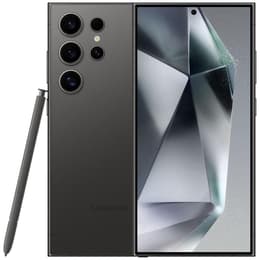
  • Design and Handling: The Galaxy S24 Ultra is a larger and heavier device, measuring 162.3 x 79.0 x 8.6mm and weighing 232g, featuring a premium titanium frame. It also integrates an S Pen stylus for enhanced productivity. The Nokia X30 is more compact and lighter at 158.9 x 73.9 x 7.99mm and 185g, with a focus on sustainable materials like a recycled aluminum frame and plastic back.

Weight

232 oz

185 oz

Screen size (in)

6.8

6.43

Network

5G

5G

SIM card

Physical SIM + eSIM

Dual Physical SIM

Carrier compatibility

Unlocked

Unlocked

User feedback for the Samsung Galaxy S24 Ultra frequently praises its exceptional camera system, particularly its versatile zoom capabilities, and its robust performance for demanding tasks and gaming. The vibrant and bright display, along with the integrated S Pen, are also commonly highlighted as strong advantages. Criticisms sometimes point to its large size and weight, which might not suit all users, and occasional shutter lag when capturing fast-moving subjects.

For the Nokia X30, users often appreciate its commitment to sustainable materials and its more compact, lightweight design. Its display is generally well-regarded for its class, and the promise of several years of software updates is a positive aspect. Common concerns include its mid-range processing power, which may not satisfy users with intensive performance needs, and the absence of 4K video recording.

Users prioritizing a top-tier camera experience, powerful performance for high-end applications, and a feature-rich ecosystem with stylus input may find the Samsung Galaxy S24 Ultra well-suited to their needs. Its extended software support also makes it a compelling choice for those seeking long-term device relevance. Conversely, users who value a more compact and lighter device, prioritize environmental considerations, and require solid performance for everyday tasks will likely find the Nokia X30 to be a practical option. Both devices offer quality-assured refurbished options, providing an eco-friendly alternative for consumers looking to make informed and sustainable choices.

See all articles

Our recent comparisons