
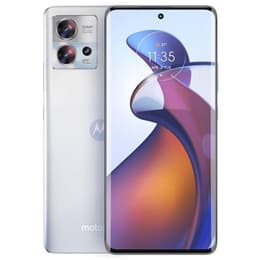
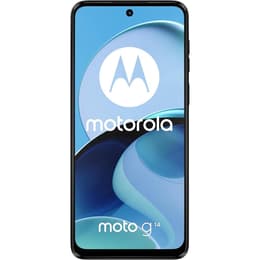

Motorola Edge 30 Fusion vs Motorola Moto G14

Motorola Edge 30 Fusion
Starting at

Refurbished price:A$257.46

Versus A$1,352.00 new

See options
Motorola Moto G14
Motorola Moto G14
Starting at

Refurbished price:A$182.00

Versus A$271.00 new

See options

The Motorola Edge 30 Fusion, released in September 2022, and the Motorola Moto G14, launched in August 2023, are smartphones from the same manufacturer but target different user needs. While both operate on the Android platform, the Edge 30 Fusion offers a more performance-oriented experience with a premium display, whereas the Moto G14 focuses on delivering essential smartphone functions with a larger battery capacity.

Scores

Durability

The practical lifespan of a smartphone is influenced by its build quality, software support, and ease of repair.

  • Release Timeline: The Motorola Edge 30 Fusion was released in September 2022, making it an older model compared to the Moto G14, which launched in August 2023. This difference in release date impacts their respective software support windows.
  • Software Longevity: The Edge 30 Fusion shipped with Android 12 and is expected to receive its last major OS update to Android 14, along with security updates for approximately three years from its release. The Moto G14 launched with Android 13 and is confirmed to receive the Android 14 update, typically receiving one major OS update and three years of security patches for its series. This means the Moto G14 may offer a slightly longer period of current software support.
  • Physical Durability & Repairability: The Edge 30 Fusion features a glass front (Gorilla Glass 5) and back, encased in an aluminum frame, offering IP52 dust and splash resistance. The Moto G14 has a glass front (Panda Glass) with a plastic frame and back, also carrying an IP52 rating for dust and splash resistance. Both devices have a repairability score of approximately 5.0 out of 10, indicating that opening them for repairs can be challenging due to the use of adhesive for components like the back cover and battery.

Release year

2022

2023

Compatible with latest Update

Yes

Yes

Operating system

Android

Android

Foldable

No

No

Performance

Performance in a smartphone is crucial for smooth operation, from launching applications to handling demanding tasks.

  • Processing Power: The Motorola Edge 30 Fusion is equipped with a powerful processor, enabling it to handle demanding applications and multitasking smoothly. Users generally report a fluid experience, even with intensive gaming. In contrast, the Moto G14 features an entry-level processor, which is suitable for everyday tasks like browsing and social media, but may show limitations when running multiple applications simultaneously or engaging in graphic-intensive gaming.
  • Memory and Storage: The Edge 30 Fusion offers various configurations, including 8GB or 12GB of RAM and storage options ranging from 128GB to 512GB. This provides ample space and memory for power users. The Moto G14 comes with 4GB of RAM and 128GB of internal storage, which is sufficient for basic usage but can be a limiting factor for heavy multitaskers or those with extensive app libraries.
  • Battery Performance: The Edge 30 Fusion houses a 4400 mAh battery, which typically provides a full day of moderate use, though heavy usage might require more frequent charging. The Moto G14 is equipped with a larger 5000 mAh battery, and users often find it provides satisfactory battery life, often lasting a full day with moderate usage.

Memory (GB)

8 GB

4 GB

Screen quality

The display is a primary interface for smartphone interaction, influencing everything from media consumption to daily readability.

  • Display Technology and Clarity: The Motorola Edge 30 Fusion features a 6.55-inch pOLED display, offering vibrant colors, deep blacks, and excellent contrast. Its resolution of 1080 x 2400 pixels ensures sharp visuals. The Moto G14 comes with a 6.5-inch IPS LCD screen, also with a 1080 x 2400 pixel resolution, providing a bright and clear viewing experience, though its colors may not be as rich or vibrant as an OLED panel.
  • Refresh Rate and Smoothness: A key differentiator is the refresh rate. The Edge 30 Fusion boasts a high 144Hz refresh rate, resulting in noticeably smoother scrolling and more fluid animations, enhancing the overall user experience. The Moto G14 has a standard 60Hz refresh rate, which is adequate for most daily tasks but does not offer the same level of visual fluidity.
  • Brightness: The Edge 30 Fusion can reach a peak brightness of 1100 nits, making it highly visible even in bright outdoor conditions. The Moto G14's display is bright enough for general use, with good sunlight legibility, but does not match the peak brightness levels of the Edge 30 Fusion.

Resolution

1080 x 2400

1080 x 2400

Screen type

P-OLED

IPS LCD

Audiovisual

Camera capabilities are a significant factor for many users, impacting the quality of photos and videos captured.

  • Rear Camera System: The Motorola Edge 30 Fusion features a versatile rear camera setup, including a 50 MP main sensor with optical image stabilization (OIS) for clearer shots, and a 13 MP ultrawide lens that also functions for macro photography. The Moto G14 also has a 50 MP main camera, but it lacks OIS, and includes a 2 MP macro lens. In daylight, both phones can capture good photos, but the Edge 30 Fusion generally offers better detail and stability, especially in challenging conditions.
  • Low-Light and Video Performance: For low-light conditions, the Edge 30 Fusion's OIS and more advanced processing tend to yield better results than the Moto G14. In terms of video, the Edge 30 Fusion is capable of recording up to 8K resolution at 30 frames per second and 4K at 30 or 60 frames per second, with good color reproduction and dynamic range. The Moto G14 records video at up to 1080p resolution at 30 frames per second.
  • Front Camera: The Edge 30 Fusion is equipped with a 32 MP front camera, which provides detailed selfies and can record 4K video. The Moto G14 has an 8 MP front camera, suitable for casual selfies and video calls, recording at 1080p.

Main camera

50 megapixels

50 megapixels

Front camera

32 megapixels

8 megapixels

Miscellaneous

Beyond core specifications, various practical features contribute to the overall user experience and device utility.

  • Connectivity and Ports: The Motorola Edge 30 Fusion supports 5G connectivity, Wi-Fi 6E, and Bluetooth 5.2, offering faster wireless speeds and more stable connections. It features a USB-C 3.1 port for data transfer and charging, but it does not include a 3.5mm headphone jack. The Moto G14 supports 4G connectivity, Wi-Fi 5, and Bluetooth 5.0. It comes with a USB-C 2.0 port and retains the traditional 3.5mm headphone jack.
  • Biometrics and Sensors: For security, the Edge 30 Fusion incorporates an in-display optical fingerprint sensor. The Moto G14 uses a side-mounted fingerprint sensor, often integrated into the power button. Both devices include essential sensors like accelerometers and gyroscopes.
  • Design and Handling: The Edge 30 Fusion features a thin and lightweight design, with a premium feel due to its glass and aluminum construction. Its curved edges contribute to a sleek aesthetic. The Moto G14 has a slightly thicker and heavier build, utilizing a plastic frame and back, which can offer a more secure grip for some users.

Weight

168 oz

177 oz

Screen size (in)

6,55

6.5

Network

5G

4G

SIM card

Dual Physical SIM

Dual Physical SIM

Carrier compatibility

Unlocked

Unlocked

User feedback for the Motorola Edge 30 Fusion often praises its premium design, vibrant pOLED display, and smooth performance for demanding applications and gaming. Common criticisms include its battery life, which some heavy users find underwhelming, and the camera software occasionally requiring adjustments to fully leverage its hardware capabilities. The Moto G14 is frequently lauded for its solid battery life, clear display for its category, and the inclusion of a 3.5mm headphone jack. However, users sometimes note its performance limitations for intensive tasks, the standard 60Hz refresh rate, and its 4G-only connectivity as areas for improvement.

For users prioritizing a high-performance device with a top-tier display for media consumption, gaming, and advanced photography, the Motorola Edge 30 Fusion is well-suited. Its faster processor and higher refresh rate make it ideal for those who value responsiveness and visual fluidity. Conversely, individuals seeking a reliable smartphone for everyday communication, web browsing, and casual media consumption, with an emphasis on battery longevity and essential features, may find the Motorola Moto G14 to be a more appropriate choice. It caters to users who need a dependable device without the need for flagship-level specifications.

Both models are available as quality-assured refurbished options, providing an eco-friendly alternative for consumers.


See all articles

Our recent comparisons
