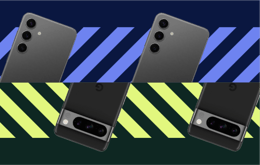
Galaxy S24 Ultra vs Google Pixel 6a

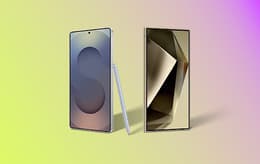
Galaxy S24 Ultra
Galaxy S24 Ultra
Starting at

Refurbished price:A$825.00

Versus A$1,899.00 new

See options
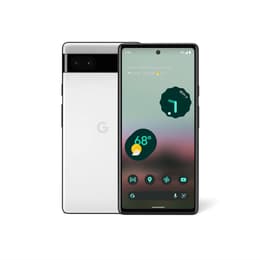
Google Pixel 6a
Google Pixel 6a
Starting at

Refurbished price:A$237.00

Versus A$569.00 new

See options

Ratings

The Samsung Galaxy S24 Ultra, released in January 2024, and the Google Pixel 6A, launched in July 2022, represent distinct approaches to the Android smartphone experience. While both devices operate on the Android platform, the S24 Ultra is positioned as a high-end device with advanced features and a focus on cutting-edge technology, whereas the Pixel 6A offers a more streamlined experience with an emphasis on core functionality and Google's software optimizations. The primary differentiators lie in their display technology, camera systems, and overall processing power.

Scores

Durability

When considering the practical lifespan of these devices, several factors come into play, including their release timelines, software support, and physical durability.

  • Release Timeline and OS Support: The Galaxy S24 Ultra is a much newer device, having been released in January 2024, compared to the Pixel 6A's July 2022 launch. This difference inherently grants the S24 Ultra a longer period of relevance and future-proofing. Samsung has committed to providing seven years of operating system and security updates for the Galaxy S24 Ultra, ensuring extended software support until early 2031. In contrast, the Pixel 6A was initially promised three years of OS updates and five years of security updates. However, Google has since extended the Pixel 6A's OS and security updates to a total of five years, meaning support is now expected until at least July 2027.
  • Software Longevity Expectations: Users prioritizing the longest possible software support and access to the latest Android features will find the Galaxy S24 Ultra a more future-proof option, with several more years of updates compared to the Pixel 6A.
  • Physical Durability: The Galaxy S24 Ultra features a robust titanium frame and Corning Gorilla Glass Armor on its display, contributing to enhanced resistance against drops and scratches. It also boasts an IP68 rating for dust and water resistance, allowing submersion in up to 1.5 meters of freshwater for 30 minutes. The Pixel 6A, while still durable, uses an aluminum frame, a plastic back, and Corning Gorilla Glass 3 for its screen, along with an IP67 rating for dust and water resistance, offering protection against splashes and brief submersion.

Performance

There is a significant difference in raw power and everyday performance between these two devices, reflecting their different categories and release timelines.

  • Processor Capabilities and Responsiveness: The Galaxy S24 Ultra is equipped with a current-generation processor, providing exceptional speed and efficiency for demanding applications and multitasking. This allows for smooth handling of heavy apps, intensive gaming, and complex AI features. The Pixel 6A features an earlier generation processor, which delivers solid performance for daily tasks and leverages AI for photography and other features, but it is less powerful than the S24 Ultra's chipset.
  • Storage and RAM: The Galaxy S24 Ultra offers various storage options, including 256GB, 512GB, and 1TB, paired with 12GB of RAM, providing ample space and memory for extensive multitasking and large media libraries. The Pixel 6A comes with a single configuration of 128GB storage and 6GB of RAM, which is sufficient for average use but more restrictive for power users or those with large media libraries.
  • Battery Behavior: The Galaxy S24 Ultra houses a 5000 mAh battery, and user reports often highlight its excellent longevity, frequently lasting more than a full day on a single charge, even for power users. The Pixel 6A has a 4410 mAh battery, which, combined with its efficient processor and lower refresh rate display, typically offers all-day battery life for average use. The S24 Ultra supports faster wired charging and also includes wireless charging capabilities, which the Pixel 6A does not.

Memory (GB)

12 GB

6 GB

Screen quality

The visual experience offered by these devices differs significantly due to their display technologies and specifications.

  • Display Technology and Resolution: The Galaxy S24 Ultra features a large 6.8-inch Dynamic AMOLED 2X display with a QHD+ resolution (1440 x 3120 pixels), offering incredibly sharp details and vibrant colors. The Pixel 6A has a smaller 6.1-inch OLED display with an FHD+ resolution (1080 x 2400 pixels), which provides clear and vibrant visuals suitable for everyday content consumption.
  • Brightness and Refresh Rate: The S24 Ultra's display boasts a peak brightness of 2600 nits, making it highly visible even in bright outdoor conditions, and features an adaptive refresh rate ranging from 1Hz to 120Hz for smooth scrolling and responsive interactions. The Pixel 6A offers a 60Hz refresh rate, which is standard for many smartphones, providing a consistent viewing experience, and its brightness levels are suitable for most indoor and outdoor conditions, though not as high as the S24 Ultra.
  • Viewing Experience: The larger screen size and higher resolution of the S24 Ultra make it well-suited for immersive media consumption and productivity tasks. The Pixel 6A's more compact 6.1-inch display offers a comfortable one-handed experience and remains a good option for general browsing and video viewing.

Audiovisual

Both devices offer capable camera systems, but they cater to different levels of photographic ambition and versatility.

  • Rear Camera System: The Galaxy S24 Ultra boasts a versatile quad-camera setup, including a 200MP main sensor, a 12MP ultrawide lens, a 10MP telephoto lens with 3x optical zoom, and a 50MP telephoto lens with 5x optical zoom. This configuration allows for exceptional detail, flexible framing, and impressive zoom capabilities, including up to 8K video recording at 30 frames per second. The Pixel 6A features a dual-camera system with a 12.2MP main sensor and a 12MP ultrawide lens, relying heavily on Google's computational photography for image enhancement.
  • Low-Light and Everyday Photography: While the S24 Ultra's larger sensors and advanced telephoto lenses offer superior hardware for various lighting conditions and zoom levels, the Pixel 6A is known for its strong computational photography, which can produce impressive results in everyday and low-light scenarios despite its more modest hardware.
  • Front Camera: The S24 Ultra includes a 12MP front camera, capable of capturing detailed selfies and supporting high-quality video calls. The Pixel 6A features an 8MP front camera, which is suitable for general use.

Miscellaneous

Beyond core features, several practical elements distinguish the user experience of these two smartphones.

  • Connectivity Options: The Galaxy S24 Ultra supports the latest connectivity standards, including 5G, Wi-Fi 7, and Bluetooth 5.3, offering faster and more reliable wireless performance. It also includes Ultra-Wideband (UWB) for enhanced spatial awareness and precise location tracking. The Pixel 6A supports 5G, Wi-Fi 6E, and Bluetooth 5.2, providing modern and efficient wireless connections suitable for most users.
  • Port Types and Authentication: Both devices utilize a USB-C port for charging and data transfer, and neither includes a 3.5mm headphone jack. The S24 Ultra uses USB 3.2 for faster speeds compared to the Pixel 6A's USB 3.1. For security, the S24 Ultra incorporates an ultrasonic in-screen fingerprint sensor, while the Pixel 6A uses an optical in-screen fingerprint sensor.
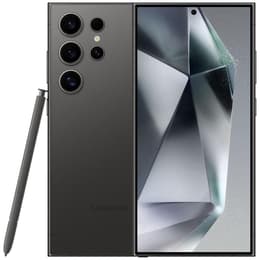
  • Dimensions, Weight, and Build: The Galaxy S24 Ultra measures 162.3 x 79 x 8.6 mm and weighs 233 grams, featuring a titanium frame and Gorilla Glass Armor. The Pixel 6A is more compact at 152.2 x 71.8 x 8.9 mm and lighter at 178 grams, with an aluminum frame and plastic back. The S24 Ultra also uniquely features an integrated S Pen stylus.

Screen size (in)

6.8

6.1

SIM card

Physical SIM + eSIM

Physical SIM + eSIM

Carrier compatibility

Unlocked

Unlocked

User feedback for the Galaxy S24 Ultra often highlights its advanced camera capabilities, powerful performance, and the vibrant, expansive display as key strengths. Common praise points include its long-term software support and the versatility offered by its multi-lens camera system. Some users note its larger size and weight as considerations for one-handed use. For the Google Pixel 6A, users frequently commend its strong computational photography, reliable all-day battery life, and its more compact form factor. Criticisms sometimes point to its 60Hz display and slower charging speeds compared to more premium devices.

Users prioritizing cutting-edge technology, extensive camera capabilities, long-term software support, and a large, immersive display will find the Samsung Galaxy S24 Ultra well-suited to their needs. Its robust build and powerful internals are designed for demanding tasks and a premium experience. Conversely, users seeking a more compact device, a pure Android experience with strong computational photography, and reliable everyday performance without needing the absolute latest features may lean toward the Google Pixel 6A. It offers a balanced experience for general use in a more manageable size.

Both devices offer compelling features within their respective categories, and considering a quality-assured refurbished option for either model can provide an eco-friendly alternative for consumers.


See all articles

Our recent comparisons