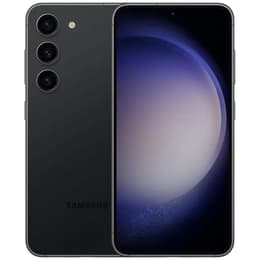

Galaxy S23 vs Nokia X30

Galaxy S23
Galaxy S23
Starting at

Refurbished price:A$504.00

Versus A$1,458.00 new

See options
Nokia X30
Nokia X30
Starting at

Refurbished price:A$299.00

Versus A$965.00 new

See options

The Samsung Galaxy S23 and the Nokia X30 are both Android smartphones, though they cater to different segments of the market. The Galaxy S23, released in February 2023, is a compact flagship device from Samsung's premium S series. The Nokia X30, launched in September 2022, positions itself as a mid-range option with a focus on sustainable design and a clean Android experience. While both run on the Android operating system, the Galaxy S23 offers a more powerful processor and a brighter display, whereas the Nokia X30 emphasizes eco-friendly materials and a commitment to software longevity.

Scores

Durability

When considering the long-term usability of a smartphone, factors like software support, physical resilience, and ease of repair are important.

  • Release Timeline and Software Support: The Galaxy S23 was released in February 2023 with Android 13 and is promised four major OS upgrades, extending its support up to Android 17, along with five years of security updates until 2028. The Nokia X30, released in September 2022 with Android 12, is guaranteed three OS upgrades and three years of monthly security updates. This means the Galaxy S23 is expected to receive software updates for a longer period.
  • Physical Durability: The Galaxy S23 features Gorilla Glass Victus 2 on both its front and back, coupled with an Armor Aluminum frame, and boasts an IP68 rating for water and dust resistance. The Nokia X30 uses Gorilla Glass Victus for screen protection, has a frame made from 100% recycled aluminum and a back cover from 65% recycled plastic, and carries an IP67 rating, indicating good resistance to dust and water immersion.
  • Repairability: While the Galaxy S23 series has shown improvements in repairability compared to its predecessors, it still receives a moderate score from repair experts. Information on the Nokia X30's specific repairability score is less widely available, but its construction with recycled materials suggests a design philosophy that considers the product's lifecycle.

Performance

The performance of a smartphone is largely determined by its internal components, impacting how smoothly applications run and how efficiently power is managed.

  • Processing Power: The Galaxy S23 is equipped with a processor optimized specifically for Samsung Galaxy devices, providing robust performance for demanding applications, intensive multitasking, and graphic-heavy gaming. The Nokia X30 utilizes a mid-range processor, which handles everyday tasks and lighter gaming smoothly, but may show limitations with more intensive applications or high-end gaming.
  • Memory and Storage: The Galaxy S23 comes with 8GB of RAM and offers storage options of 128GB, 256GB, or 512GB, with the 256GB and 512GB variants utilizing faster UFS 4.0 storage. The Nokia X30 is available with 6GB or 8GB of RAM and 128GB or 256GB of internal storage, typically using UFS 2.2 or UFS 3.0.
  • Battery Behavior: The Galaxy S23 has a 3900 mAh battery, which generally provides a full day of use for moderate users and shows improved efficiency over its predecessor. The Nokia X30 features a larger 4200 mAh battery, often delivering a full day of power, with some users reporting up to two days of use under moderate conditions, partly due to its efficient processor and optimized software.

Memory (GB)

8 GB

8 GB

Screen quality

The display is a primary interface for smartphone interaction, and its quality significantly influences the user experience.

  • Display Technology and Clarity: The Galaxy S23 features a 6.1-inch Dynamic AMOLED 2X display with a Full HD+ resolution (2340x1080 pixels), offering sharp images and vibrant colors. The Nokia X30 has a slightly larger 6.43-inch AMOLED display with a Full HD+ resolution (2400x1080 pixels), providing clear visuals and good color reproduction.
  • Brightness and Outdoor Visibility: The Galaxy S23's display can reach a peak brightness of 1750 nits, ensuring excellent visibility even in bright outdoor conditions. The Nokia X30 offers a peak brightness of 700 nits, which is sufficient for most indoor and outdoor scenarios, though it may be less legible under direct sunlight compared to the S23.
  • Refresh Rate and Smoothness: The Galaxy S23 boasts an adaptive refresh rate of 120Hz, which can dynamically adjust between 48Hz and 120Hz, contributing to very smooth scrolling and responsive interactions. The Nokia X30 features a 90Hz refresh rate, providing a smoother experience than standard 60Hz displays, particularly noticeable during scrolling and animations.

Audiovisual

The camera systems on both devices offer different capabilities for capturing photos and videos.

  • Rear Camera System: The Galaxy S23 is equipped with a versatile triple-camera setup, including a 50-megapixel main sensor, a 12-megapixel ultrawide lens, and a 10-megapixel telephoto lens, allowing for various photographic perspectives. The Nokia X30 features a dual-camera system with a 50-megapixel main sensor that includes optical image stabilization (OIS) and a 13-megapixel ultrawide lens.
  • Photography Performance: The Galaxy S23 generally delivers high-quality photos with good detail and color accuracy in well-lit conditions, and offers decent low-light performance, though some users note inconsistencies. The Nokia X30's main camera performs well in daylight, producing sharp and vibrant images, and its OIS and AI features contribute to improved low-light photography.
  • Video Recording and Audio: The Galaxy S23 supports high-resolution video recording with various features. The Nokia X30 records video up to 1080p at 60 frames per second and includes OZO Spatial Audio capture with wind noise reduction for enhanced audio quality in recordings.

Miscellaneous

Beyond core features, several practical elements contribute to the overall user experience and device utility.

  • Connectivity and Ports: Both devices support 5G connectivity, ensuring access to faster mobile networks. The Galaxy S23 includes Wi-Fi 6E and Bluetooth 5.3, while the Nokia X30 features Wi-Fi 6 (ax-ready) and Bluetooth 5.1. Both utilize a USB-C port for charging and data transfer, though the Nokia X30's is USB 2.0. The Nokia X30 also includes NFC.
  • Biometric Security: The Galaxy S23 incorporates an ultrasonic in-display fingerprint sensor and face recognition for secure unlocking. The Nokia X30 also offers an in-display fingerprint sensor, which is optical, alongside face unlock capabilities.
  • Physical Characteristics: The Galaxy S23 is a more compact device, weighing 168 grams and measuring 146.3 x 70.9 x 7.6 mm. The Nokia X30 is slightly larger and heavier at 185 grams and dimensions of 158.9 x 73.9 x 7.99 mm. The Galaxy S23 uses Gorilla Glass Victus 2 and an Armor Aluminum frame, while the Nokia X30 highlights its use of recycled aluminum for the frame and recycled plastic for the back cover.

Screen size (in)

6.1

6.43

Network

5G

5G

SIM card

Physical SIM + eSIM

Dual Physical SIM

Carrier compatibility

Unlocked

Unlocked

Users frequently praise the Samsung Galaxy S23 for its powerful performance, vibrant and bright display, and capable camera system, particularly in well-lit conditions. Many appreciate its compact size and the overall smooth user experience provided by its optimized software. However, some users have noted that while the battery life is improved over previous models, it might still require careful management for very heavy use, and low-light camera performance can sometimes be inconsistent.

The Nokia X30 is often commended for its commitment to sustainability, utilizing recycled materials in its construction, and its clean, near-stock Android experience. Users generally find its battery life to be reliable, often lasting a full day or more, and its main camera performs well for everyday photography. Criticisms sometimes point to its mid-range processor not matching the performance of higher-end devices, and its video recording capabilities being limited to 1080p.

Users prioritizing a compact form factor, top-tier performance for demanding tasks, and a highly vibrant, bright display with extended software support may find the Samsung Galaxy S23 well-suited to their needs. Conversely, individuals who value a sustainable design, a clean Android interface, and reliable battery life for general use, and who do not require the absolute highest processing power, might lean towards the Nokia X30. Both devices offer quality-assured refurbished options, providing an eco-friendly alternative for consumers looking to make informed choices.
See all articles

Our recent comparisons