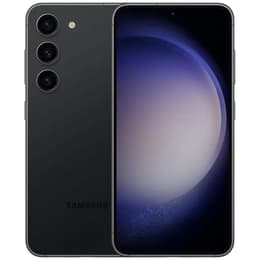
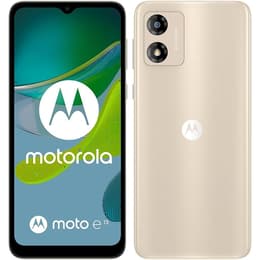

Galaxy S23 vs Motorola Moto E13

Galaxy S23
Galaxy S23
Starting at

Refurbished price:A$489.00

Versus A$1,349.00 new

See options
Motorola Moto E13
Motorola Moto E13
Starting at

Refurbished price:A$121.29

Versus A$244.00 new

See options

Ratings

The Samsung Galaxy S23 (released February 2023) and the Motorola Moto E13 (released January 2023) are both Android smartphones, yet they cater to distinctly different user expectations and needs. While the Galaxy S23 is positioned as a compact flagship device offering advanced features and robust performance, the Moto E13 is an entry-level option designed for essential smartphone functions. Their core differences lie in processing power, display technology, camera capabilities, and overall software experience.

Scores

Durability

The longevity of a smartphone is influenced by its physical durability and the duration of software support it receives.

  • Software Updates: The Samsung Galaxy S23 launched with Android 13 and is guaranteed to receive four generations of Android OS upgrades, extending its software support up to Android 17. It will also receive five years of security updates, ensuring protection until at least 2028. In contrast, the Motorola Moto E13 also launched with Android 13 (Go edition) but has not received any major Android OS updates since its release. While security updates are recommended for the Moto E13, its long-term OS upgrade path is less defined.
  • Physical Durability: The Galaxy S23 features a more robust construction with glass and metal, including Ceramic Shield protection, and boasts an IP68 rating for significant dust and water resistance. The Moto E13, built with a plastic construction, offers an IP52 rating, providing protection against dust and splashes but not full water immersion.
  • Expected Lifespan: Users prioritizing extended software longevity and higher physical resilience will find the Galaxy S23 better suited for a longer practical lifespan. The Moto E13, while offering basic protection, is likely to see a shorter period of relevant software support and may be more susceptible to wear over time.

Release year

2023

2023

Compatible with latest Update

Yes

No

Operating system

Android

Android

Foldable

No

No

Performance

Performance varies significantly between these two devices, impacting how smoothly they handle daily tasks and demanding applications.

  • Processing Power: The Galaxy S23 is equipped with a powerful, current-generation octa-core processor, enabling it to handle demanding applications, intensive multitasking, and graphic-rich gaming with ease. Users can expect quick app loading times and a highly responsive overall system. The Moto E13 features an octa-core processor designed for entry-level use. It is suitable for basic tasks like web browsing and social media, but users may experience stuttering, slow app loading, and difficulties with multitasking or more intensive applications.
  • Multitasking and Storage: The Galaxy S23 typically comes with 8GB of RAM, providing ample capacity for smooth multitasking and keeping multiple applications open in the background without performance degradation. It offers internal storage options starting from 128GB, with faster storage technology (UFS 4.0) available in higher capacities. The Moto E13 is available with 2GB, 4GB, or 8GB of RAM, and 64GB or 128GB of internal storage, which can be expanded up to 1TB via a microSD card. Models with lower RAM may struggle with efficient multitasking.
  • Battery Behavior: The Galaxy S23 has a 3900 mAh battery, supporting 25W wired charging and wireless charging. While generally offering a full day of use for many, some users have noted that its battery life can feel less robust under heavy usage compared to some competitors, and charging speeds are not the fastest available. The Moto E13 features a larger 5000 mAh battery, designed to last an entire working day with moderate use. However, its 10W charging is slower, taking approximately three hours for a full charge, and some users report faster battery drain under heavy use due to its processor.

Memory (GB)

8 GB

4 GB

Screen quality

The visual experience on these devices differs significantly due to their display technologies and specifications.

  • Display Technology and Clarity: The Galaxy S23 features a 6.1-inch Dynamic AMOLED 2X display with a resolution of 2340x1080 pixels (FHD+). This technology delivers deep blacks, vibrant colors, and excellent contrast, providing a clear and immersive viewing experience. The Moto E13 has a larger 6.5-inch IPS LCD screen with a resolution of 1600x720 pixels (HD+). While adequate for basic viewing, it offers less sharpness and color vibrancy compared to the AMOLED panel.
  • Brightness and Refresh Rate: The Galaxy S23's display can reach a peak brightness of 1750 nits, making it highly visible even in bright outdoor conditions. It also boasts a 120Hz adaptive refresh rate, which provides smooth scrolling and a fluid user interface. The Moto E13 has a standard 60Hz refresh rate, which is typical for its category. Its brightness levels are suitable for indoor use but may struggle more in direct sunlight.
  • Viewing Experience: Users who prioritize a premium visual experience for media consumption, gaming, and general interaction will find the Galaxy S23's display superior. The Moto E13's screen is functional for everyday tasks but offers a more basic viewing experience.

Resolution

1080 x 2340

720 x 1600

Screen type

Dynamic AMOLED 2X

IPS LCD

Audiovisual

The camera systems on the Galaxy S23 and Moto E13 are designed for different levels of photographic capability.

  • Rear Camera System: The Galaxy S23 features a versatile triple-camera setup on the rear, including a 50MP main sensor, a 12MP ultrawide lens, and a 10MP telephoto lens. This configuration allows for detailed photos, wide-angle shots, and optical zoom, performing well in various lighting conditions. Its video recording capabilities are also advanced. The Moto E13 is equipped with a single 13MP main rear camera. This camera is suitable for basic photography in good lighting, but its performance is generally described as underwhelming, particularly in low light, and some users report it being slow to launch and capture images.
  • Front Camera and Video: For selfies and video calls, the Galaxy S23 has a 12MP front camera that captures clear and detailed images. It also offers high-quality video recording. The Moto E13 includes a 5MP front camera. This camera is functional for video calls and casual selfies but provides less detail and dynamic range. Both devices can record video at 1080p resolution.
  • Audio Experience: The Galaxy S23 provides a robust audio experience with stereo speakers and clear microphone quality for calls and recordings. The Moto E13 features a single speaker with Dolby Atmos support, offering an enhanced audio experience for its class. It also retains a 3.5mm headphone jack, which is absent on the Galaxy S23.

Main camera

50 megapixels

13 megapixels

Front camera

12 megapixels

5 megapixels

Miscellaneous

Beyond core features, several practical elements differentiate these two smartphones in terms of connectivity, design, and user interaction.

  • Connectivity and Ports: The Galaxy S23 supports 5G connectivity, along with advanced Wi-Fi 6E (802.11 ax) and Bluetooth 5.3, ensuring fast and reliable wireless connections. It uses a USB-C port for charging and data transfer. The Moto E13 supports 4G LTE, Wi-Fi 802.11 a/b/g/n/ac (dual-band), and Bluetooth 5.0. It also features a USB-C 2.0 port and includes a 3.5mm headphone jack, offering more traditional audio connectivity.
  • Biometrics and Sensors: The Galaxy S23 incorporates an in-display fingerprint sensor and face recognition for secure and convenient unlocking. It also includes a range of sensors like an accelerometer, gyroscope, and compass. The Moto E13 lacks a fingerprint sensor but offers face unlock, which is generally considered less secure. It includes basic sensors such as an accelerometer and proximity sensor.
  • Design and Handling: The Galaxy S23 is a compact device, measuring 146.3 x 70.9 x 7.6mm and weighing 168g, making it comfortable for one-handed use. Its premium build materials contribute to a refined feel. The Moto E13 is slightly larger and heavier at 164.19 x 74.95 x 8.47mm and 179.5g, with a plastic body. Its design is practical and durable for its category.

Weight

227 oz

179 oz

Screen size (in)

6.1

6.5

Network

5G

4G

SIM card

Physical SIM + eSIM

Dual Physical SIM

Carrier compatibility

Unlocked

Unlocked

Connector

USB-C

USB-C

User feedback for the Samsung Galaxy S23 often highlights its compact size, powerful performance, and capable camera system as significant advantages. Many appreciate its vibrant display and the long-term software support provided by Samsung. However, some users have noted concerns regarding battery life under heavy use, occasional camera processing issues leading to blur, and slower charging speeds compared to some rivals.

The Motorola Moto E13 is frequently praised for its large battery capacity and its inclusion of Android 13 Go Edition, which offers a clean user interface. Conversely, common criticisms revolve around its very slow performance, particularly with multitasking and demanding apps, and its underwhelming camera quality, which can be slow to operate. Users also report issues like screen unresponsiveness and faster battery drain than expected despite the large capacity.

Users prioritizing a premium smartphone experience with high performance, advanced camera features, and extended software support will find the Samsung Galaxy S23 well-suited to their needs. It is ideal for those who engage in mobile gaming, intensive multitasking, and high-quality photography. For individuals seeking a basic, functional smartphone for essential communication, light browsing, and media consumption, the Motorola Moto E13 offers a straightforward option. It suits users who value a large screen and long battery life for casual use, and for whom advanced features are not a primary concern. Both devices are available as quality-assured refurbished options, providing an eco-friendly alternative for consumers.


See all articles

Our recent comparisons