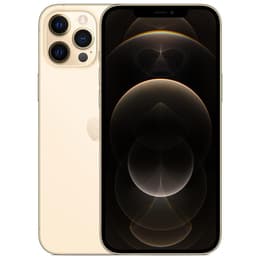

Galaxy S21 5G vs iPhone 12 Pro Max

Galaxy S21 5G
Galaxy S21 5G
Starting at

Refurbished price:A$318.00

Versus A$1,369.00 new

See options
iPhone 12 Pro Max
iPhone 12 Pro Max
Starting at

Refurbished price:A$430.00

Versus A$1,249.00 new

See options

Ratings

The Samsung Galaxy S21 5G, released in January 2021, and the iPhone 12 Pro Max, launched in November 2020, represent flagship smartphones from their respective manufacturers. While both devices offer premium experiences, they cater to different user preferences through their distinct operating systems and hardware philosophies. The Galaxy S21 5G operates on the Android platform, offering a customizable interface, whereas the iPhone 12 Pro Max runs on Apple's iOS, known for its integrated ecosystem and streamlined user experience. Key differentiators lie in their display technologies, camera systems, and overall design approaches.

Scores

Durability

Evaluating the practical lifespan of these devices involves considering their release timelines, software support, and physical resilience.

  • Release Timeline and Software Support: The iPhone 12 Pro Max, released in November 2020, typically receives iOS updates for an extended period, often 5-6 years from its launch. The Galaxy S21 5G, launched in January 2021, was promised four generations of Android OS updates and five years of security updates from its release. As of early 2026, the Galaxy S21 5G has received Android 14 (One UI 6) and Android 15 (One UI 7) updates, indicating it is nearing the end of its major OS update cycle. The iPhone 12 Pro Max, having launched with iOS 14, is likely to continue receiving updates for a bit longer, potentially offering a slightly extended software longevity.
  • Repairability and Physical Durability: The Galaxy S21 5G has been noted for a repairability score around 7.5 out of 10 by some assessments, with its plastic back making it easier to open for repairs. However, other assessments gave it a lower score of 4 out of 10, citing difficulties with battery removal due to strong adhesive. The iPhone 12 Pro Max features a Ceramic Shield front cover, designed for enhanced drop performance. Both devices carry an IP68 rating for dust and water resistance, providing protection against immersion.
  • Expected Practical Lifespan: Both phones are built to last, with their robust software support ensuring continued functionality and security updates for several years. Users can expect reliable performance from either device for the foreseeable future, especially when considering quality-assured refurbished options.

Release year

2021

2020

Compatible with latest Update

Yes

Yes

Operating system

Android

iOS

Foldable

No

No

Performance

The performance of a smartphone is crucial for daily tasks, from navigating applications to engaging in demanding multimedia activities.

  • Processor Capabilities: The Galaxy S21 5G is powered by a current-generation octa-core processor, either the Exynos 2100 or Snapdragon 888 depending on the region, designed to handle everyday applications and multitasking efficiently. The iPhone 12 Pro Max features Apple's A14 Bionic chip, known for its robust processing power and efficiency.
  • System Responsiveness and Multitasking: The Galaxy S21 5G typically comes with 8GB of RAM, contributing to smooth multitasking and app switching. The iPhone 12 Pro Max includes 6GB of RAM. Despite the difference in RAM, iOS's optimization often allows for comparable multitasking fluidity. Users of the Galaxy S21 5G have occasionally reported processor throttling during extended heavy gaming sessions. The iPhone 12 Pro Max generally maintains consistent performance even under demanding loads, though some users noted battery drain during intensive 3D gaming.
  • Storage Options: The Galaxy S21 5G offers internal storage options of 128GB and 256GB. The iPhone 12 Pro Max provides more flexibility with 128GB, 256GB, and 512GB configurations.

Memory (GB)

8 GB

6 GB

Screen quality

The display is a primary interface for smartphone interaction, influencing everything from media consumption to daily navigation.

  • Display Technology and Clarity: The Galaxy S21 5G features a 6.2-inch Dynamic AMOLED 2X display, offering vibrant colors and deep blacks. It has a resolution of 1080 x 2400 pixels. The iPhone 12 Pro Max boasts a larger 6.7-inch Super Retina XDR OLED display with a resolution of 1284 x 2778 pixels, resulting in a slightly higher pixel density for sharper visuals.
  • Brightness and Refresh Rate: The Galaxy S21 5G supports an adaptive refresh rate of up to 120Hz, providing a smoother scrolling and animation experience, and can reach a peak brightness of 1300 nits. The iPhone 12 Pro Max has a standard 60Hz refresh rate, which is less fluid than the S21 5G, but offers excellent color accuracy and a peak brightness of 1200 nits for HDR content.
  • Screen Size and Viewing Experience: The iPhone 12 Pro Max's larger 6.7-inch screen provides a more expansive viewing area compared to the Galaxy S21 5G's 6.2-inch display, which can be beneficial for media consumption and productivity tasks. The Galaxy S21 5G features a flat screen, while the iPhone 12 Pro Max has a display with rounded corners within a rectangular shape.

Resolution

1080 x 2400

1284 x 2778

Screen type

Dynamic AMOLED 2X

Super Retina XDR OLED

Audiovisual

Both smartphones offer advanced camera systems designed to capture high-quality photos and videos in various conditions.

  • Camera System Capabilities: The Galaxy S21 5G features a versatile triple-camera setup on the rear, including a 12MP wide-angle lens, a 64MP telephoto lens with 3x hybrid optical zoom, and a 12MP ultrawide lens. Its front camera is 10MP. The iPhone 12 Pro Max also has a triple 12MP camera system, comprising a wide lens with a larger sensor and sensor-shift optical image stabilization, an ultrawide lens, and a telephoto lens offering 2.5x optical zoom. Its front camera is 12MP.
  • Photography Performance: The iPhone 12 Pro Max's larger main sensor and sensor-shift stabilization contribute to improved low-light performance and overall image quality, with a focus on natural color reproduction. It also includes a LiDAR scanner for faster and more accurate autofocus, especially in low-light conditions. The Galaxy S21 5G offers a 64MP telephoto lens for detailed zoomed shots and features like 'Director's View' for multi-camera recording. User feedback on the Galaxy S21 sometimes notes over-sharpening in images.
  • Video Recording Quality: The Galaxy S21 5G can record video at up to 8K resolution at 24 frames per second, allowing for high-resolution stills to be extracted from video. The iPhone 12 Pro Max supports 4K video recording at up to 60 frames per second, with the added capability of Dolby Vision HDR recording for enhanced color and dynamic range. Both devices offer strong video stabilization.

Main camera

12 megapixels

12 megapixels

Front camera

10 megapixels

12 megapixels

Miscellaneous

Beyond core features, several practical elements contribute to the overall user experience and device utility.

  • Connectivity and Ports: Both the Galaxy S21 5G and iPhone 12 Pro Max support 5G connectivity, Wi-Fi 6, and Bluetooth 5.0, ensuring fast wireless communication. The Galaxy S21 5G uses a USB-C port for charging and data transfer. The iPhone 12 Pro Max utilizes Apple's proprietary Lightning port.
  • Biometric Security and Build Materials: The Galaxy S21 5G features an in-display fingerprint sensor for secure unlocking. The iPhone 12 Pro Max relies on Face ID, its facial recognition system. The Galaxy S21 5G has a glass front (Gorilla Glass Victus), a plastic back, and an aluminum frame. The iPhone 12 Pro Max features a Ceramic Shield front, a glass back, and a stainless steel frame, contributing to its substantial feel.
  • Dimensions and Handling: The Galaxy S21 5G is the more compact and lighter device, measuring 151.7 x 71.2 x 7.9 mm and weighing 169 grams. The iPhone 12 Pro Max is larger and heavier at 160.8 x 78.1 x 7.4 mm and 228 grams, which can make one-handed use more challenging for some users.

Weight

169 oz

226 oz

Screen size (in)

6.2

6.7

Network

5G

5G

SIM card

Physical SIM + eSIM

Physical SIM + eSIM

Carrier compatibility

Unlocked

Unlocked

Connector

USB-C

Lightning

The Samsung Galaxy S21 5G and iPhone 12 Pro Max each offer a compelling set of features, appealing to different user priorities. User feedback for the Galaxy S21 5G often highlights its vibrant 120Hz AMOLED display, making scrolling and interactions noticeably smoother. Its versatile camera system and relatively compact size for a flagship are also frequently praised. However, some users have noted inconsistent battery life, particularly with heavy usage, and occasional processor throttling during intensive gaming. The plastic back, while aiding repairability, was sometimes seen as a less premium material by some users.

Conversely, the iPhone 12 Pro Max receives consistent praise for its exceptional battery life, often lasting well over a day even with moderate to heavy use. Its large, immersive OLED display is highly regarded for media consumption, and its powerful processor ensures smooth performance across all tasks. The advanced camera system, particularly its low-light capabilities and Dolby Vision HDR video recording, is a significant draw for many users. The primary criticism often revolves around its considerable size and weight, which can make it less comfortable for one-handed operation.

Users prioritizing a smoother display experience, the Android ecosystem's flexibility, and a slightly lighter device may find the Galaxy S21 5G well-suited to their needs. Those who value extended battery life, a larger display for media, and a highly capable camera system with strong video features, alongside the iOS ecosystem, may lean towards the iPhone 12 Pro Max. Both devices remain capable smartphones, and choosing a quality-assured refurbished option can be an eco-friendly alternative for acquiring either model.

See all articles

Our recent comparisons