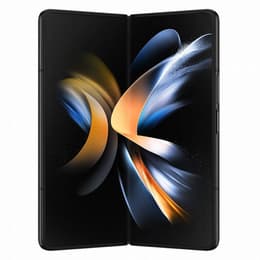

Galaxy S10 vs Galaxy Z Fold4

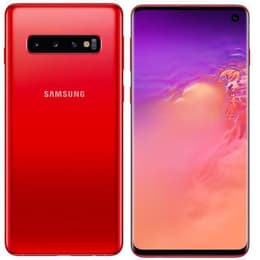
Galaxy S10
Galaxy S10
Starting at

Refurbished price:A$359.00

Versus A$849.00 new

See options
Galaxy Z Fold4
Galaxy Z Fold4
Starting at

Refurbished price:A$766.00

Versus A$2,000.00 new

See options

Ratings

The Samsung Galaxy S10, released in March 2019, is a traditional smartphone featuring a classic slab design. In contrast, the Samsung Galaxy Z Fold4, launched in August 2022, represents a significant evolution in mobile technology with its innovative foldable form factor. Both devices operate on the Android platform, but they offer distinct user experiences, primarily differing in their display technology, processing power, and overall functionality.

Scores

Durability

The practical lifespan of these two devices differs significantly due to their release dates and Samsung's software support policies.

  • Software Updates: The Galaxy S10 received its last major Android operating system update with Android 12 in January 2022, and its security updates concluded in April 2023 for most models. The Galaxy Z Fold4, being a much newer device, shipped with Android 12L and is guaranteed four major Android OS updates (up to Android 16) and five years of security updates, extending its software longevity until at least August 2027.
  • Expected Lifespan: For daily use in 2026, the Galaxy S10 is considered an older device, and its performance may struggle with modern, demanding applications due to its outdated software support. The Galaxy Z Fold4 offers a contemporary experience with ongoing software and security support, ensuring better compatibility with future applications and services.
  • Repairability: The Galaxy S10 received a low repairability score of 3 out of 10 from iFixit, citing difficulties with battery replacement due to strong adhesive and the integrated ultrasonic fingerprint sensor requiring a full screen replacement if damaged. The Galaxy Z Fold4, while having a more complex foldable design, has seen efforts from Samsung to make screen repairs more accessible, particularly with a Samsung Care+ plan, though its overall repair complexity remains higher than traditional smartphones.

Release year

2019

2022

Compatible with latest Update

No

Yes

Operating system

Android

Android

Foldable

No

Yes

Performance

Performance capabilities are a key differentiator, reflecting the generational gap between these two Samsung smartphones.

  • Processing Power: The Galaxy S10, equipped with an older generation processor, handles everyday tasks adequately but may exhibit slowdowns with demanding applications, intensive multitasking, or modern mobile games. The Galaxy Z Fold4 features a powerful, current-generation processor that ensures smooth operation, rapid app loading, and excellent performance across all tasks, including high-end gaming and complex multitasking.
  • Multitasking and Responsiveness: The Galaxy S10, with 8GB of RAM, offers competent multitasking for its era, allowing users to switch between several applications without significant delays. The Galaxy Z Fold4, with 12GB of RAM, provides a more fluid and responsive experience, especially when running multiple applications simultaneously on its larger display, making it well-suited for productivity.
  • Battery Behavior: The Galaxy S10 has a 3400 mAh battery, which provided a full day of moderate use when new, though its efficiency has diminished over time. The Galaxy Z Fold4 features a 4400 mAh battery, which, despite powering two displays, generally lasts a full day for moderate users, with heavy use of the main screen potentially requiring more frequent charging.

Memory (GB)

8 GB

12 GB

Screen quality

The display experience is a primary distinction between these two devices, largely due to their fundamental form factors.

  • Display Technology and Size: The Galaxy S10 features a single 6.1-inch Dynamic AMOLED display, offering vibrant colors and deep blacks in a traditional smartphone format. The Galaxy Z Fold4, in contrast, offers a dual-screen setup: a 6.2-inch Dynamic AMOLED 2X cover display and a large 7.6-inch foldable Dynamic AMOLED 2X main display when unfolded, providing a tablet-like experience.
  • Resolution and Refresh Rate: The Galaxy S10's display has a 1440 x 3040 pixel resolution with a standard 60Hz refresh rate, delivering clear visuals. The Galaxy Z Fold4's displays both feature adaptive 120Hz refresh rates, providing smoother scrolling and more fluid animations, alongside resolutions of 904 x 2316 pixels for the cover screen and 1812 x 2176 pixels for the main screen, ensuring sharp imagery across its larger surface.
  • Viewing Experience: The S10 offers an excellent viewing experience for a conventional smartphone, suitable for media consumption and everyday tasks. The Z Fold4's expansive main display significantly enhances productivity and media immersion, allowing for a more versatile and engaging visual experience, though the crease in the foldable screen is still visible to some users.

Resolution

1440 x 3040

1812 x 2176

Screen type

Dynamic AMOLED

Foldable Dynamic AMOLED 2X

Audiovisual

Both devices offer capable camera systems, but the advancements in mobile photography are evident in the newer model.

  • Rear Camera System: The Galaxy S10 features a versatile triple-camera setup with a 12 MP wide, 12 MP telephoto (2x optical zoom), and 16 MP ultrawide lens, providing good flexibility for its time. The Galaxy Z Fold4 also has a triple-camera system, but with a higher-resolution 50 MP main sensor, an improved 10 MP telephoto lens (3x optical zoom), and a 12 MP ultrawide, resulting in sharper images and enhanced low-light performance.
  • Front Camera Performance: The Galaxy S10 includes a 10 MP front camera, capable of producing clear selfies. The Galaxy Z Fold4 features a 10 MP front camera on its cover display and a 4 MP under-display camera on the main screen, offering options for video calls and selfies, with the cover screen camera generally providing higher quality.
  • Video Recording and Audio: The S10 supports 4K video recording at 60 frames per second. The Z Fold4 offers more advanced video recording capabilities, including 8K at 24 frames per second and 4K at 60 frames per second, with improved stabilization. Both devices provide stereo speakers for media consumption, but the S10 retains a 3.5mm headphone jack, a feature absent on the Z Fold4.

Main camera

12 megapixels

50 megapixels

Front camera

10 megapixels

4 megapixels

Miscellaneous

Beyond core features, several practical elements distinguish the Galaxy S10 from the Galaxy Z Fold4.

  • Connectivity and Ports: The Galaxy S10 supports 4G LTE and Wi-Fi 6, and notably includes a 3.5mm headphone jack and a USB-C port. The Galaxy Z Fold4 offers advanced connectivity with 5G support for faster mobile data speeds and Wi-Fi 6E for improved wireless network performance, relying solely on its USB-C port for charging and audio.
  • Biometrics and Durability: The S10 features an ultrasonic in-display fingerprint sensor and face recognition. The Z Fold4 utilizes a side-mounted fingerprint sensor and face recognition for unlocking. Both devices feature glass and aluminum constructions, with the S10 having an IP68 rating for dust and water resistance. The Z Fold4 has an IPX8 rating, indicating water resistance but not dust resistance, a consideration for its folding mechanism.
  • Form Factor and Handling: The Galaxy S10 is a compact and lightweight traditional smartphone, weighing 157g. The Galaxy Z Fold4, due to its foldable design, is significantly heavier at 263g and thicker when folded, offering a different handling experience that transforms from a narrow smartphone to a wider tablet.

Weight

157 oz

263 oz

Screen size (in)

6.1

7.6

Network

4G

5G

SIM card

Physical SIM

Physical SIM + eSIM

Carrier compatibility

Unlocked

Unlocked

Users generally praised the Galaxy S10 for its vibrant display, versatile camera system, and the inclusion of a 3.5mm headphone jack, which was a valued feature for many. Common criticisms often centered on its battery life, which some found to be only adequate, and the initial reliability of its in-display fingerprint sensor.

The Galaxy Z Fold4, on the other hand, received acclaim for its innovative foldable design, offering a large, immersive main display ideal for multitasking and media consumption. Its improved camera system and powerful performance were also frequently highlighted as strengths. Criticisms often pointed to its weight and thickness, the visible crease on the main display, and the lack of dust resistance.

Users prioritizing a compact, traditional smartphone experience with a headphone jack and a still-capable camera for everyday photography may find the Galaxy S10 suitable. However, those who require cutting-edge performance, extensive software support, and a versatile, large screen for productivity and immersive media will find the Galaxy Z Fold4 better suited to their needs. The Z Fold4 is particularly appealing to users who value the ability to switch between a phone and a tablet form factor. For consumers considering either device, exploring quality-assured refurbished options can provide an eco-friendly alternative to extend the life cycle of these technologies.


See all articles

Our recent comparisons