
Galaxy S21 5G vs Galaxy S23+

Galaxy S21 5G
Galaxy S21 5G
Starting at

Refurbished price:A$318.00

Versus A$1,369.00 new

See options
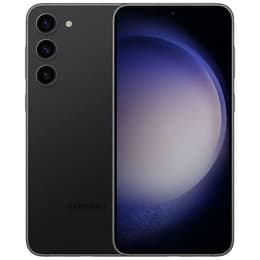
Galaxy S23+
Galaxy S23+
Starting at

Refurbished price:A$539.00

Versus A$1,953.00 new

See options

Ratings

The Samsung Galaxy S21 5G, released in January 2021, and the Samsung Galaxy S23 Plus, launched in February 2023, represent two distinct generations within Samsung's flagship smartphone series. Both devices operate on the Android platform with Samsung's One UI software, offering a consistent user experience. However, the Galaxy S23 Plus introduces advancements in processing power, display technology, and camera capabilities, alongside a more extended software support timeline, setting it apart from its predecessor.

Scores

Durability

Assessing the longevity of these devices involves looking at both their physical build quality and the software support they will receive over the coming years to ensure they remain functional.

  • Software Longevity: The Galaxy S23 Plus offers a significant advantage in software support, benefiting from Samsung's policy of providing seven years of major Android version updates and security patches. In contrast, the Galaxy S21 5G received its final major Android OS update (Android 15) in May 2025, with security updates concluding around November 2025 or February 2026.
  • Build Materials: The Galaxy S21 5G features an aluminum frame and a polycarbonate back, paired with Gorilla Glass Victus on the front. The Galaxy S23 Plus elevates durability with an Armor Aluminum frame and Gorilla Glass Victus 2 on both the front and back, offering enhanced resistance to drops and scratches. Both models carry an IP68 rating for dust and water resistance, indicating protection against immersion.
  • Repairability: The Galaxy S21 5G has been noted for a relatively high repairability score by some sources, with a rating of 7.5 or 7.75 out of 10, partly due to a removable display cable. While specific repairability scores for the Galaxy S23 Plus are less widely published, newer devices often present challenges due to tighter construction and increased use of adhesives.

Release year

2021

2023

Compatible with latest Update

Yes

Yes

Operating system

Android

Android

Foldable

No

No

Performance

The two-year gap between these models brings notable differences in their internal components, impacting overall performance and efficiency.

  • Processing Power: The Galaxy S23 Plus features a newer generation processor, which translates to smoother handling of demanding applications, more efficient multitasking, and enhanced performance in graphics-intensive tasks like gaming. Users will experience quicker app loading times and a more fluid overall system response.
  • Battery Endurance: The Galaxy S23 Plus is equipped with a larger 4700 mAh battery, compared to the 4000 mAh battery in the Galaxy S21 5G. This, combined with a more power-efficient processor, results in significantly longer usage times between charges for the S23 Plus, making it better suited for users who are frequently away from power outlets.
  • Storage and RAM: Both devices come with 8GB of RAM, providing ample capacity for typical smartphone usage. The Galaxy S21 5G offers 128GB and 256GB storage options, while the Galaxy S23 Plus provides 256GB and 512GB options, catering to users with larger storage needs.

Memory (GB)

8 GB

8 GB

Screen quality

Both smartphones feature vibrant displays, but there are distinct differences in their size, brightness, and overall viewing experience.

  • Display Technology and Size: Both the Galaxy S21 5G and Galaxy S23 Plus utilize Dynamic AMOLED 2X display technology, known for deep blacks and rich colors. The Galaxy S21 5G has a 6.2-inch display, offering a compact form factor. The Galaxy S23 Plus provides a larger 6.6-inch screen, which enhances the viewing experience for media consumption and productivity tasks.
  • Brightness and Clarity: The Galaxy S23 Plus boasts a higher peak brightness of 1750 nits, ensuring better visibility in bright outdoor conditions. The Galaxy S21 5G offers a peak brightness of 1300 nits, which is still capable but less luminous in direct sunlight. Both displays feature a Full HD+ resolution (1080 x 2400 for S21 5G, 1080 x 2340 for S23 Plus), providing clear and sharp visuals for everyday use.
  • Refresh Rate: Both models support an adaptive refresh rate of up to 120Hz, contributing to smoother scrolling and more fluid animations. The Galaxy S21 5G's refresh rate adapts between 48Hz and 120Hz, while the Galaxy S23 Plus also offers adaptive refresh rates, optimizing power consumption.

Resolution

1080 x 2400

1080 x 2340

Screen type

Dynamic AMOLED 2X

Dynamic AMOLED 2X

Audiovisual

The camera systems on both devices are capable, but the Galaxy S23 Plus introduces enhancements that improve photography and videography.

  • Rear Camera System: The Galaxy S21 5G features a triple camera setup with a 12MP main sensor, a 12MP ultra-wide lens, and a 64MP telephoto lens with optical image stabilization. The Galaxy S23 Plus also has a triple camera system, but with a 50MP main sensor, a 12MP ultra-wide lens, and a 10MP telephoto lens offering 3x optical zoom. The S23 Plus's larger main sensor generally captures more detail and performs better in varied lighting conditions.
  • Low-Light and Everyday Photography: Users report that the Galaxy S23 Plus offers improved low-light performance and better detail retention in everyday photos, with faster shutter speeds. While the S21 5G delivers good results in well-lit environments, the S23 Plus generally produces more consistent and higher-quality images across different scenarios.
  • Video Recording and Audio: Both phones are capable of high-resolution video recording, including 8K. The Galaxy S23 Plus offers enhanced video stabilization and improved microphone quality for clearer audio capture. Both devices feature stereo speakers, providing a good audio experience for media consumption.

Main camera

12 megapixels

50 megapixels

Front camera

10 megapixels

12 megapixels

Miscellaneous

Beyond core features, several practical elements differentiate the user experience and connectivity options of these two smartphones.

  • Connectivity: Both the Galaxy S21 5G and Galaxy S23 Plus support 5G connectivity, ensuring access to faster mobile networks. They also feature modern Wi-Fi standards (Wi-Fi 6 for S21 5G, Wi-Fi 6E for S23 Plus) and Bluetooth (5.0 for S21 5G, 5.3 for S23 Plus), offering robust wireless connections.
  • Ports and Sensors: Both devices rely on a USB-C port for charging and data transfer, omitting a traditional headphone jack. They integrate an ultrasonic in-display fingerprint sensor for secure unlocking. The Galaxy S23 Plus also includes an eSIM alongside physical SIM support, offering more flexibility for network connectivity.
  • Physical Design and Handling: The Galaxy S21 5G is slightly more compact and lighter, measuring 151.7 x 71.2 x 7.9 mm and weighing 169 grams. The Galaxy S23 Plus is larger and slightly heavier at 157.8 x 76.2 x 7.6 mm and approximately 195-196 grams, providing a larger screen but requiring a two-handed grip for some users. The S23 Plus also features a more minimalist camera design on the back, with individual lens cutouts rather than a contoured camera bump.

Weight

169 oz

196 oz

Screen size (in)

6.2

6.6

Network

5G

5G

SIM card

Physical SIM + eSIM

Physical SIM + eSIM

Carrier compatibility

Unlocked

Unlocked

User feedback often highlights the Galaxy S23 Plus for its impressive battery life and consistent performance, even after several months of use. Many appreciate its vibrant display and the quality of its camera system, particularly for everyday photos and video. Some users, however, note that while the S23 Plus is a strong performer, its resolution remains Full HD+, which some might expect to be higher for a device in its category. The design, with its flat display and premium materials, generally receives positive remarks.

The Galaxy S21 5G, while older, is still praised for its compact size and capable performance for general tasks. Its display is still considered vibrant, and its camera system delivers good results in adequate lighting. Criticisms sometimes point to its battery life, which can be less enduring for heavy users compared to newer models, and its polycarbonate back, which some perceive as less premium than glass. The end of major software updates is also a consideration for long-term users.

Users prioritizing extended software support, superior battery endurance, and enhanced camera capabilities, especially in challenging lighting, may find the Galaxy S23 Plus better suited to their needs. Its larger display also appeals to those who consume a lot of media or engage in productivity tasks. Conversely, users who prefer a more compact and lighter device for easier one-handed use, and who do not require the absolute latest in processing power or camera technology, might lean towards the Galaxy S21 5G. Both devices offer a quality Android experience, and choosing a quality-assured refurbished option for either model can provide an eco-friendly alternative for consumers.

See all articles

Our recent comparisons