
Compare models
Galaxy S10 vs Galaxy S21 FE 5G
- 1-year warranty
- Free standard shipping
- Free 30-day returns
Differences at a glance
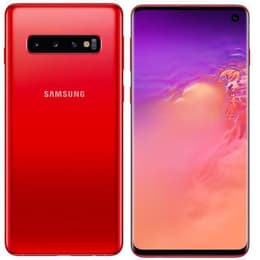
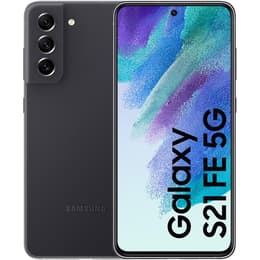
The Samsung Galaxy S10, released in March 2019, and the Samsung Galaxy S21 FE 5G, launched in January 2022, represent different generations within Samsung's smartphone lineup. While both devices run on the Android operating system, the S21 FE 5G benefits from a more recent release, bringing with it updated hardware and a longer software support window. The S10, as an older flagship, offers a more traditional smartphone experience with certain features no longer common in newer models.
Available Models
Colour
Storage (GB)
Scores
Durability
The practical lifespan of a smartphone is heavily influenced by its release timeline and the duration of software support it receives.
- Release Timeline: The Galaxy S10 was released in March 2019, making it a significantly older device compared to the Galaxy S21 FE 5G, which launched in January 2022. This age difference directly impacts their remaining support cycles.
- OS Support: The Galaxy S10 received its last major Android operating system update with Android 12, which rolled out in late 2021. It no longer receives regular OS or security updates, though critical security flaws might still be addressed. In contrast, the Galaxy S21 FE 5G launched with Android 12 and is expected to receive major OS updates up to Android 16, extending its software longevity significantly.
- Repairability: Both devices feature glass and aluminum constructions, which generally offer a good balance of aesthetics and durability. User sentiment suggests that replacing components like the battery on the S10 can extend its usable life, indicating a degree of repairability.
Release year
2019
2022
Compatible with latest Update
No
Yes
Operating system
Android
Android
Foldable
No
No
Performance
Performance is a key differentiator, with the newer S21 FE 5G offering a more contemporary experience compared to the S10.
- Processing Power: The Galaxy S21 FE 5G features a more advanced processor, enabling smoother handling of demanding applications, faster app loading times, and a more fluid multitasking experience. Users engaging in mobile gaming or intensive productivity tasks will likely notice the performance gains. The S10, while still capable for everyday tasks like browsing and messaging, may show its age with more resource-intensive applications.
- Battery Behavior: The Galaxy S21 FE 5G is equipped with a larger 4500 mAh battery, compared to the S10's 3400 mAh battery. This generally translates to longer usage times for the S21 FE 5G, though some users have reported that its battery life can be average, especially with heavy use or 5G connectivity. The S10's battery, particularly in older units, may require more frequent charging or a replacement to last a full day.
- Storage and RAM: Both devices offer various storage configurations. The S10 typically comes with 8GB of RAM, while the S21 FE 5G is available with either 6GB or 8GB of RAM. For most users, both configurations provide sufficient memory for smooth multitasking, though the S10's consistent 8GB across its main models offers a slight edge in this specific aspect. The S10 also includes a microSD card slot for expandable storage, a feature absent in the S21 FE 5G.
Screen quality
Both devices offer high-quality displays, but the S21 FE 5G incorporates newer display technology for a more modern viewing experience.
- Display Technology and Resolution: The Galaxy S10 features a 6.1-inch Dynamic AMOLED display with a resolution of 1440 x 3040 pixels, providing sharp and vibrant visuals. The Galaxy S21 FE 5G has a slightly larger 6.4-inch Dynamic AMOLED 2X display with a resolution of 1080 x 2340 pixels. While the S10 has a higher pixel density, the S21 FE 5G's display is still clear and vibrant for typical viewing.
- Refresh Rate and Brightness: A key difference is the refresh rate; the S21 FE 5G offers a 120Hz refresh rate, resulting in smoother scrolling and more fluid animations compared to the S10's standard 60Hz refresh rate. The S21 FE 5G also boasts a higher peak brightness of 1200 nits, making it more visible in bright outdoor conditions than the S10's 800 nits.
- Screen Protection: The S10 uses Gorilla Glass 6 for screen protection, while the S21 FE 5G features the more robust Gorilla Glass Victus.
Resolution
1440 x 3040
1080 x 2340
Screen type
Dynamic AMOLED
Dynamic AMOLED 2X
Audiovisual
Both smartphones provide capable camera systems, with the S21 FE 5G offering some advancements due to its newer hardware.
- Rear Camera System: The Galaxy S10 features a triple-camera setup with a 12 MP wide, 12 MP telephoto (2x optical zoom), and 16 MP ultrawide lens. The Galaxy S21 FE 5G also has a triple-camera system, consisting of a 12 MP wide, 8 MP telephoto (3x optical zoom), and 12 MP ultrawide lens. The S21 FE 5G offers a greater optical zoom capability.
- Photography Performance: The S21 FE 5G generally delivers strong camera performance in various conditions, including low light, with good color accuracy. The S10's camera still takes solid photos in good lighting, but its low-light performance may not match newer devices.
- Video Recording and Front Camera: Both devices are capable of recording 4K video. The S21 FE 5G features a higher resolution 32 MP front camera, compared to the S10's 10 MP front camera, which can be beneficial for selfies and video calls.
Main camera
12 megapixels
12 megapixels
Front camera
10 megapixels
32 megapixels
Miscellaneous
Beyond core specifications, several practical elements contribute to the overall user experience of these devices.
- Connectivity and Ports: The Galaxy S21 FE 5G supports 5G connectivity, offering faster mobile data speeds where available, a feature absent in the standard S10. The S10 retains a 3.5mm headphone jack and a microSD card slot, which are not present on the S21 FE 5G. Both devices feature USB-C ports for charging and data transfer.
- Biometric Security: Both phones utilize under-display fingerprint sensors for secure unlocking. The S10 uses an ultrasonic sensor, while the S21 FE 5G employs an optical sensor.
- Build Materials and Handling: The S10 features a glass front and back with an aluminum frame, providing a premium feel. The S21 FE 5G has a glass front and an aluminum frame, but uses a plastic back. Both devices carry an IP68 rating for dust and water resistance. The S10 is noted by some users for its comfortable, compact design.
Weight
157 oz
177 oz
Screen size (in)
6,1
6.4
Network
4G
5G
SIM card
Physical SIM
Physical SIM
Carrier compatibility
Unlocked
Unlocked
What the community thinks
The Samsung Galaxy S10 and Galaxy S21 FE 5G cater to different user priorities, largely due to their respective release dates and design philosophies. Users often praise the S10 for its compact size, premium build quality, and the inclusion of features like the 3.5mm headphone jack and expandable storage, which are increasingly rare in modern smartphones. However, common criticisms revolve around its aging battery performance and the end of major software updates.
The Galaxy S21 FE 5G, on the other hand, is frequently lauded for its vibrant 120Hz display, capable camera system, and more powerful processor, offering a smoother and more responsive experience for demanding applications and gaming. Its longer software support also provides a more future-proof option. Some users have noted concerns regarding its battery life, especially with heavy usage, and occasional heating under load.
Users prioritizing a compact form factor, a headphone jack, and expandable storage, and who are comfortable with an older software experience, may find the Galaxy S10 well-suited to their needs. Those who value a modern display with a high refresh rate, extended software support, and stronger overall performance for current applications will likely lean towards the Galaxy S21 FE 5G. Both devices, particularly the S21 FE 5G, are available as quality-assured refurbished options, providing an eco-friendly alternative for consumers seeking to make informed and sustainable choices.