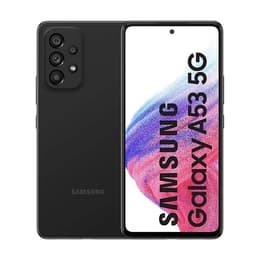

Compare models
Galaxy A34 vs Galaxy A53 5G
- 1-year warranty
- Free standard shipping
- Free 30-day returns
Differences at a glance
The Samsung Galaxy A34 (2023) and the Samsung Galaxy A53 5G (2022) are popular mid-range smartphones designed to deliver balanced everyday performance and essential features. While both devices run on Android with Samsung's custom interface and offer similar software support foundations, they differ slightly in release timing, screen dimensions, and internal processing hardware.
Understanding how these two models compare across key categories helps users determine which device best aligns with their daily requirements, whether they prioritize screen estate, battery reliability, or media consumption.
Available Models
Colour
Storage (GB)
Scores
Durability
When evaluating the expected lifespan of the Galaxy A34 and the Galaxy A53 5G, differences in release schedules and software support timelines play a vital role in determining long-term usability.
- Software Support Window: The Galaxy A34 launched one year after its counterpart, granting it an extended window of official security patches and system updates. Both models follow multi-year update commitments, but the Galaxy A34 maintains its software currency slightly further into the future.
- Repairability and Build Longevity: Both devices feature robust glass fronts paired with durable plastic frames and back panels, achieving similar scores for physical resilience and standard component replacement ease.
- Practical Lifespan: Users can expect both smartphones to handle daily routines reliably for several years, though the slightly newer release date of the Galaxy A34 gives it an advantage for long-term software retention.
Release year
2023
2022
Compatible with latest Update
Yes
Yes
Operating system
Android
Android
Foldable
No
No
Performance
Performance capabilities between the Galaxy A34 and the Galaxy A53 5G cater well to general multitasking, social media navigation, and casual gaming through distinct internal hardware choices.
- Everyday Responsiveness: Both devices handle web browsing, streaming, and switching between standard applications smoothly, supported by generous RAM configurations and efficient octa-core processing architectures.
- Storage Flexibility: Both models offer ample internal storage capacities alongside expandable storage via microSD card support, allowing users to keep large media libraries and documents locally.
- Battery Behavior: Each device packs a large 5,000 mAh battery that comfortably sustains a full day of mixed usage, requiring similar charging habits when managing demanding tasks or extended video playback.
Screen quality
Display characteristics on both smartphones deliver bright, sharp visuals, though slight variations in physical dimensions and panel technology create distinct viewing experiences.
- Display Technology and Clarity: Both models utilize vibrant Super AMOLED panels with crisp resolution and deep contrast levels, ensuring text and images appear sharp during reading or media viewing.
- Refresh Rate and Fluidity: Each device supports a smooth high refresh rate, making scrolling through web pages and animations feel fluid and responsive to touch input.
- Size and Outdoor Visibility: The Galaxy A34 features a slightly larger 6.6-inch screen compared to the 6.5-inch display on the Galaxy A53 5G, while both maintain high peak brightness levels to remain legible under direct sunlight.
Resolution
1080 x 2340
1080 x 2400
Screen type
Super AMOLED
Super AMOLED
Audiovisual
The camera configurations on the Galaxy A34 and the Galaxy A53 5G provide versatile photo and video tools suited for everyday memories and casual content capture.
- Main and Wide-Angle Photography: Both smartphones incorporate optical image stabilization on their primary sensors to reduce blur in daily snapshots, accompanied by ultra-wide lenses for capturing expansive landscapes.
- Video and Audio Capture: Each device records stable video clips in high resolution and utilizes clear internal microphone setups to ensure voice clarity during phone calls and video chats.
- Media Consumption Experience: Integrated stereo speakers on both models deliver balanced audio output for listening to podcasts, watching videos, or playing games without external headphones.
Main camera
48 megapixels
64 megapixels
Front camera
13 megapixels
32 megapixels
Miscellaneous
Practical daily usability elements such as connectivity standards, physical dimensions, and protective ratings show strong consistency across both smartphone models.
- Durability and Protection: Both handsets carry an IP67 rating for dust and water resistance, providing reliable protection against accidental splashes or brief immersion in shallow water.
- Physical Dimensions and Handling: The Galaxy A34 is marginally wider and heavier due to its larger screen size, whereas the Galaxy A53 5G offers a slightly more compact footprint for single-handed use.
- Connectivity and Security: Both devices support fast 5G cellular networks, modern Bluetooth standards, and secure authentication via optical in-display fingerprint sensors.
Weight
199 oz
189 oz
Screen size (in)
6,6
6.5
Network
5G
5G
SIM card
Physical SIM
Physical SIM
Carrier compatibility
Unlocked
Unlocked
What the community thinks
Community discussions and user feedback indicate that both the Galaxy A34 and the Galaxy A53 5G are appreciated for their reliable daily battery endurance, bright high-refresh-rate displays, and robust water resistance ratings. Common criticisms across both models occasionally point to slightly slower charging speeds compared to select market competitors and occasional interface stutter during heavy system updates. Overall, user consensus highlights both devices as dependable, balanced choices for standard smartphone tasks.
Users prioritizing a slightly larger display area and extended software longevity may lean toward the Galaxy A34, while users preferring a slightly more compact physical footprint and equivalent core functionality will find the Galaxy A53 5G well-suited to their needs. For those exploring sustainable purchasing paths, choosing a quality-assured refurbished option provides an eco-friendly alternative that extends the lifecycle of these capable devices. Ultimately, the decision rests on matching screen size preferences and release year timelines with individual daily usage habits.