
Compare models
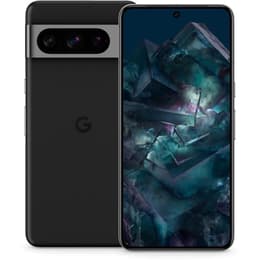
Galaxy A33 5G vs Google Pixel 8 Pro
- 1-year warranty
- Free standard shipping
- Free 30-day returns
Differences at a glance
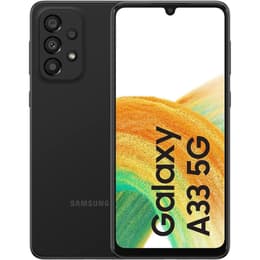
The Samsung Galaxy A33 5G, released in March 2022, and the Google Pixel 8 Pro, launched in October 2023, are both Android smartphones offering distinct user experiences. While the Galaxy A33 5G focuses on delivering a balanced set of features for everyday use, the Pixel 8 Pro emphasizes advanced camera capabilities, a premium display, and extended software support.
Available Models
Colour
Storage (GB)
Scores
Durability
The longevity of a smartphone is influenced by its release date, software support, and physical resilience.
- Release Timeline: The Samsung Galaxy A33 5G was released in March 2022, making it an older model compared to the Google Pixel 8 Pro, which launched in October 2023 [3, 10, 12, 15]. This difference in release year directly impacts their respective software support cycles.
- Software Support: The Galaxy A33 5G is expected to receive four major Android OS updates and five years of security updates from its release, with quarterly security updates currently being provided [13, 17, 20, 23, 42]. In contrast, the Google Pixel 8 Pro offers an extended commitment of seven years of OS, security, and Feature Drops updates, ensuring support until October 2030 [1, 14, 16, 24, 30, 33]. This makes the Pixel 8 Pro a more sustainable choice for users prioritizing long-term software longevity.
- Physical Durability & Repairability: The Galaxy A33 5G features an IP67 rating for dust and water resistance and a Corning Gorilla Glass 5 front, with a plastic back and frame [10, 13, 17, 23, 48]. Its repairability score is around 7.5 out of 10, indicating a relatively easier device to disassemble for repairs [6, 11]. The Pixel 8 Pro comes with an IP68 rating and Gorilla Glass Victus 2 on the front, alongside a glass back and aluminum frame [1]. However, its repairability score is noted to be lower, around 4.0 out of 10, due to tightly integrated components and strong adhesives, making DIY repairs more challenging [7, 18].
Release year
2022
2023
Compatible with latest Update
Yes
Yes
Operating system
Android
Android
Foldable
No
No
Performance
Performance is a key differentiator, impacting how smoothly applications run and how efficiently the device handles daily tasks.
- Processing Power: The Samsung Galaxy A33 5G is equipped with a processor that handles everyday tasks smoothly, with users reporting quick app loading and general responsiveness [17, 26]. However, it may experience occasional stutters when many applications are open simultaneously and is not ideal for demanding gaming [26, 44]. The Google Pixel 8 Pro, featuring a more advanced processor, delivers very quick and smooth performance for daily processes, multitasking, and graphically intensive applications like gaming [8, 12, 28].
- Memory and Storage: The Galaxy A33 5G typically offers 6GB or 8GB of RAM and 128GB or 256GB of internal storage, with the added benefit of expandable storage via a microSD card [3, 5, 10, 13, 29, 48]. The Pixel 8 Pro comes with 12GB of RAM and offers larger internal storage options ranging from 128GB up to 1TB, though it lacks expandable storage [1, 2, 12, 15].
- Battery Behavior: Both devices feature large battery capacities. The Galaxy A33 5G has a 5000mAh battery, with users often reporting it lasts a full day or even two with light usage [17, 23, 26]. The Pixel 8 Pro, with a 5050mAh battery, also generally provides good battery life, often lasting a full day for most users, though some report it as good but not exceptional compared to other high-end devices [8, 19, 22, 27, 28, 35].
Screen quality
The display is the primary interface for user interaction, and differences in technology and specifications can significantly alter the viewing experience.
- Display Technology and Resolution: The Samsung Galaxy A33 5G features a 6.4-inch Super AMOLED display with a resolution of 1080 x 2400 pixels, providing clear visuals and vibrant colors [3, 5, 13, 48]. The Google Pixel 8 Pro boasts a larger 6.7-inch LTPO OLED display with a higher resolution of 1344 x 2992 pixels, offering a sharper and more detailed viewing experience [1, 12, 19, 25, 35].
- Refresh Rate and Smoothness: The Galaxy A33 5G offers a 90Hz refresh rate, contributing to smoother scrolling and a more fluid user interface compared to standard 60Hz displays [3, 5, 13, 44]. The Pixel 8 Pro features an adaptive refresh rate that ranges from 1Hz to 120Hz, allowing for exceptionally smooth motion when needed and conserving power during static content viewing [1, 12, 35].
- Brightness and Outdoor Visibility: The Galaxy A33 5G's display is generally considered good for its segment, with adequate brightness for outdoor readability when set to maximum [9, 23]. The Pixel 8 Pro stands out with a significantly brighter display, reaching up to 2400 nits peak brightness, which ensures excellent visibility even in direct sunlight [1, 19, 35].
Resolution
1080 x 2400
1344 x 2992
Screen type
Super AMOLED
LTPO OLED
Audiovisual
Camera capabilities are a significant factor for many users, and both devices offer distinct photographic strengths.
- Rear Camera Systems: The Samsung Galaxy A33 5G includes a quad-camera setup with a 48MP main sensor featuring optical image stabilization (OIS), an 8MP ultrawide, a 5MP macro, and a 2MP depth sensor [3, 5, 10, 29, 44, 48]. It captures good photos in daylight, though the ultrawide can show distortion, and low-light performance benefits from Night mode [23, 44]. The Google Pixel 8 Pro features a more advanced triple-camera system, including a 50MP main sensor with OIS, a 48MP ultrawide with autofocus, and a 48MP telephoto lens with 5x optical zoom and OIS [1, 2, 15]. It is highly praised for its excellent photo quality, particularly in low-light conditions, and its improved ultrawide capabilities [8, 28, 32, 35].
- Front Camera and Video Recording: The Galaxy A33 5G has a 13MP front camera [3, 5, 29, 48]. Both devices are capable of 4K video recording, with the Galaxy A33 5G offering OIS on its main sensor for video [23]. The Pixel 8 Pro's 10.5MP front camera includes autofocus, and its video recording quality is generally good, though some reviewers note it may not match the very best in the market for video stabilization or detail in all scenarios [1, 8, 32].
- Computational Photography: The Pixel 8 Pro leverages its advanced processor for sophisticated computational photography features, enhancing image quality and offering unique editing tools [12, 32]. Users appreciate the consistent and reliable results from the Pixel's camera processing [8].
Main camera
48 megapixels
50 megapixels
Front camera
13 megapixels
10.5 megapixels
Miscellaneous
Beyond core specifications, several practical elements contribute to the overall user experience and device utility.
- Connectivity and Ports: Both smartphones support 5G connectivity. The Galaxy A33 5G includes Wi-Fi 5 (802.11ac) and Bluetooth 5.1, with a USB-C 2.0 port [3, 5, 48]. The Pixel 8 Pro offers more advanced connectivity with Wi-Fi 7 and Bluetooth 5.3, alongside a faster USB-C 3.2 port [12]. Neither device includes a traditional 3.5mm headphone jack [17].
- Biometric Security and Sensors: The Galaxy A33 5G features an in-display optical fingerprint sensor for secure unlocking [3, 5]. The Pixel 8 Pro also utilizes an under-display fingerprint scanner and offers advanced face recognition for security [12]. Both devices include standard sensors like accelerometers, gyroscopes, and compasses [3, 10, 25, 48].
- Design and Handling: The Galaxy A33 5G has a plastic back and frame, weighing 186g with dimensions of 159.7 x 74 x 8.1 mm [10, 13, 29]. The Pixel 8 Pro features a glass back and aluminum frame, weighing 213g and measuring 162.9 x 76.5 x 8.8 mm [1, 12, 25, 34]. The Pixel 8 Pro's larger size and weight might feel substantial to some users [34].
Weight
186 oz
213 oz
Screen size (in)
6.4
6.7
Network
5G
5G
SIM card
Physical SIM
Physical SIM + eSIM
Carrier compatibility
Unlocked
Unlocked
What the community thinks
Users frequently praise the Samsung Galaxy A33 5G for its reliable battery life, often lasting a full day or more, and its vibrant Super AMOLED display [17, 23, 26]. Many appreciate its IP67 water resistance and the inclusion of optical image stabilization in its main camera, which are notable features for its segment [17, 23, 44]. Common criticisms sometimes point to its performance not being ideal for heavy gaming and occasional stutters with multiple apps open [26, 44]. Some users also note that the ultrawide camera can produce distorted images [44].
The Google Pixel 8 Pro receives consistent acclaim for its exceptional camera system, particularly its low-light performance and advanced computational photography features [8, 28, 32, 35]. Its bright, high-resolution LTPO OLED display and extended software support commitment of seven years are also frequently highlighted as major advantages [1, 14, 16, 19, 24, 30, 33, 35]. Some users have expressed concerns about its battery life being good but not always outstanding compared to some competitors, and its repairability score is noted to be lower than some other devices [7, 18, 27, 31].
Users prioritizing long-term software support, a top-tier camera experience, and a premium display will find the Google Pixel 8 Pro well-suited to their needs. Its advanced processing power also makes it a strong choice for demanding applications and multitasking. Conversely, users seeking a balanced device with solid battery life, expandable storage, and a more repairable design may prefer the Samsung Galaxy A33 5G. It offers a dependable experience for everyday tasks and media consumption. Both devices are available as quality-assured refurbished options, providing an eco-friendly alternative for consumers.