Galaxy A23 vs Motorola Moto E32

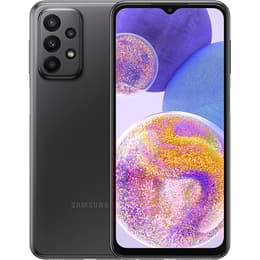
Galaxy A23
Galaxy A23
See options
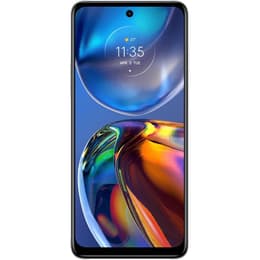
Motorola Moto E32
Motorola Moto E32
See options

The Samsung Galaxy A23 and the Motorola Moto E32 are both smartphones released in 2022, targeting users seeking essential features for daily communication and media consumption. While both devices operate on the Android platform, they present distinct approaches to display technology, processing power, and camera capabilities. This comparison aims to highlight these differences to help users determine which device best aligns with their individual needs.

Scores

Durability

When considering the long-term usability of these devices, their release timelines and software support policies are key factors. Both phones were launched in 2022, making them relatively similar in age.

  • Software Longevity: The Samsung Galaxy A23 launched with Android 12 and is expected to receive two major Android OS upgrades, potentially reaching Android 14, along with four years of security updates. In contrast, the Motorola Moto E32 launched with Android 11, and while Motorola initially indicated an update to Android 12, some reports suggest it may not receive further major OS updates, with security updates extending until May 2024. This difference means the Galaxy A23 offers a longer period of software support.
  • Repairability: The Samsung Galaxy A23 has a reported repairability score of 6.75 out of 10, indicating a reasonable ease of repair for components like the back plate and battery. Information regarding the specific repairability score for the Motorola Moto E32 is less readily available, though Motorola generally has a reputation for producing some repair-friendly devices.
  • Practical Lifespan: Users prioritizing extended software updates and security patches for a longer practical lifespan may find the Galaxy A23 more suitable due to its more robust update policy. For those who typically upgrade their devices more frequently or use them for less demanding tasks, the Moto E32's update schedule might be less of a concern.

Release year

2022

2022

Compatible with latest Update

Yes

No

Operating system

Android

Android

Foldable

No

No

Performance

The performance of a smartphone impacts how smoothly applications run, how quickly tasks are completed, and the overall responsiveness of the user experience. Both the Galaxy A23 and Moto E32 are designed for everyday usage, but they differ in their underlying hardware.

  • Processing Capabilities: The Samsung Galaxy A23 is equipped with a processor that handles general tasks and multitasking with reasonable efficiency. Users report it is suitable for daily usage, though some demanding applications or intensive gaming might experience occasional sluggishness or frame drops, particularly with lower RAM configurations. The Motorola Moto E32 features a processor that provides adequate performance for common daily activities like web browsing, social media, and casual games. However, it may struggle with more intensive applications, leading to slower loading times or less fluid operation.
  • Storage and Multitasking: The Galaxy A23 offers various RAM options, including 4GB, 6GB, and 8GB, alongside 64GB or 128GB of internal storage, all expandable via microSD. The Moto E32 typically comes with 4GB of RAM and 64GB of internal storage, also expandable. More RAM in the Galaxy A23, especially in its higher configurations, can contribute to smoother multitasking and app switching.
  • Battery Behavior: Both devices feature a substantial 5000mAh battery. The Galaxy A23 is noted for its good battery life, often lasting through a full day of moderate to heavy use. The Moto E32 also receives praise for its impressive battery endurance, with users reporting it can last for extended periods with light usage. Both support fast charging, with the Galaxy A23 supporting up to 25W (though often bundled with a 15W charger) and the Moto E32 supporting 18W (often bundled with a 10W charger).

Memory (GB)

4 GB

4 GB

Screen quality

The display is a primary interface for smartphone interaction, and both the Galaxy A23 and Moto E32 offer different visual experiences.

  • Display Technology and Resolution: The Samsung Galaxy A23 features a 6.6-inch PLS TFT LCD with a Full HD+ resolution of 1080x2408 pixels. This provides a clear and detailed viewing experience for text and images. The Motorola Moto E32 has a 6.5-inch IPS LCD with an HD+ resolution of 720x1600 pixels. While still offering a decent viewing area, the lower resolution on the Moto E32 means content will appear less sharp compared to the Galaxy A23.
  • Refresh Rate and Brightness: Both devices offer a 90Hz refresh rate, contributing to smoother scrolling and a more fluid visual experience than standard 60Hz displays. However, the Galaxy A23's display is generally brighter and offers better color reproduction, though it is not an AMOLED panel. The Moto E32's screen is described as bright and vivid, but some users note it may not be as rich as more premium displays. Outdoor visibility can be a challenge for the Galaxy A23 in direct sunlight.
  • Screen Protection: The Samsung Galaxy A23 benefits from Corning Gorilla Glass 5 protection, offering a degree of resistance against scratches and minor drops. The Motorola Moto E32 does not specify a particular glass protection, though it does feature a water-repellent design.

Resolution

1080 x 2408

720 x 1600

Screen type

PLS LCD

IPS LCD

Audiovisual

For many users, the camera system is a crucial aspect of a smartphone. Both the Galaxy A23 and Moto E32 offer multi-lens setups, but with varying capabilities.

  • Rear Camera System: The Samsung Galaxy A23 features a quad-camera setup with a 50-megapixel main sensor that includes optical image stabilization (OIS), a 5-megapixel ultrawide lens, and two 2-megapixel sensors for macro and depth. The OIS helps in reducing blur from handshakes, especially in challenging lighting. The Motorola Moto E32 typically includes a 50-megapixel main camera and a 2-megapixel depth sensor. Some regional variants of the Moto E32 may feature a 16-megapixel main sensor along with macro and depth lenses.
  • Photography Performance: The Galaxy A23 captures decent photos in good lighting conditions, but its low-light performance can result in grainy images and struggles with focus. The ultrawide lens adds versatility. The Moto E32's camera also performs well in good lighting, capturing clear images, but like many phones in its category, it may not excel in low-light scenarios.
  • Video Recording and Audio: Both devices support video recording up to 1080p at 30 frames per second. The Galaxy A23 lacks a 60fps option and stabilization, which can impact video smoothness. The Moto E32 also lacks stabilization, but can produce decent footage with minimal movement. Both phones offer acceptable microphone quality for calls and recordings, and their speakers are suitable for media consumption, though the Moto E32's audio might require earphones in noisy environments.

Main camera

50 megapixels

16 megapixels

Front camera

8 megapixels

8 megapixels

Miscellaneous

Beyond core performance and display, several practical elements contribute to the overall user experience of these smartphones.

  • Connectivity and Ports: Both the Samsung Galaxy A23 and Motorola Moto E32 support 4G LTE connectivity, Wi-Fi, and Bluetooth 5.0. They both include a USB-C 2.0 port for charging and data transfer, and importantly, retain a 3.5mm headphone jack, which is convenient for wired audio accessories.
  • Biometric Security: For secure unlocking, both devices feature a side-mounted fingerprint sensor. This placement is often preferred by users for its natural accessibility.
  • Design and Handling: The Galaxy A23 measures 165.1 x 76.4 x 8.8 mm and weighs 195 grams, featuring a plastic build with a Gorilla Glass 5 front. The Moto E32 is slightly more compact and lighter at 163.95 x 74.94 x 8.49 mm and 185 grams, with a plastic frame and back, and a water-repellent design. The water-repellent feature on the Moto E32 offers some protection against splashes.
  • Expandable Storage: Both smartphones offer expandable storage via a microSD card, allowing users to increase their storage capacity beyond the internal 64GB or 128GB options.

Weight

195 oz

184 oz

Screen size (in)

6.6

6,5

Network

4G

4G

SIM card

Dual Physical SIM

Dual Physical SIM

Carrier compatibility

Unlocked

Unlocked

User feedback for the Samsung Galaxy A23 often praises its large, high-resolution display and reliable battery life. However, some users have noted that its performance can be sluggish with demanding applications, and the camera's low-light capabilities are not its strongest suit. The Motorola Moto E32 is frequently commended for its strong battery endurance and smooth 90Hz display for everyday tasks. Criticisms sometimes point to its less powerful processor for intensive use and the uncertainty surrounding future Android version updates.

For users who prioritize a sharper display with higher resolution and a longer commitment to software updates, the Samsung Galaxy A23 may be the more fitting choice. Its optical image stabilization on the main camera also offers an advantage for photography. Conversely, individuals seeking a device primarily for essential daily communication, web browsing, and media consumption, with excellent battery life and a water-repellent design, might find the Motorola Moto E32 to be a practical option. Both devices represent solid choices in their category, and considering a quality-assured refurbished option for either model can be a sustainable choice for budget-conscious consumers.
See all articles

Our recent comparisons