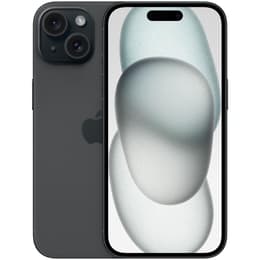
Galaxy A23 vs iPhone 15

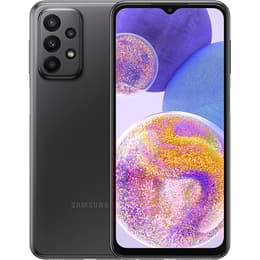
Galaxy A23
Galaxy A23
See options
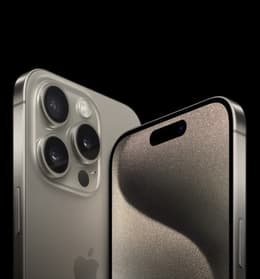
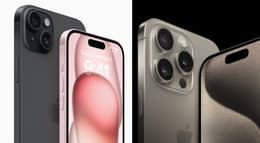
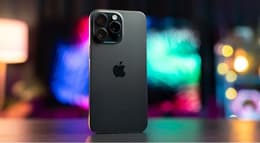
iPhone 15
iPhone 15
Starting at

Refurbished price:A$680.00

Versus A$1,249.00 new

See options

Ratings

The Samsung Galaxy A23, released in March 2022, and the Apple iPhone 15, launched in September 2023, represent distinct offerings in the smartphone market. While the Galaxy A23 operates on Android, providing a customizable experience, the iPhone 15 runs on Apple's iOS, known for its integrated ecosystem. These devices cater to different user preferences, primarily differing in their operating systems, display technology, and overall performance capabilities.

Scores

Durability

When considering the long-term usability of a smartphone, software support and physical resilience are key factors. The Galaxy A23 and iPhone 15 offer different trajectories in this regard.

  • Software Longevity: The Samsung Galaxy A23 typically receives two major Android OS updates and four years of security updates from its release. For example, a Galaxy A23 5G model that shipped with Android 12 has been updated to Android 15. In contrast, the iPhone 15 is expected to receive major iOS updates for approximately 5-7 years, with security support potentially extending even longer, offering a longer period of new features and security patches.
  • Physical Durability: The iPhone 15 features a Ceramic Shield front cover and an aluminum design, contributing to its overall resilience and offering IP68 water and dust resistance. The Galaxy A23, while offering a glass front with Gorilla Glass 5 protection on some variants, generally features a plastic frame and back, and does not typically carry an official IP rating for water resistance.
  • Expected Lifespan: Users prioritizing extended software support and robust physical protection may find the iPhone 15 better suited for a longer practical lifespan. The Galaxy A23, while durable for its class, will see its software support conclude sooner.

Release year

2022

2023

Compatible with latest Update

Yes

Yes

Operating system

Android

iOS

Foldable

No

No

Performance

The performance of a smartphone dictates how smoothly applications run, how quickly tasks are completed, and the overall responsiveness of the device. The Galaxy A23 and iPhone 15 approach performance from different tiers.

  • Everyday Responsiveness: The iPhone 15, powered by a current-generation processor, handles demanding applications and multitasking with notable fluidity. Users report that even graphically intensive games run smoothly at high settings. The Galaxy A23, equipped with an octa-core processor (Snapdragon 680 for 4G, Snapdragon 695 for 5G), capably manages daily tasks and general app usage, though some users have noted occasional lag with heavy multitasking or demanding applications.
  • Multitasking and App Handling: The iPhone 15's optimized hardware and software integration allow for seamless transitions between multiple open applications and quick loading times. The Galaxy A23, while offering various RAM configurations (4GB, 6GB, 8GB), provides a solid experience for typical smartphone use, but may exhibit slower performance when juggling many apps simultaneously.
  • Storage Options: Both devices offer multiple internal storage capacities. The iPhone 15 is available with 128GB, 256GB, or 512GB of internal storage. The Galaxy A23 comes with 64GB or 128GB of internal storage, with the added flexibility of expandable storage via a microSD card, which is not an option on the iPhone 15.

Memory (GB)

4 GB

6 GB

Screen quality

The display is a primary interface for smartphone interaction, and the visual experience varies significantly between these two models.

  • Display Technology and Clarity: The iPhone 15 features a 6.1-inch Super Retina XDR OLED display, offering deep blacks, vibrant colors, and a high resolution of 2556x1179 pixels at approximately 460 pixels per inch (ppi). The Samsung Galaxy A23 typically comes with a 6.6-inch PLS TFT LCD or IPS LCD display with a resolution of 1080x2408 pixels.
  • Brightness and Outdoor Visibility: The iPhone 15's OLED panel achieves a peak outdoor brightness of up to 2,000 nits, ensuring excellent visibility even in direct sunlight. The Galaxy A23's LCD panel offers adequate brightness for most indoor and outdoor conditions, though it may not match the iPhone 15's peak brightness in very bright environments.
  • Refresh Rate and Smoothness: The iPhone 15 maintains a standard 60Hz refresh rate. The Galaxy A23 offers a smoother visual experience with a 90Hz refresh rate on its 4G variant and up to 120Hz on its 5G variant, which can result in more fluid scrolling and animations.

Resolution

1080 x 2408

1179 x 2556

Screen type

PLS LCD

Super Retina XDR OLED

Audiovisual

For many users, the camera system is a crucial component of a modern smartphone, and both devices offer distinct photographic capabilities.

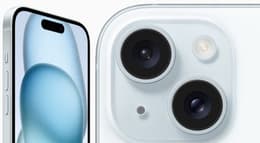
  • Main Camera Performance: The iPhone 15 features an advanced dual-camera system with a 48-megapixel main sensor that utilizes pixel binning for detailed photos, alongside a 12-megapixel ultrawide camera. The Galaxy A23 boasts a quad-camera setup, including a 50-megapixel main sensor with optical image stabilization (OIS), a 5-megapixel ultrawide, and additional macro and depth sensors.
  • Low-Light and Video Recording: The iPhone 15 excels in low-light conditions, producing clear and well-exposed images, and offers high-quality video recording up to 4K at 60 frames per second. The Galaxy A23's main camera performs well in good lighting, with OIS aiding in sharper images, and includes a night mode. However, its low-light performance can be grainy, and video recording is typically capped at 1080p at 30 frames per second.
  • Front Camera and Audio: Both devices feature capable front-facing cameras for selfies and video calls. The iPhone 15 has a 12-megapixel front camera, while the Galaxy A23 has an 8-megapixel front camera. For audio, the iPhone 15 provides clear speaker output and microphone quality. The Galaxy A23 also offers a 3.5mm headphone jack, a feature absent on the iPhone 15.

Main camera

50 megapixels

48 megapixels

Front camera

8 megapixels

12 megapixels

Miscellaneous

Beyond core features, several practical elements contribute to the overall user experience and daily convenience of these smartphones.

  • Connectivity Standards: The iPhone 15 supports 5G, Wi-Fi 6, and Bluetooth 5.3, ensuring fast and reliable wireless connections. The Galaxy A23 is available in both 4G and 5G variants, supporting Wi-Fi 5 (802.11ac) and Bluetooth 5.0 or 5.1, depending on the model.
  • Charging and Ports: The iPhone 15 has transitioned to a USB-C port for charging and data transfer, aligning with modern standards. The Galaxy A23 also uses a USB-C port and notably retains a 3.5mm headphone jack, offering direct wired audio connectivity.
  • Biometric Security and Design: The iPhone 15 relies on Face ID for secure facial recognition. The Galaxy A23 features a side-mounted fingerprint sensor for biometric authentication. In terms of physical design, the iPhone 15 is generally more compact and lighter at 171 grams, compared to the Galaxy A23's 195-197 grams.

Weight

195 oz

171 oz

Screen size (in)

6.6

6.1

Network

4G

5G

SIM card

Dual Physical SIM

Physical SIM + eSIM

Carrier compatibility

Unlocked

Unlocked

The Samsung Galaxy A23 and iPhone 15 cater to distinct user needs and preferences. The Galaxy A23 is often praised by users for its long-lasting battery life, with many reporting up to two days of use on a single charge, and its inclusion of a headphone jack and expandable storage. However, some common criticisms include its performance, which can feel slow or laggy with intensive use, and its camera's performance in low-light conditions.

Conversely, the iPhone 15 receives consistent acclaim for its powerful performance, vibrant OLED display, and advanced camera capabilities, particularly in various lighting scenarios. User feedback sometimes points to its 60Hz refresh rate as a potential drawback compared to some Android counterparts, and the absence of a headphone jack or expandable storage.

Users prioritizing an extensive software update cycle, a premium build, and top-tier performance for demanding applications and photography will find the iPhone 15 well-suited to their needs. Its integrated ecosystem and consistent user experience are also strong considerations. On the other hand, users who value a larger display, exceptional battery life, the flexibility of expandable storage, and a traditional headphone jack may lean towards the Galaxy A23. This device is also a practical choice for those who prefer the Android operating system's customization options.

For those seeking an eco-friendly and quality-assured alternative, considering refurbished options for either model can provide access to these devices while supporting sustainable consumption.

See all articles

Our recent comparisons