Google Pixel 8 vs iPhone 14 Plus

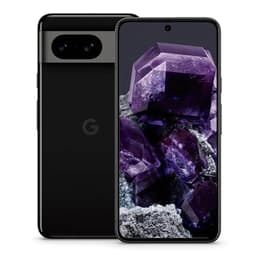
Google Pixel 8
Google Pixel 8
Starting at

Refurbished price:A$465.00

Versus A$1,245.00 new

See options
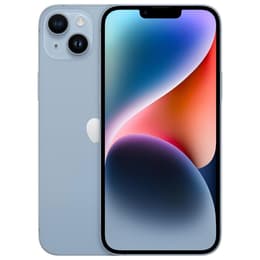
iPhone 14 Plus
iPhone 14 Plus
Starting at

Refurbished price:A$480.00

Versus A$1,249.00 new

See options

Ratings

The Google Pixel 8, released in October 2023, and the iPhone 14 Plus, launched in October 2022, represent distinct approaches to the modern smartphone experience. While both devices offer robust performance and advanced camera systems, they differ significantly in their operating systems and long-term software support. The Pixel 8 runs on Android, emphasizing artificial intelligence features, whereas the iPhone 14 Plus operates on iOS, known for its integrated ecosystem and user experience.

Scores

Durability

When considering the longevity of these devices, their respective release timelines and software support policies are key factors.

  • Release Timeline: The Google Pixel 8 is the newer device, having been released in October 2023, approximately a year after the iPhone 14 Plus, which debuted in October 2022.
  • Software Support: Google has committed to an extensive seven years of operating system, security, and feature updates for the Pixel 8, suggesting a prolonged period of software relevance. The iPhone 14 Plus, typical of Apple devices, can expect approximately five to six years of iOS updates from its release date.
  • Physical Durability: Both smartphones carry an IP68 rating for dust and water resistance, indicating protection against immersion. The Pixel 8 features Gorilla Glass Victus 2 for screen protection, while the iPhone 14 Plus utilizes Apple's Ceramic Shield on its front cover, which is designed for enhanced durability.

Release year

2023

2022

Compatible with latest Update

Yes

Yes

Operating system

Android

iOS

Foldable

No

No

Performance

The performance of a smartphone is central to its daily usability, encompassing everything from app responsiveness to handling demanding tasks.

  • Processing Power: The Google Pixel 8 is equipped with a current-generation processor designed to handle complex computations and advanced AI features efficiently. The iPhone 14 Plus features a powerful processor that was also used in the previous year's Pro models, providing smooth operation for applications and gaming.
  • Multitasking and Responsiveness: The Pixel 8 comes with 8GB of RAM, contributing to fluid multitasking and app management. The iPhone 14 Plus includes 6GB of RAM, which allows for efficient handling of multiple applications simultaneously within the iOS environment. Both devices offer a responsive user experience, with applications launching quickly and navigating the interface smoothly.
  • Storage Options: Both models are available with internal storage configurations of 128GB, 256GB, and 512GB, providing ample space for apps, photos, and media.
  • Battery Performance: The Pixel 8 houses a 4575 mAh battery, while the iPhone 14 Plus has a 4323 mAh battery. Users of the iPhone 14 Plus often report that its battery can comfortably last through a full day of typical use.

Memory (GB)

8 GB

6 GB

Screen quality

The display is a primary interface for smartphone interaction, influencing everything from media consumption to daily tasks.

  • Display Technology and Size: The Google Pixel 8 features a 6.2-inch OLED display, marketed as 'Actua,' offering vibrant colors and deep blacks. The iPhone 14 Plus comes with a larger 6.7-inch Super Retina XDR OLED display, also known for its rich color reproduction and contrast.
  • Resolution and Clarity: The Pixel 8 has a resolution of 2400 x 1080 pixels at 428 pixels per inch (ppi). The iPhone 14 Plus offers a resolution of 2778 x 1284 pixels at 458 ppi, providing a slightly sharper image on its larger screen.
  • Brightness and Refresh Rate: The Pixel 8's display can reach up to 1400 nits for HDR content and a peak brightness of 2000 nits, along with a variable refresh rate of 60-120Hz for smoother visuals. The iPhone 14 Plus has a typical brightness of 800 nits and a peak HDR brightness of 1200 nits, with a standard 60Hz refresh rate.

Resolution

1080 x 2400

1284 x 2778

Screen type

OLED

Super Retina XDR OLED

Audiovisual

Both devices offer advanced camera systems, but with different strengths and computational photography approaches.

  • Rear Camera System: The Pixel 8 features a 50MP main camera with a larger sensor for improved light sensitivity and a 12MP ultrawide camera that includes autofocus and macro focus capabilities. The iPhone 14 Plus is equipped with a dual 12MP camera system, comprising a main wide-angle lens with sensor-shift optical image stabilization and an ultrawide lens.
  • Photography Features: The Pixel 8 leverages Google's computational photography with features like Magic Editor, Best Take, and enhanced low-light performance. The iPhone 14 Plus includes features such as Photonic Engine for improved low-light performance, Deep Fusion, and Photographic Styles.
  • Video Capabilities: Both phones support 4K video recording. The iPhone 14 Plus offers Cinematic mode for depth-of-field effects and Action mode for stabilized video. The Pixel 8 also features advanced video capabilities, including Dual Exposure technology for clearer videos in challenging lighting.
  • Front Camera: The Pixel 8 has a 10.5MP front camera, while the iPhone 14 Plus features a 12MP TrueDepth front camera with autofocus and Night Mode capabilities.

Main camera

50 megapixels

12 megapixels

Front camera

10.5 megapixels

12 megapixels

Miscellaneous

Beyond core performance and display, several practical elements contribute to the overall user experience of a smartphone.

  • Connectivity: Both the Google Pixel 8 and the iPhone 14 Plus support 5G cellular networks, Wi-Fi 6, and Bluetooth 5.3, ensuring fast and reliable wireless connections.
  • Physical Design and Materials: The Pixel 8 has dimensions of 150.5 x 70.8 x 8.9 mm and weighs 187g, featuring an aluminum frame and Gorilla Glass Victus 2. The iPhone 14 Plus measures 160.8 x 78.1 x 7.8 mm and weighs 203g, constructed with an aerospace-grade aluminum frame and a Ceramic Shield front cover. The Pixel 8 is slightly more compact and lighter.
  • Charging Port and Biometrics: The Pixel 8 utilizes a USB-C port for charging and data transfer, and offers both an in-display fingerprint reader and secure face unlock. The iPhone 14 Plus features a Lightning port and relies on Face ID for biometric authentication.

Weight

187 oz

203 oz

Screen size (in)

6.2

6,7

Network

5G

5G

SIM card

Physical SIM + eSIM

Physical SIM + eSIM

Carrier compatibility

Unlocked

Unlocked

Connector

USB-C

Lightning

The Google Pixel 8 and iPhone 14 Plus cater to users with differing priorities, reflecting their respective operating system philosophies and hardware focuses. Users often praise the Pixel 8 for its advanced computational photography and the long-term software support commitment from Google, which ensures the device remains current for an extended period. Some users appreciate its more compact form factor and the integration of AI features that enhance daily tasks. Criticisms sometimes revolve around the battery life compared to some competitors, though it generally performs well for a full day's use.

The iPhone 14 Plus is frequently lauded for its large, vibrant display, robust battery life, and the consistent, intuitive iOS experience. Its camera system is well-regarded for producing high-quality photos and videos, with features like Cinematic mode being a highlight for many. Some users might note the 60Hz refresh rate as a point of comparison to devices with higher refresh rates, and the continued use of the Lightning port may be a consideration for those preferring USB-C.

For users who prioritize cutting-edge AI features, a long software support window, and a smoother display experience, the Google Pixel 8 may be a more suitable choice. Conversely, individuals who value a larger screen for media consumption, a highly integrated ecosystem, and a proven track record of consistent performance and strong battery life might find the iPhone 14 Plus better aligns with their needs. Both devices are available as quality-assured refurbished options, offering a sustainable choice for consumers.

See all articles

Our recent comparisons