Galaxy A23 5G vs Nokia X30

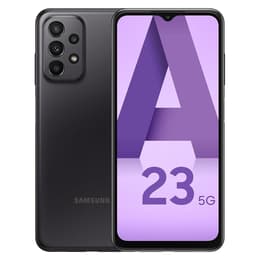
Galaxy A23 5G
Galaxy A23 5G
Starting at

Refurbished price:A$219.00

Versus A$457.00 new

See options
Nokia X30
Nokia X30
Starting at

Refurbished price:A$298.00

Versus A$965.00 new

See options

The Samsung Galaxy A23 5G and the Nokia X30 are both Android-based smartphones released in 2022, targeting users seeking reliable performance and modern features. While the Galaxy A23 5G focuses on a large display and a versatile camera system, the Nokia X30 emphasizes a more compact design, an AMOLED screen, and a commitment to sustainability. Both devices operate on the Android platform, offering a familiar user experience with their respective manufacturer-specific interfaces.

Scores

Durability

The longevity of a smartphone is influenced by its initial release date, software support, and physical durability.

  • Release Timeline and Software Support: The Samsung Galaxy A23 5G was released in August 2022, while the Nokia X30 followed in September 2022. The Galaxy A23 5G launched with Android 12 and has received updates up to Android 15, with Samsung generally providing two major OS upgrades and four years of security updates for this model. The Nokia X30 also launched with Android 12 and has been updated to Android 14. While Nokia initially promised three years of OS upgrades, user reports indicate that Android 15 may not be released for the X30, suggesting its major OS update cycle might conclude with Android 14.
  • Repairability: The Samsung Galaxy A23 5G has a repairability score of 8.1 out of 10, indicating a good level of repairability, with components like the back plate, camera lens covers, and battery being replaceable. The Nokia X30 is also designed with repairability in mind, with technicians using genuine OEM parts for repairs.
  • Expected Practical Lifespan: Given their release dates and software support policies, the Galaxy A23 5G is expected to receive security updates for a longer duration than the Nokia X30, potentially offering a slightly extended practical lifespan for users who prioritise the latest security patches. The Nokia X30's build, featuring a metal frame and Gorilla Glass Victus, contributes to its physical durability.

Release year

2022

2022

Compatible with latest Update

Yes

No

Operating system

Android

Android

Foldable

No

No

Performance

Both devices are equipped to handle daily tasks, but their performance characteristics differ in subtle ways that impact user experience.

  • Processor Capabilities: Both the Galaxy A23 5G and the Nokia X30 are powered by similar processors, enabling smooth operation for everyday applications and multitasking. Users can expect responsive navigation and efficient handling of common apps. For more demanding tasks like gaming, both devices offer a capable experience, though neither is designed for high-end, graphically intensive gaming.
  • Storage and RAM: The Galaxy A23 5G offers various configurations, including 4GB, 6GB, or 8GB of RAM and 64GB or 128GB of internal storage, expandable via microSD. The Nokia X30 typically comes with 6GB or 8GB of RAM and 128GB or 256GB of internal storage, with some variants supporting UFS 3.0 for faster data access, but it lacks a microSD card slot for expansion. Users who require extensive storage for media and apps without relying on cloud services might find the Galaxy A23 5G's expandable storage more flexible.
  • Battery Behavior: The Galaxy A23 5G features a larger 5,000mAh battery, which users report can last up to two days with moderate use. The Nokia X30 has a 4,200mAh battery, which generally provides a full day of use. Both support fast charging, with the Galaxy A23 5G supporting up to 25W and the Nokia X30 supporting up to 33W, though neither typically includes a charger in the box.

Memory (GB)

4 GB

8 GB

Screen quality

The visual experience on these smartphones is shaped by their display technology, size, and refresh rates.

  • Display Technology and Clarity: The Samsung Galaxy A23 5G features a 6.6-inch PLS LCD display, offering a resolution of 2408x1080 pixels (FHD+). The Nokia X30, on the other hand, comes with a 6.43-inch AMOLED display with a resolution of 2400x1080 pixels (FHD+). The AMOLED technology on the Nokia X30 typically provides deeper blacks and more vibrant colors compared to the LCD panel on the Galaxy A23 5G.
  • Refresh Rate and Smoothness: The Galaxy A23 5G boasts a 120Hz refresh rate, contributing to smoother scrolling and a more fluid visual experience. The Nokia X30 offers a 90Hz refresh rate, which is also smoother than a standard 60Hz display, providing a good balance between fluidity and battery efficiency.
  • Brightness and Outdoor Use: The Nokia X30's AMOLED display offers a peak brightness of 700 nits, which can be beneficial for outdoor visibility, though some users have noted it can still be challenging to read in very bright daylight. Information on the Galaxy A23 5G's typical brightness levels is less consistently highlighted, but its LCD panel may not achieve the same contrast or peak brightness as an AMOLED.
  • Screen Protection: Both devices offer screen protection, with the Galaxy A23 5G featuring Corning Gorilla Glass 5 and the Nokia X30 using Gorilla Glass Victus, which is generally considered more robust.

Resolution

1080 x 2408

1080 x 2400

Screen type

PLS LCD

AMOLED

Audiovisual

Both smartphones offer capable camera systems for capturing everyday moments, with some distinctions in their capabilities.

  • Rear Camera System: The Samsung Galaxy A23 5G features a quad-camera setup, including a 50-megapixel main camera, a 5-megapixel ultra-wide lens, and two 2-megapixel sensors for macro and depth. The Nokia X30 has a dual-camera system with a 50-megapixel main sensor with optical image stabilization (OIS) and a 13-megapixel ultra-wide lens. The Nokia X30's main camera is noted for its impressive low-light performance and image quality.
  • Photography Performance: The Galaxy A23 5G's 50-megapixel main camera is generally praised for its quality in various lighting conditions. The Nokia X30's camera, despite having fewer lenses, is highlighted for its strong performance, particularly in low-light scenarios, and its redesigned camera app.
  • Video Recording Quality: The Galaxy A23 5G supports Full HD video recording at 30 frames per second. The Nokia X30 also records video at 1080p at 30/60 frames per second, but some users note that the processor limits it from recording 4K video.
  • Front Camera: The Galaxy A23 5G has an 8-megapixel front-facing camera. The Nokia X30 features a 16-megapixel front camera.
  • Audio Experience: The Nokia X30 features a single loudspeaker, which some users have found to be less impressive, with reports of static at low volumes. The Galaxy A23 5G also has a single bottom-firing speaker, lacking stereo audio.

Main camera

50 megapixels

50 megapixels

Front camera

8 megapixels

16 megapixels

Miscellaneous

Beyond core features, several practical elements contribute to the overall user experience and daily convenience of these devices.

  • Connectivity Options: Both the Samsung Galaxy A23 5G and the Nokia X30 support 5G connectivity, Wi-Fi, and Bluetooth. The Nokia X30 also includes Wi-Fi 6 and NFC, along with eSIM support.
  • Port Types: Both devices feature a USB-C port for charging and data transfer. Neither phone includes a traditional 3.5mm headphone jack.
  • Biometric Security: The Galaxy A23 5G typically features a side-mounted fingerprint sensor. The Nokia X30 incorporates an in-display fingerprint sensor for convenient unlocking.
  • Weight and Dimensions: The Galaxy A23 5G weighs around 197 grams and has dimensions of 165.4 x 76.9 x 8.4 mm. The Nokia X30 is slightly lighter at 185 grams and more compact with dimensions of 158.9 x 73.9 x 7.99 mm. These differences can impact how each phone feels in hand and pocketability.
  • Build Materials and Durability Features: The Galaxy A23 5G features a plastic frame and back, with its display protected by Corning Gorilla Glass 5. The Nokia X30 boasts a more premium feel with a 100% recycled aluminum frame and a back made from recycled plastic, along with Gorilla Glass Victus for enhanced screen durability and an IP67 rating for dust and water resistance.

Weight

197 oz

185 oz

Screen size (in)

6.6

6.43

Network

5G

5G

SIM card

Physical SIM

Dual Physical SIM

Carrier compatibility

Unlocked

Unlocked

User feedback for the Samsung Galaxy A23 5G often highlights its strong battery life, capable camera, and the smooth experience provided by its 120Hz display. Many users appreciate its overall performance for daily tasks. However, some criticisms include its plastic build feeling less premium and the lack of stereo speakers. There have also been isolated reports of overheating and performance issues, though these do not appear to be widespread.

The Nokia X30 receives praise for its vibrant AMOLED display, robust build quality with recycled materials, and its commitment to software updates, offering a clean Android experience. Its camera performance, particularly in low light, is also frequently commended. Points of concern for users include the single loudspeaker's audio quality and the processor's limitation on 4K video recording. There has also been user disappointment regarding the potential discontinuation of major OS updates earlier than initially promised.

Users prioritising a large display, expandable storage, and a longer period of security updates may find the Samsung Galaxy A23 5G well-suited to their needs. Conversely, those who value a more compact design, a superior display technology, enhanced physical durability with an IP rating, and a focus on sustainable materials might lean towards the Nokia X30. Both devices offer a solid Android experience, and choosing between them often comes down to these specific preferences. For those considering either model, exploring quality-assured refurbished options can provide an eco-friendly alternative.


See all articles

Our recent comparisons