
Galaxy A23 5G vs Motorola Edge 30 Neo

Galaxy A23 5G
Galaxy A23 5G
Starting at

Refurbished price:A$219.00

Versus A$457.00 new

See options
Motorola Edge 30 Neo
Starting at

Refurbished price:A$307.00

Versus A$414.00 new

See options

Ratings

The Samsung Galaxy A23 5G and the Motorola Edge 30 Neo are both mid-range smartphones released in late 2022, offering 5G connectivity and aiming to provide a balanced user experience. While both devices operate on the Android platform, they present distinct approaches to display technology, camera configurations, and overall design, catering to different user preferences.

Scores

Durability

When considering the long-term usability of a smartphone, factors like release timeline, software support, and physical durability play a significant role.

  • Release Timeline: The Samsung Galaxy A23 5G was released in August 2022, while the Motorola Edge 30 Neo followed shortly after in September 2022. This means both devices are of similar age, impacting their remaining software support windows.
  • Software Longevity: The Galaxy A23 5G launched with Android 12 and has received updates up to Android 15 as of July 2025, with a policy of two major OS upgrades and four years of security updates. The Motorola Edge 30 Neo also launched with Android 12 and is expected to receive two major OS updates, bringing it to Android 14, along with three years of security updates. Users prioritizing longer security patch support may find the Galaxy A23 5G more appealing.
  • Physical Durability: The Galaxy A23 5G features Corning Gorilla Glass 5 for screen protection, offering a degree of resistance against scratches and drops. The Motorola Edge 30 Neo has a water-repellent design with an IP52 rating, providing some protection against dust and splashes.

Release year

2022

2022

Compatible with latest Update

Yes

Yes

Operating system

Android

Android

Foldable

No

No

Performance

Both smartphones are equipped to handle daily tasks and multitasking, though their internal configurations offer some differences in storage and battery management.

  • Storage and RAM: The Samsung Galaxy A23 5G is available with 4GB, 6GB, or 8GB of RAM and 64GB or 128GB of internal storage, which is expandable up to 1TB via a microSD card. The Motorola Edge 30 Neo typically comes with 6GB or 8GB of RAM and 128GB or 256GB of internal storage, but it does not offer expandable storage. Users requiring extensive storage for media and apps, or those who prefer physical expansion, might lean towards the Galaxy A23 5G.
  • Battery Life and Charging: The Galaxy A23 5G houses a larger 5000 mAh battery with 25W fast charging support. In contrast, the Edge 30 Neo has a 4020 mAh battery but supports significantly faster 68W wired charging and also includes 5W wireless charging, a feature not found on the Galaxy A23 5G. This means the Galaxy A23 5G generally offers longer usage on a single charge, while the Edge 30 Neo can recharge much more quickly and offers the convenience of wireless charging.
  • System Responsiveness: Both devices are powered by a similar current-generation processor, enabling smooth navigation through apps and efficient handling of everyday tasks. Users can expect a responsive experience for general use, web browsing, and light gaming on both.

Memory (GB)

4 GB

8 GB

Screen quality

The visual experience on these devices differs primarily in their display technology and overall size.

  • Display Technology and Clarity: The Samsung Galaxy A23 5G features a 6.6-inch PLS LCD display, offering a resolution of 1080 x 2408 pixels. The Motorola Edge 30 Neo, on the other hand, sports a smaller 6.28-inch pOLED display with a resolution of 1080 x 2400 pixels. The pOLED technology on the Edge 30 Neo typically provides deeper blacks, higher contrast, and more vibrant colors compared to the PLS LCD of the Galaxy A23 5G.
  • Refresh Rate and Smoothness: Both smartphones offer a 120Hz refresh rate, contributing to smoother scrolling and a more fluid visual experience, particularly noticeable during gaming or when navigating user interfaces.
  • Brightness and Viewing Experience: The Edge 30 Neo's pOLED panel generally offers better outdoor visibility due to its inherent brightness capabilities and superior contrast. The larger screen of the Galaxy A23 5G provides a more expansive viewing area, which can be beneficial for media consumption or productivity tasks.

Resolution

1080 x 2408

1080 x 2400

Screen type

PLS LCD

P-OLED

Audiovisual

Both devices offer versatile camera systems, though with different strengths and configurations for capturing photos and videos.

  • Rear Camera System: The Samsung Galaxy A23 5G features a quad-camera setup, including a 50-megapixel main sensor with Optical Image Stabilization (OIS), a 5-megapixel ultrawide lens, and two 2-megapixel sensors for macro and depth. The Motorola Edge 30 Neo opts for a dual-camera system, with a higher-resolution 64-megapixel main sensor also featuring OIS, and a 13-megapixel ultrawide lens that doubles as a macro camera. User reviews suggest the Galaxy A23 5G's main camera performs well in good lighting, producing detailed and color-accurate photos. The Edge 30 Neo's main camera also delivers sharp images with good color balance in bright conditions.
  • Low-Light and Video Performance: For low-light conditions, the OIS on both main cameras helps in capturing clearer images. However, some user feedback indicates that the Edge 30 Neo's low-light performance can be underwhelming compared to some competitors. The Galaxy A23 5G's ultrawide camera is noted to be basic, while the Edge 30 Neo's 13MP ultrawide is considered above average for its segment. Video recording on the Galaxy A23 5G is limited to 1080p at 30 frames per second, while the Edge 30 Neo can record 1080p at up to 60 frames per second with its main camera.
  • Front Camera and Audio: The Edge 30 Neo features a 32-megapixel front camera, which generally captures more detailed selfies than the Galaxy A23 5G's 8-megapixel front camera. For audio, the Motorola Edge 30 Neo includes stereo speakers with Dolby Atmos support, providing a more immersive sound experience for media consumption. The Galaxy A23 5G has a single bottom-firing speaker.

Main camera

50 megapixels

64 megapixels

Front camera

8 megapixels

32 megapixels

Miscellaneous

Beyond core specifications, several practical features and design elements differentiate these two smartphones.

  • Connectivity and Ports: Both devices support 5G connectivity, ensuring access to faster mobile networks. The Galaxy A23 5G retains a 3.5mm headphone jack, which is absent on the Motorola Edge 30 Neo. Both utilize a USB-C port for charging and data transfer. The Edge 30 Neo supports Bluetooth 5.1, while the Galaxy A23 5G also includes Bluetooth connectivity.
  • Biometric Security: The Galaxy A23 5G features a side-mounted fingerprint sensor integrated into the power button. The Motorola Edge 30 Neo incorporates an in-display fingerprint sensor for unlocking.
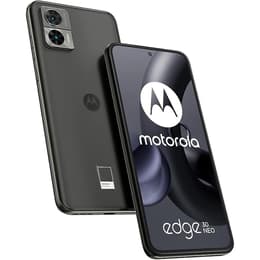
  • Design and Handling: The Motorola Edge 30 Neo is notably more compact and lighter, weighing 155g with dimensions of 152.9 x 71.2 x 7.8 mm. The Samsung Galaxy A23 5G is larger and heavier at 197g and measures 165.4 x 76.9 x 8.4 mm. The Edge 30 Neo's smaller form factor may appeal to users who prefer a device that is easier to handle with one hand or carry in a pocket. Both devices feature plastic backs.

Weight

197 oz

155 oz

Screen size (in)

6.6

6.28

Network

5G

5G

SIM card

Physical SIM

Dual Physical SIM

Carrier compatibility

Unlocked

Unlocked

The Samsung Galaxy A23 5G and the Motorola Edge 30 Neo both present compelling options in the mid-range smartphone market, each with distinct advantages. User feedback for the Galaxy A23 5G often highlights its robust battery life, generally good camera performance in adequate lighting, and the inclusion of expandable storage and a headphone jack. Some users have noted occasional software hiccups or a less premium feel due to its plastic construction.

The Motorola Edge 30 Neo is frequently praised for its vibrant pOLED display, compact and lightweight design, and very fast wired charging capabilities, along with the convenience of wireless charging. Criticisms sometimes point to its camera performance in challenging conditions and a shorter software update commitment compared to some rivals.

Users prioritizing a larger screen, a significantly larger battery capacity for extended use, expandable storage, and a traditional headphone jack may find the Samsung Galaxy A23 5G better suited to their needs. Conversely, those who value a more compact and lighter device, a superior display technology with deeper colors, faster charging speeds, wireless charging, and a higher-resolution front camera might lean towards the Motorola Edge 30 Neo. Both devices offer a reliable Android experience, and choosing between them often comes down to these specific feature preferences. For those seeking an eco-friendly alternative, both models are available as quality-assured refurbished options.


See all articles

Our recent comparisons