
Compare models

Galaxy A23 5G vs Google Pixel 10 Pro XL

  • 1-year warranty
  • Free standard shipping
  • Free 30-day returns
Galaxy A23 5G
Starting at

Refurbished price:A$221.00

Versus A$457.00 new

See options
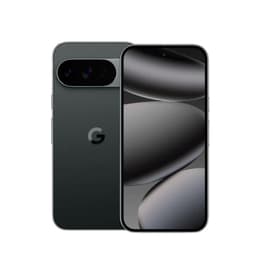
Google Pixel 10 Pro XL
Starting at

Refurbished price:A$899.00

Versus A$1,434.00 new

See options

Differences at a glance

The Samsung Galaxy A23 5G (2022) and the Google Pixel 10 Pro XL (2025) represent entirely different tiers of the smartphone market, catering to distinct user expectations and daily demands. While the Galaxy A23 5G is designed as an accessible device focused on fundamental connectivity, the Pixel 10 Pro XL functions as an advanced flagship featuring high-end processing, premium camera systems, and expansive display technology. Choosing between these two models involves weighing basic everyday utility against advanced system capabilities and long-term feature support.

Both smartphones operate on Android software platforms, though they deliver vastly different user experiences due to their hardware capabilities and update cycles.

Available Models

Colour

Storage (GB)

Scores

Durability

When examining longevity and software support, the two devices occupy very different positions in the marketplace due to their release years and hardware positioning.

  • Software update timeline: The Google Pixel 10 Pro XL benefits from extended multi-year OS and security support matching current flagship standards, while the Galaxy A23 5G operates closer to its mid-range lifecycle conclusion.
  • Repairability and durability: Both models feature standard smartphone construction, with the Pixel incorporating higher-grade protective glass and water-resistance ratings suited for rigorous everyday handling.
  • Expected practical lifespan: Users seeking prolonged device longevity through software updates will find the newer flagship model aligns better with extended usage horizons.

Release year

2022

2025

Operating system

Android

Android

Foldable

No

No

Performance

Daily operation and multitasking capabilities differ significantly between these options, shaping how smoothly demanding applications and general tasks execute.

  • System responsiveness: The Pixel 10 Pro XL handles heavy multitasking, demanding games, and intensive computational tasks seamlessly, whereas the Galaxy A23 5G manages standard messaging, web browsing, and social media efficiently without high-tier processing power.
  • Battery behavior: Both devices offer sufficient power to get through a standard day of typical use, though heavy utilization of high-performance apps will drain the flagship model faster while requiring more frequent charging for power users.
  • Memory and storage configurations: The Pixel provides larger baseline storage and high-speed memory pools, whereas the Galaxy offers expandable storage via a memory card slot for flexible media management.

Screen quality

Visual output and display engineering vary markedly, influencing media consumption comfort, outdoor visibility, and general clarity.

  • Display technology: The Pixel 10 Pro XL features a vibrant OLED panel with deep contrast and high peak brightness for clear outdoor viewing, while the Galaxy A23 5G utilizes a standard LCD screen with a high refresh rate for smooth scrolling.
  • Resolution and sharpness: The flagship model delivers higher pixel density and sharper text rendering, making detailed photo viewing and video streaming more immersive.
  • Size and handling: Both devices offer large screen formats suitable for productivity and entertainment, though overall physical dimensions dictate pocketability and one-handed reach.

Resolution

1080 x 2408

1344x2992

Audiovisual

Multimedia capabilities and photography hardware present a major dividing line between these two distinct smartphone categories.

  • Camera versatility: The Pixel 10 Pro XL equips advanced multi-lens hardware including dedicated telephoto zoom and sophisticated computational photography tools, while the Galaxy A23 5G provides a dependable main sensor for casual everyday snapshots.
  • Low-light performance: Advanced sensor architecture and processing on the flagship model capture greater detail and clarity in dim environments compared to the mid-range alternative.
  • Audio and video output: Stereo speakers and microphone arrays on the Pixel deliver richer media playback and clearer call recording, supporting reliable day-to-day communication.

Miscellaneous

Practical physical attributes, connectivity standards, and daily usability features dictate how each phone integrates into a user's routine.

  • Connectivity standards: Both devices support 5G network speeds and modern Wi-Fi protocols, ensuring reliable connection stability in supported areas.
  • Physical security: The Pixel incorporates advanced biometric options including under-display fingerprint sensors and secure facial recognition, complementing standard security tools found on the Galaxy.
  • Build and materials: The Galaxy A23 5G relies on durable plastic composite framing, whereas the Pixel 10 Pro XL utilizes polished glass and metal construction for a weighted hand feel.

Weight

197 oz

232 oz

Screen size (in)

6.6

6.8

Network

5G

5G

SIM card

Physical SIM

Physical SIM + eSIM

Carrier compatibility

Unlocked

Unlocked

What the community thinks

Community discussions and user feedback indicate that buyers appreciate the straightforward reliability and expandable storage of the Galaxy A23 5G, while Pixel 10 Pro XL users frequently praise its advanced camera performance and fluid screen responsiveness. Common considerations involve balancing the need for raw processing power against the desire for a simple, cost-effective communication tool.

Users prioritizing high-end photography, advanced multitasking capabilities, and long-term software support may prefer the Google Pixel 10 Pro XL. Conversely, users seeking a quality-assured refurbished option focused on everyday calling, messaging, and media streaming will find the Samsung Galaxy A23 5G well-suited to their needs. Exploring a quality-assured refurbished option on Back Market provides an eco-friendly way to access either device while reducing electronic waste. Ultimately, the right choice depends entirely on individual daily workflows and feature priorities rather than universal superiority.

Our recent comparisons