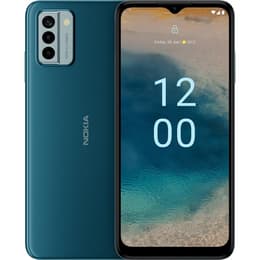

Galaxy A14 vs Nokia G22

Galaxy A14
Galaxy A14
Starting at

Refurbished price:A$216.00

Versus A$390.00 new

See options
Nokia G22
Nokia G22
See options

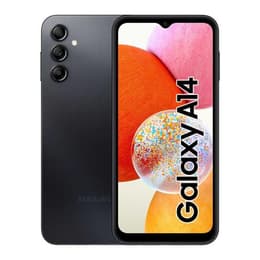
The Samsung Galaxy A14 and the Nokia G22 are Android smartphones released in early 2023. While both devices aim to provide essential smartphone functionalities, the Nokia G22 distinguishes itself with a strong emphasis on user repairability, whereas the Samsung Galaxy A14 offers a higher resolution display and slightly longer software support for security updates.

Scores

Durability

Both devices were released in early 2023, offering a similar starting point in their lifecycle.

  • Software Support: The Samsung Galaxy A14 5G launched with Android 13 and is expected to receive two major OS upgrades, up to Android 15, along with four years of security updates, extending until 2027. These security updates are typically delivered quarterly. The Nokia G22, released with Android 12, is slated for two OS upgrades, reaching Android 14, and three years of security updates, concluding around April 2026.
  • Repairability: The Nokia G22 is specifically designed for user-friendly repairs, partnering with iFixit to provide parts and guides for common fixes like battery, screen, and charging port replacements. It has received an 8/10 repairability score from iFixit. The Samsung Galaxy A14 5G also demonstrates improved repairability with a score of 8/10, featuring accessible components and battery pull tabs for easier replacement.
  • Practical Lifespan: Both phones are built for extended use, with the Nokia G22 explicitly promoting longevity through its self-repair design, encouraging users to keep their devices for longer.

Release year

2023

2023

Compatible with latest Update

No

No

Operating system

Android

Android

Foldable

No

No

Performance

When evaluating daily performance, both devices handle common tasks, but their underlying hardware leads to different user experiences.

  • Storage and Memory: Both the Galaxy A14 and Nokia G22 are available with 64GB or 128GB of internal storage, and both support expandable storage via a microSD card. The Galaxy A14 typically offers 4GB or 6GB of RAM, with some variants featuring 8GB, while the Nokia G22 usually comes with 4GB or 6GB of RAM.
  • Battery Performance: Both smartphones are equipped with large batteries, with the Galaxy A14 featuring a 5000mAh capacity and the Nokia G22 a 5050mAh capacity. Users of both devices frequently report excellent battery life, often lasting through a full day of heavy use or up to three days for the Nokia G22 with moderate usage.
  • System Responsiveness: The Galaxy A14's processor generally provides smooth performance for everyday applications and multitasking within its category. However, some users have noted occasional lag with demanding games or after significant OS updates. The Nokia G22's processor is generally considered less powerful, which can result in slower app loading times and a less fluid experience, particularly with more intensive applications or camera processing.

Memory (GB)

4 GB

4 GB

Screen quality

The visual experience on these devices differs primarily in display technology and resolution.

  • Display Technology and Size: The Samsung Galaxy A14 features a 6.6-inch PLS LCD display, while the Nokia G22 comes with a 6.5-inch IPS LCD panel.
  • Resolution and Clarity: The Galaxy A14 offers a Full HD+ resolution of 1080x2408 pixels, providing a sharper and more detailed image. In contrast, the Nokia G22 has an HD+ resolution of 720x1600 pixels, which results in a less crisp visual experience.
  • Refresh Rate and Brightness: Both devices support a 90Hz refresh rate, contributing to smoother scrolling and a more responsive feel. The Nokia G22 typically reaches 500 nits of brightness, with a sunlight brightness boost feature, while the Galaxy A14's display is noted by some users as not being the brightest.
  • Screen Protection: The Nokia G22's display is protected by Corning Gorilla Glass 3.

Resolution

1080 x 2408

720 x 1600

Screen type

PLS LCD

IPS LCD

Audiovisual

Both smartphones feature multi-lens camera systems designed for general photography, with varying results in different conditions.

  • Rear Camera System: Both the Samsung Galaxy A14 and Nokia G22 are equipped with a triple rear camera setup. The primary sensor on both is a 50-megapixel wide-angle lens with an f/1.8 aperture. Both also include 2-megapixel macro and 2-megapixel depth sensors. Some LTE variants of the Galaxy A14 may feature a 5-megapixel ultrawide lens instead of a depth sensor.
  • Front Camera and Video: The Galaxy A14 has a 13-megapixel front-facing camera, while the Nokia G22 features an 8-megapixel front camera. Both devices are capable of recording video at Full HD resolution at 30 frames per second.
  • Photography Performance: The main camera on the Galaxy A14 is generally considered capable for everyday photography and produces good selfies. However, some users have expressed dissatisfaction with overall camera quality, describing it as inconsistent or poor, particularly in challenging conditions. The Nokia G22's 50-megapixel camera performs adequately in good lighting but tends to struggle in low-light environments, and some users report slow camera app performance.
  • Audio Experience: The Nokia G22 includes a 3.5mm headphone jack. Some users of the Galaxy A14 have reported issues with sound quality and inconsistent volume levels.

Main camera

50 megapixels

50 megapixels

Front camera

13 megapixels

8 megapixels

Miscellaneous

Beyond core features, several practical elements differentiate the user experience of these two devices.

  • Connectivity and Ports: The Samsung Galaxy A14 5G supports 5G networks, Wi-Fi 802.11 a/b/g/n/ac (dual-band), and Bluetooth 5.2, with NFC available in some regions. The Nokia G22 supports LTE networks, Wi-Fi 802.11 a/b/g/n/ac (dual-band), and Bluetooth 5.0, with NFC on specific models. Both phones include a USB-C 2.0 port for charging and data transfer, as well as a 3.5mm headphone jack.
  • Sensors and Security: Both devices feature a side-mounted fingerprint sensor for secure unlocking, along with an accelerometer and proximity sensor. The Galaxy A14 5G also includes a gyroscope and a barometer in some regions.
  • Design and Durability: The Galaxy A14 measures 167.7 x 78 x 9.1 mm and weighs 201g, featuring a plastic back and frame. The Nokia G22 is slightly more compact and lighter at 165 x 76.19 x 8.48 mm and 195.23g, with a plastic back and frame, and a Corning Gorilla Glass 3 protected front. The Nokia G22 also boasts an IP52 rating for dust and splash resistance, and is constructed with recycled materials.

Weight

201 oz

196 oz

Screen size (in)

6.6

6.5

Network

4G

4G

SIM card

Physical SIM

Dual Physical SIM

Carrier compatibility

Unlocked

Unlocked

User feedback for the Samsung Galaxy A14 often highlights its excellent battery life, generally smooth performance for its category, and capable main camera as positive aspects. However, common criticisms include a display that may not be the brightest, sluggish charging speeds, occasional lag with demanding applications, and inconsistent camera performance. For the Nokia G22, users frequently praise its robust battery life and its unique focus on repairability, which allows for easier self-service of common components.

Conversely, the Nokia G22 often faces criticism for its limited processing power, which can lead to slower app performance and a less responsive camera experience, as well as its lower resolution display. Some users have also reported software stability issues after updates.

Users prioritizing a higher resolution display, slightly better overall performance for everyday tasks, and a longer commitment to security software updates may find the Samsung Galaxy A14 to be a suitable choice. Conversely, users who value the ability to perform basic repairs themselves, prioritize environmental considerations through extended device longevity, and require robust battery life will likely find the Nokia G22 aligns better with their needs. Both devices offer a practical approach to smartphone ownership, and considering a quality-assured refurbished option can be an eco-friendly alternative for either model.

See all articles

Our recent comparisons