
Compare models
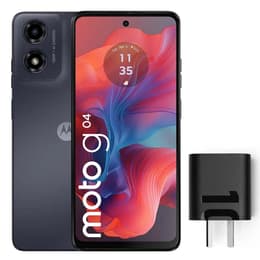
Galaxy A14 vs Motorola Moto G04
- 1-year warranty
- Free standard shipping
- Free 30-day returns
Differences at a glance
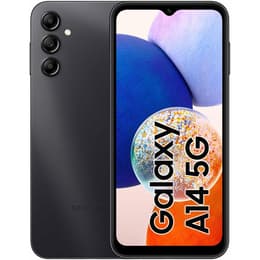
The Samsung Galaxy A14 (2023) and the Motorola Moto G04 (2024) are entry-level smartphones designed for everyday mobile communication, web browsing, and media consumption. While both devices serve users looking for straightforward, reliable functionality, they diverge significantly in display clarity and software ecosystems. The Samsung model runs on Android with the manufacturer's customized interface, whereas the Motorola device utilizes a streamlined, near-stock version of Android. These distinct approaches cater to different preferences for interface layout and long-term usability.
Available Models
Colour
Storage (GB)
Scores
Durability
When evaluating structural longevity and software support, both devices offer practical life spans suited to standard daily demands, though their update paths differ.
- Software support: The Samsung model benefits from multi-year security patches, helping maintain safety over time, while the Motorola model generally follows a more concise update lifecycle.
- Build and maintenance: Both smartphones feature sturdy plastic frames designed to withstand regular handling, and they can be maintained easily through quality-assured refurbished options that extend their operational usefulness.
- Expected lifespan: Daily performance remains stable for routine tasks across both options, provided storage is managed effectively.
Release year
2023
2024
Compatible with latest Update
No
Yes
Operating system
Android
Android
Foldable
No
No
Performance
Performance profiles on both entry-level handsets are optimized for foundational communication tasks rather than demanding resource-heavy applications.
- Everyday responsiveness: Basic applications, messaging tools, and web browsing open reliably, though heavy multitasking or high-end 3D gaming will push hardware limits.
- Battery behavior: Both devices include a robust 5000 mAh battery capacity that comfortably powers a full day of standard use, supported by standard wired charging speeds.
- Storage capacity: Internal storage configurations are complemented by expandable memory slots, allowing users to save media and files securely.
Screen quality
Display characteristics represent a key point of divergence, affecting text crispness and motion smoothness during daily viewing.
- Resolution and clarity: The Samsung device features a higher-resolution panel that renders text and images with sharper detail, whereas the Motorola alternative opts for a lower resolution.
- Refresh rate: The Motorola handset incorporates a faster refresh rate for smoother scrolling through menus and web pages, complementing its visual fluidity.
- Outdoor visibility: Standard brightness levels on both screens allow for indoor visibility and basic outdoor legibility under shaded conditions.
Resolution
1080 x 2408
720 x 1612
Screen type
PLS LCD
IPS LCD
Audiovisual
Camera capabilities on these affordable devices focus on capturing casual everyday moments rather than specialized professional photography.
- Main photography: High-megapixel primary sensors on both models capture clear daylight photos with natural colors and adequate detail for social sharing.
- Supplementary lenses: The Samsung model includes additional utility lenses for wider perspectives, while the Motorola model keeps its rear camera setup streamlined to a single primary sensor.
- Video and audio: Standard definition video recording and clear microphone performance handle routine video calls and casual recording adequately.
Main camera
50 megapixels
16 megapixels
Front camera
13 megapixels
5 megapixels
Miscellaneous
Practical daily usability elements, including physical dimensions and connectivity, shape how these devices fit into a traveler's or student's routine.
- Physical handling: The Motorola model features a noticeably lighter and slimmer chassis, making it comfortable for one-handed operation, while the Samsung model has a slightly heavier build.
- Ports and security: Both devices retain the traditional headphone jack alongside modern USB Type-C ports and responsive side-mounted fingerprint sensors for biometric security.
- Connectivity: Standard wireless protocols and local networking features ensure stable connections for everyday browsing and accessory pairing.
Weight
201 oz
179 oz
Screen size (in)
6.6
6.56
Network
4G
4G
SIM card
Physical SIM
Dual Physical SIM
Carrier compatibility
Unlocked
Unlocked
What the community thinks
User feedback from online communities highlights distinct preferences for each device depending on daily habits. Owners of the Samsung model frequently praise its sharper screen resolution and structured software environment, though some note that demanding apps can test its processing limits. Conversely, users favor the Motorola model for its lightweight ergonomics and fluid interface navigation, while pointing out that the lower display resolution and simpler camera array are trade-offs for its streamlined simplicity. For consumers exploring sustainable technology, choosing a quality-assured refurbished option provides an eco-friendly alternative without compromising on core functionality.
Users prioritizing sharper visual text and structured software features may prefer the Samsung option, while users prioritizing a lighter physical build and fluid screen transitions will lean toward the Motorola device. Evaluating these specific interface and display differences helps ensure the selected smartphone aligns smoothly with daily requirements.