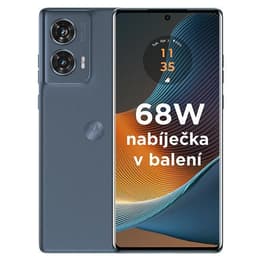

Galaxy A14 vs Motorola Edge 50 Fusion

Galaxy A14
Galaxy A14
Starting at

Refurbished price:A$216.00

Versus A$390.00 new

See options
Motorola Edge 50 Fusion
See options

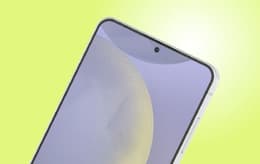
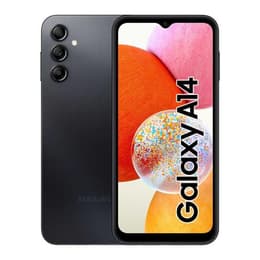
The Samsung Galaxy A14, released in January 2023, and the Motorola Edge 50 Fusion, launched in April 2024, are both Android smartphones designed to offer a balanced user experience. While the Galaxy A14 focuses on essential features and robust battery life, the Edge 50 Fusion introduces a more advanced display, enhanced camera capabilities, and a sleeker design. Both devices run on the Android operating system, providing access to a wide ecosystem of applications and services, and are available as quality-assured refurbished options for a more sustainable choice.

Scores

Durability

When considering the long-term usability of these devices, several factors come into play, including software support and physical resilience.

  • Software Longevity: The Motorola Edge 50 Fusion, being the newer device, benefits from a longer software support window, typically receiving three major Android OS updates and four years of security updates from its release. The Samsung Galaxy A14, released earlier, is expected to receive two major Android OS updates (up to Android 15) and four years of security updates.
  • Physical Durability: The Motorola Edge 50 Fusion features an IP68 rating, indicating strong resistance to dust and water immersion, and its display is protected by Corning Gorilla Glass 5. The Samsung Galaxy A14, while featuring a durable plastic build, does not carry an official IP rating for water and dust resistance.
  • Repairability: The Samsung Galaxy A14 has demonstrated a notable repairability score of 8 out of 10, partly due to its design which includes battery pull tabs, making battery replacement more straightforward. Information regarding the specific repairability score for the Motorola Edge 50 Fusion is less readily available, though its construction suggests a standard approach to internal component access.

Release year

2023

2024

Compatible with latest Update

No

Yes

Operating system

Android

Android

Foldable

No

No

Performance

The performance of a smartphone is crucial for daily tasks, from browsing to demanding applications and gaming.

  • Processing Power: The Motorola Edge 50 Fusion is equipped with a more recent-generation processor, which allows it to handle demanding applications and multitasking with greater fluidity. Users will experience smoother transitions and quicker app loading times. The Samsung Galaxy A14's processor is well-suited for everyday use and lighter tasks, though it may exhibit occasional slowdowns with graphically intensive games or numerous applications running simultaneously.
  • Multitasking and Storage: The Edge 50 Fusion offers higher RAM configurations, up to 12GB, contributing to more efficient multitasking and keeping more apps open in the background without refreshing. It also provides larger internal storage options, up to 512GB, but lacks expandable storage. The Galaxy A14 typically comes with 4GB or 6GB of RAM, which is adequate for general use, and supports microSD card expansion up to 1TB, offering flexibility for users with extensive media libraries.
  • Battery Endurance and Charging: Both devices feature a substantial 5000 mAh battery capacity, providing ample power for a full day of use. However, the Motorola Edge 50 Fusion supports significantly faster 68W charging, capable of replenishing a large portion of the battery in a short period, and includes a charger in the box. The Samsung Galaxy A14 supports 15W charging, which is slower, and typically does not include a charging adapter.

Memory (GB)

4 GB

12 GB

Screen quality

The visual experience is a key differentiator, with both phones offering distinct display technologies.

  • Display Technology and Vibrancy: The Motorola Edge 50 Fusion features a 6.7-inch pOLED display, known for its deep blacks, high contrast, and vibrant color reproduction. It also supports HDR10+ and reaches a peak brightness of 1600 nits, making content consumption immersive and outdoor visibility excellent. The Samsung Galaxy A14 utilizes a 6.6-inch PLS LCD panel, which provides good clarity and color accuracy for its class, though it does not offer the same level of contrast or brightness as an OLED screen.
  • Smoothness and Responsiveness: The Edge 50 Fusion boasts a high 144Hz refresh rate, resulting in exceptionally smooth scrolling, animations, and a more responsive feel during interactions and gaming. The Galaxy A14 5G model offers a 90Hz refresh rate, which is an improvement over standard 60Hz displays, providing a noticeably smoother experience for daily navigation. The 4G variant of the A14 has a 60Hz refresh rate.
  • Screen Protection: The Motorola Edge 50 Fusion's display is protected by Corning Gorilla Glass 5, offering a degree of resistance against scratches and minor drops. The Samsung Galaxy A14 does not specify a particular glass protection, suggesting a more basic level of screen durability.

Resolution

1080 x 2408

1080 x 2400

Screen type

PLS LCD

P-OLED

Audiovisual

Camera capabilities are often a deciding factor, and these devices offer different photographic strengths.

  • Rear Camera Systems: The Motorola Edge 50 Fusion features a versatile dual-camera setup, including a 50 MP main sensor with Optical Image Stabilization (OIS) for clearer photos and videos, and a 13 MP ultrawide lens that also functions for macro shots. The Samsung Galaxy A14 comes with a triple rear camera array, consisting of a 50 MP main sensor, a 2 MP macro lens, and a 2 MP depth sensor. The 5G model of the A14 lacks an ultrawide lens.
  • Photography Performance: The Edge 50 Fusion's OIS on its main sensor contributes to better low-light performance and more stable video recording. Its ultrawide lens adds flexibility for capturing broader scenes. The Galaxy A14's main 50 MP camera performs well in good lighting conditions, capturing decent detail, but its performance diminishes in low-light environments, and the dedicated macro and depth sensors offer limited practical utility.
  • Video Recording and Front Camera: The Motorola Edge 50 Fusion supports 4K video recording at 30 frames per second (fps) with both its rear and front cameras, and 1080p at 120fps with the main rear camera, providing more options for video creators. It also has a higher-resolution 32 MP front camera for detailed selfies and video calls. The Samsung Galaxy A14 records video at 1080p at 30fps from both its rear and 13 MP front cameras.

Main camera

50 megapixels

50 megapixels

Front camera

13 megapixels

32 megapixels

Miscellaneous

Beyond core specifications, several practical elements influence the overall user experience.

  • Connectivity Standards: Both devices support 5G connectivity for faster mobile data speeds. The Motorola Edge 50 Fusion offers more advanced Wi-Fi 6e support, providing potentially faster and more stable wireless internet connections in compatible environments, alongside Bluetooth 5.2. The Samsung Galaxy A14 supports Wi-Fi 802.11 a/b/g/n/ac (Wi-Fi 5) and Bluetooth 5.1 or 5.2. Both include NFC for contactless payments.
  • Physical Ports and Biometrics: The Galaxy A14 retains a 3.5mm headphone jack, which is convenient for users with wired audio accessories, and features a side-mounted fingerprint sensor. The Edge 50 Fusion omits the headphone jack but offers an under-display optical fingerprint sensor for biometric authentication. Both use a USB-C 2.0 port for charging and data transfer.
  • Design and Handling: The Motorola Edge 50 Fusion presents a slimmer and lighter profile, often featuring eco-leather or silicone polymer backs for a distinct tactile feel and a more premium aesthetic. The Samsung Galaxy A14 has a more traditional plastic build, which contributes to its durability but results in a slightly thicker and heavier device.

Weight

201 oz

175 oz

Screen size (in)

6.6

6.7

Network

4G

5G

SIM card

Physical SIM

Dual Physical SIM

Carrier compatibility

Unlocked

Unlocked

The Samsung Galaxy A14 and Motorola Edge 50 Fusion cater to different user priorities, reflecting their respective release timelines and design philosophies. Users often praise the Galaxy A14 for its reliable battery life and the inclusion of a headphone jack and expandable storage, making it a practical choice for those who value these traditional features. Criticisms sometimes point to its display technology and less powerful processor compared to newer alternatives, as well as the absence of an official IP rating.

The Motorola Edge 50 Fusion, on the other hand, frequently receives positive remarks for its vibrant pOLED display with a high refresh rate, its faster charging capabilities, and its more modern design with IP68 water and dust resistance. Some users note that while its processor is capable, it might not always match the raw power of some competitors in its segment, and the lack of expandable storage can be a consideration for some.

Users prioritizing a smooth visual experience, faster charging, and a more refined design with robust water and dust protection may find the Motorola Edge 50 Fusion better suited to their needs. Conversely, individuals who value a lower entry point, expandable storage, a headphone jack, and a highly repairable device for essential daily tasks might lean towards the Samsung Galaxy A14. Both devices offer a pathway to informed and sustainable choices, especially when considering quality-assured refurbished options.


See all articles

Our recent comparisons