Compare models
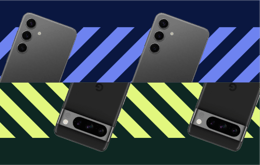
Galaxy A56 vs Google Pixel 8 Pro
- 1-year warranty
- Free standard shipping
- Free 30-day returns
Differences at a glance
The Samsung Galaxy A56 (2025) and the Google Pixel 8 Pro (2023) are distinct smartphones that cater to different user preferences within the Android ecosystem. While both devices feature large screens and multi-camera setups, the Galaxy A56 focuses on a modern mid-range design with extended software commitments, whereas the Google Pixel 8 Pro delivers a flagship-tier hardware and software experience.
Operating on customized interfaces built over Android, both phones provide smooth access to the Google Play Store and modern app ecosystems, yet they handle hardware integration and day-to-day interactions differently.
Available Models
Colour
Storage
Scores
Durability
When evaluating structural longevity and software support, both devices offer extensive update lifelines backed by robust build materials.
- Release timeline and support: The Google Pixel 8 Pro launched in late 2023 with a landmark seven-year software support window covering system updates and security patches, while the Galaxy A56 arrived in early 2025 with a similarly impressive multi-year support commitment stretching deep into the next decade.
- Build and repairability: Both phones incorporate durable glass and metal frames paired with dust and water resistance ratings, ensuring they withstand routine daily hazards and accidental exposure to the elements.
- Expected practical lifespan: Generous memory configurations and dedicated security patches allow both handsets to maintain reliable performance and safety over years of continuous daily ownership.
Release year
2025
2023
Foldable
No
No
Performance
Under everyday conditions, both smartphones handle multitasking, demanding applications, and system navigation with high reliability.
- Storage and memory: The Galaxy A56 is typically offered with flexible internal storage tiers paired with ample random access memory, while the Pixel 8 Pro starts with a robust 12GB memory baseline to keep background tasks active effortlessly.
- Everyday responsiveness: Apps load swiftly, web pages render without stutter, and switching between heavy utility programs occurs smoothly thanks to optimized system software and capable processors.
- Battery behavior: Both devices house large 5,000 mAh-class batteries designed to comfortably clear a standard day of mixed communication, media streaming, and navigation use before requiring a recharge.
Screen quality
Both models feature large, immersive display panels designed for crisp text rendering and vibrant media consumption.
- Display technology: The Galaxy A56 utilizes a bright Super AMOLED panel, while the Pixel 8 Pro employs an advanced OLED screen capable of rich contrast levels and deep black tones.
- Outdoor visibility: High peak brightness capabilities on both screens ensure that text and images remain easily legible even under direct sunlight outdoors.
- Refresh rate and smoothness: Both displays support a 120Hz refresh rate, delivering fluid scrolling through social media feeds, menus, and supported mobile games.
Resolution
1080 x 2340
1344 x 2992
Audiovisual
Camera hardware and processing approaches differ notably, affecting how each device captures photos and video content.
- Camera system capabilities: The Pixel 8 Pro features a dedicated high-resolution telephoto lens alongside its primary and ultra-wide sensors for optical zoom versatility, whereas the Galaxy A56 relies on a capable triple-lens setup anchored by a primary stabilized sensor and macro capabilities.
- Everyday and low-light photography: The Pixel 8 Pro utilizes advanced computational photography algorithms to excel in challenging low-light environments, while the Galaxy A56 produces sharp, natural-looking everyday snapshots.
- Media and audio output: Both models include reliable multi-microphone arrays for calls and stereo speakers that provide clear sound for casual video viewing and listening.
Miscellaneous
Physical dimensions and connectivity standards shape the everyday ergonomics and handling of each phone.
- Connectivity options: Both smartphones support modern 5G cellular networks, dual-band Wi-Fi standards, and Bluetooth for seamless peripheral pairing.
- Handling and ergonomics: The Galaxy A56 measures slightly thinner and lighter at 198 grams, while the Pixel 8 Pro weighs 213 grams with a slightly heavier feel attributed to its robust flagship sensor housing and heavier glass construction.
- Security sensors: Both devices offer biometric authentication options, including fast facial recognition and secure under-display fingerprint sensors for quick unlocking.
Weight
200 oz
213 oz
Screen size (in)
6.7
6.7
Network
4G
5G
SIM card
Physical SIM + eSIM
Physical SIM + eSIM
Carrier compatibility
Unlocked
Unlocked
What the community thinks
User feedback from online communities highlights the Pixel 8 Pro for its advanced zoom capabilities, clean software environment, and comprehensive editing tools, though some users note that the device can run warm during intensive tasks. Conversely, the Galaxy A56 receives praise for its balanced power efficiency, modern design aesthetics, and reliable daily battery longevity, with occasional notes that its auxiliary macro lens is less versatile than a dedicated telephoto camera.
Users prioritizing advanced photography flexibility and long-range zoom may prefer the Google Pixel 8 Pro, while users seeking a modern, large-screen daily device with a light software interface may lean toward the Samsung Galaxy A56. Selecting a quality-assured refurbished option for either model provides an eco-friendly, sustainable choice that reduces electronic waste without compromising on core performance.