Compare models

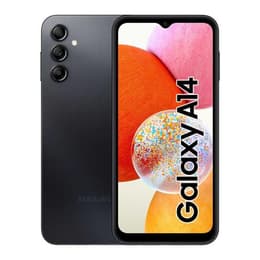
Galaxy A14 vs Galaxy A34

  • 1-year warranty
  • Free standard shipping
  • Free 30-day returns
Galaxy A14
Starting at

Refurbished price:A$239.00

Versus A$411.00 new

See options
Galaxy A34
Starting at

Refurbished price:A$205.00

Versus A$476.00 new

See options

Differences at a glance

The Samsung Galaxy A14 (2023) and the Samsung Galaxy A34 (2023) are mid-range smartphones designed for everyday mobile users. While both devices run on the Android operating system with Samsung's custom interface, they target different user priorities through distinct hardware configurations. The Galaxy A14 focuses on essential mobile features for straightforward daily communication, whereas the Galaxy A34 introduces enhanced processing power, a more fluid display technology, and improved media capabilities.

Available Models

Colour

Storage

Scores

Durability

When examining software support and physical longevity, both smartphones are built to handle years of daily use, though their update timelines and hardware resilience differ slightly.

  • Software support: Both devices receive multi-year security patches and operating system updates from Samsung, with the Galaxy A34 generally slated for a slightly extended support lifecycle due to its position in the product lineup.
  • Build and repairability: The Galaxy A34 includes a higher rating for water and dust resistance, making it better equipped to handle accidental liquid exposure over time compared to the Galaxy A14.
  • Expected lifespan: Users can expect both models to remain reliable for standard tasks over several years, provided they choose quality-assured refurbished options that undergo rigorous testing to verify battery health and structural integrity.

Release year

2023

2023

Compatible with latest Update

No

Yes

Operating system

Android

Android

Foldable

No

No

Performance

Daily operation and multitasking capabilities vary between the two models based on their internal hardware and memory configurations.

  • App loading and multitasking: The Galaxy A34 handles demanding applications, quick switching between multiple active programs, and moderate gaming more smoothly due to its faster internal processor.
  • Storage capacity: Both models offer expandable storage via microSD card slots, allowing users to keep large photo libraries and media files without internal space constraints.
  • Battery behavior: Both devices feature large battery capacities capable of lasting through a full day of standard use, though the Galaxy A34 manages power more efficiently during intensive tasks like video streaming.

Screen quality

Display performance represents one of the most noticeable differences during daily media consumption and outdoor navigation.

  • Display technology: The Galaxy A14 uses a standard high-definition screen, while the Galaxy A34 features an advanced organic light-emitting diode panel that delivers deeper contrast levels and more vivid color reproduction.
  • Outdoor visibility: The Galaxy A34 offers higher peak brightness levels, making text and images easier to read under direct sunlight.
  • Refresh rate: The Galaxy A34 supports a higher refresh rate for smoother scrolling through web pages and social media feeds, compared to the standard refresh rate on the Galaxy A14.

Resolution

1080 x 2408

1080 x 2340

Screen type

PLS LCD

Super AMOLED

Audiovisual

Photography and media recording capabilities vary across the two devices, influencing how well they capture everyday moments and handle video calls.

  • Camera systems: The Galaxy A34 includes a more versatile multi-lens rear setup featuring optical image stabilization to reduce blur in low-light environments, alongside a dedicated ultra-wide sensor.
  • Video recording: The Galaxy A34 supports higher resolution video capture with steadier stabilization during movement, while the Galaxy A14 handles standard definition video suitable for casual sharing.
  • Audio and calls: The Galaxy A34 provides stereo speakers for a more immersive media playback experience, whereas the Galaxy A14 relies on a single loudspeaker configuration.

Main camera

50 megapixels

48 megapixels

Front camera

13 megapixels

13 megapixels

Miscellaneous

Practical physical design choices and connectivity options shape how each device fits into daily routines and travel requirements.

  • Connectivity: Both models support modern mobile networks, though the Galaxy A34 includes faster wireless standards for more stable connections in congested areas.
  • Security features: Both devices incorporate fingerprint sensors for secure unlocking, integrated directly into the side power button on the Galaxy A34 and the side frame on the Galaxy A14.
  • Handling and weight: Both phones share a similar physical footprint and weight distribution, making them comfortable to hold during extended phone calls or reading sessions.

Weight

201 oz

199 oz

Screen size (in)

6.6

6,6

Network

4G

5G

SIM card

Dual Physical SIM

Physical SIM

Carrier compatibility

Unlocked

Unlocked

What the community thinks

User feedback from online communities highlights distinct preferences for each device based on everyday needs. Owners of the Galaxy A14 frequently praise its reliable battery performance and straightforward interface for basic tasks like messaging, web browsing, and calling. Common criticisms focus on its slower processing speeds during heavier multitasking and lower screen brightness outdoors. Conversely, users favor the Galaxy A34 for its fluid display performance, superior low-light camera stability, and responsive daily operation, though some note that its larger physical profile requires two-handed use.

Users prioritizing media streaming, outdoor screen visibility, and smooth scrolling will find the Galaxy A34 well-suited to their daily routines. Meanwhile, users looking for an eco-friendly, quality-assured smartphone dedicated to core communication and essential apps may prefer the Galaxy A14. Choosing a refurbished model from Back Market provides a sustainable path for both options, ensuring verified hardware reliability regardless of which device fits individual user requirements.