
Galaxy A14 5G vs Motorola Moto G53

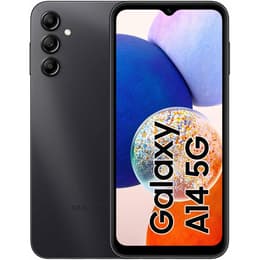
Galaxy A14 5G
Galaxy A14 5G
Starting at

Refurbished price:A$220.00

Versus A$280.00 new

See options
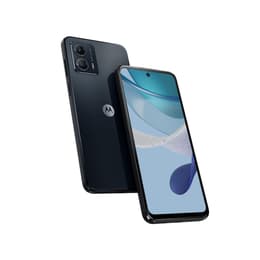
Motorola Moto G53
Motorola Moto G53
Starting at

Refurbished price:A$203.77

Versus A$975.00 new

See options

The Samsung Galaxy A14 5G and the Motorola Moto G53 are both smartphones released in late 2022 and early 2023, offering 5G connectivity to a broad user base. While both devices run on the Android operating system, they present different approaches to display technology and software support, which are key differentiators for potential users.

Scores

Durability

When considering the longevity of a smartphone, factors like release timeline, software support, and repairability play a significant role.

  • Release Timeline: The Motorola Moto G53 was released in December 2022, closely followed by the Samsung Galaxy A14 5G in January 2023. This means both devices are relatively similar in age, impacting their remaining lifespan for software updates.
  • OS Support Duration: Samsung generally offers a longer software support period for its devices. The Galaxy A14 5G is expected to receive two major Android OS updates and four years of security updates. In contrast, the Moto G53 typically receives one major OS update and three years of security updates. Users prioritizing extended software longevity will find the Galaxy A14 5G offers a longer period of official support.
  • Repairability: Both devices feature plastic frames and backs, with glass fronts. While specific repairability scores can vary, their construction suggests a similar level of ease or difficulty for common repairs.

Release year

2023

2022

Compatible with latest Update

Yes

Yes

Operating system

Android

Android

Foldable

No

No

Performance

The performance of a smartphone is crucial for daily tasks, from app usage to multitasking and gaming.

  • Storage Options: Both the Galaxy A14 5G and the Moto G53 offer various RAM and internal storage configurations, typically ranging from 4GB to 8GB of RAM and 64GB to 128GB of internal storage. Both also include a microSD card slot for expandable storage, providing flexibility for users who need more space for apps, photos, and videos.
  • Battery Behavior: Both smartphones are equipped with a 5000 mAh battery, designed to provide extended usage. The Galaxy A14 5G supports 15W wired charging, while the Moto G53 supports 10W wired charging, with some regions reporting 18W support. This means the Galaxy A14 5G may recharge slightly faster in some scenarios. Users report the Galaxy A14 5G's battery lasts through a full day of heavy use.
  • Overall System Responsiveness: Both devices are powered by current-generation processors designed for 5G connectivity. The Galaxy A14 5G uses either the Exynos 1330 or MediaTek Dimensity 700, depending on the region, while the Moto G53 features the Snapdragon 480+ 5G. These processors are capable of handling everyday applications and multitasking smoothly. Users can expect responsive performance for general browsing, social media, and light gaming.

Memory (GB)

4 GB

8 GB

Screen quality

The display is a primary interface for any smartphone, influencing the visual experience for all content.

  • Display Technology and Resolution: The Samsung Galaxy A14 5G features a 6.6-inch PLS LCD display with a Full HD+ resolution of 1080 x 2408 pixels, resulting in a pixel density of approximately 400 ppi. The Motorola Moto G53 has a slightly smaller 6.5-inch IPS LCD display with a lower HD+ resolution of 720 x 1600 pixels, leading to a pixel density of around 270 ppi. This means the Galaxy A14 5G offers a sharper and more detailed visual experience.
  • Refresh Rate and Smoothness: The Galaxy A14 5G provides a 90Hz refresh rate, contributing to smoother scrolling and a more fluid user interface. The Moto G53, however, offers a higher 120Hz refresh rate, which can result in an even more fluid visual experience, particularly noticeable during scrolling and gaming, despite its lower resolution.
  • Brightness and Viewing Experience: Both devices use LCD technology, which generally offers good brightness for indoor use. For outdoor visibility, the higher resolution of the A14 5G might offer a slightly clearer image, but the overall brightness levels are comparable. The Moto G53's larger screen-to-body ratio might offer a more immersive viewing experience for some users, despite the lower resolution.

Resolution

1080 x 2408

720x1600

Screen type

PLS LCD

IPS LCD

Audiovisual

Camera capabilities are a significant consideration for many users, impacting the quality of photos and videos captured.

  • Camera System Capabilities: Both the Galaxy A14 5G and the Moto G53 feature a 50 MP main camera with an f/1.8 aperture, capable of capturing detailed images in good lighting conditions. The Galaxy A14 5G includes an additional 2 MP macro lens and a 2 MP depth sensor. The Moto G53 also has a 2 MP macro lens, but some variants may include an 8 MP ultrawide camera, while others do not.
  • Low-light and Everyday Photography: In everyday lighting, both main cameras perform adequately, producing clear images. For low-light conditions, the larger aperture on the main sensors helps, but neither device is designed for exceptional low-light performance. User reports suggest the Moto G53's main camera takes attractively sharp photos in daylight and even in the dark.
  • Video Recording Quality: Both smartphones support video recording at 1080p resolution at 30 frames per second. This is suitable for casual video capture and sharing.

Main camera

50 megapixels

50 megapixels

Front camera

13 megapixels

8 megapixels

Miscellaneous

Beyond core features, several practical elements contribute to the overall user experience of a smartphone.

  • Connectivity Options: Both the Galaxy A14 5G and the Moto G53 offer 5G connectivity, Wi-Fi 802.11 a/b/g/n/ac, and Bluetooth 5.x (5.2 for A14 5G, 5.1 for G53). Both also include NFC for contactless payments, though availability can be market-dependent.
  • Port Types: Both devices retain a 3.5mm headphone jack, which is convenient for users who prefer wired audio accessories. They both use a USB-C 2.0 port for charging and data transfer.
  • Useful Sensors and Handling: Both phones feature a side-mounted fingerprint sensor for secure and convenient unlocking. The Galaxy A14 5G measures 167.7 x 78 x 9.1 mm and weighs 202 grams. The Moto G53 is slightly more compact and lighter at 162.7 x 74.7 x 8.2 mm and 183 grams, which might make it feel more comfortable for one-handed use.

Weight

201 oz

183 oz

Screen size (in)

6.6

6.5

Network

5G

5G

SIM card

Physical SIM

Dual Physical SIM

Carrier compatibility

Unlocked

Unlocked

The Samsung Galaxy A14 5G and the Motorola Moto G53 both offer solid foundations for users seeking a 5G-capable smartphone. User feedback for the Galaxy A14 5G often highlights its good main camera, decent battery life, and smooth performance for its category. Some users appreciate its design, which aligns with Samsung's flagship aesthetic. Criticisms sometimes point to the charging speed, which is not the fastest.

For the Motorola Moto G53, common praise includes its 120Hz display for smoother visuals, its lean software experience close to stock Android, and its stereo speakers with Dolby Atmos. Users also note its comfortable weight and compact size. However, some users have expressed concerns about the display's lower resolution and the macro camera's limited utility.

Users prioritizing a sharper display resolution and longer software update support may prefer the Samsung Galaxy A14 5G. Its Full HD+ screen provides more detail, and Samsung's update policy offers extended longevity. On the other hand, users who value a smoother scrolling experience with a higher refresh rate and a slightly lighter, more compact design might lean towards the Motorola Moto G53. Its 120Hz display and near-stock Android experience are notable advantages.

Both devices represent capable options in the market, and choosing a quality-assured refurbished option for either model can be an eco-friendly alternative for consumers.


See all articles

Our recent comparisons