Galaxy A14 5G vs Motorola Moto E13

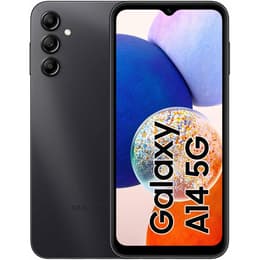
Galaxy A14 5G
Galaxy A14 5G
Starting at

Refurbished price:A$220.00

Versus A$280.00 new

See options
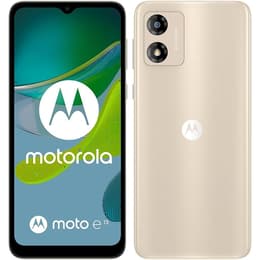
Motorola Moto E13
Motorola Moto E13
Starting at

Refurbished price:A$121.29

Versus A$244.00 new

See options

The Samsung Galaxy A14 5G and the Motorola Moto E13 are both entry-level smartphones released in early 2023. While both devices aim to provide essential smartphone functionalities, the Galaxy A14 5G offers enhanced connectivity and a smoother display experience, whereas the Moto E13 focuses on a streamlined Android Go operating system for optimized performance on more modest hardware.

Scores

Durability

The longevity of a smartphone is influenced by its software support and physical durability. These two models present different approaches to long-term usability.

  • Software Support: The Samsung Galaxy A14 5G launched with Android 13 and is expected to receive two major Android operating system updates, extending its software currency up to Android 15. Additionally, it is slated to receive four years of security updates, continuing until 2027. The Motorola Moto E13, released with Android 13 Go Edition, has not yet received major Android version updates, remaining on its original OS version. Motorola recommends regular software updates for security and performance improvements.
  • Repairability: The Galaxy A14 5G has a repairability score of 8 out of 10, partly due to its design which allows for relatively easy disassembly and battery replacement using adhesive pull tabs. Its construction features a plastic back and frame. The Moto E13 has a repairability score of 6.5 out of 10, with accessible battery and cable components, though screen replacement requires more extensive disassembly. It also features a plastic back and frame and includes an IP52 rating for dust and splash resistance.
  • Expected Lifespan: Users prioritizing extended software feature updates and security patches may find the Galaxy A14 5G offers a longer practical lifespan due to Samsung's update policy. The Moto E13, while durable with its splash resistance, may see its software features become outdated sooner without major OS upgrades.

Release year

2023

2023

Compatible with latest Update

Yes

No

Operating system

Android

Android

Foldable

No

No

Performance

Performance in daily use is a key factor for any smartphone, impacting how smoothly applications run and how efficiently tasks are handled.

  • Processing Capabilities: The Samsung Galaxy A14 5G is powered by an octa-core processor, which can be either the Exynos 1330 or MediaTek Dimensity 700, depending on the region. This hardware configuration provides solid everyday performance, though some users have reported occasional lags and stutters in app animations. The Motorola Moto E13 utilizes a Unisoc T606 processor. This chipset is designed for entry-level devices, and while it handles basic daily tasks, it may struggle when multiple applications are running simultaneously or with more demanding operations.
  • Memory and Storage: The Galaxy A14 5G is available with 4GB, 6GB, or 8GB of RAM and internal storage options of 64GB or 128GB, which can be expanded up to 1TB via a microSD card. The Moto E13 typically comes with 2GB or 4GB of RAM and 64GB or 128GB of internal storage, also expandable up to 1TB with a microSD card. The Moto E13 runs Android 13 Go Edition, a lighter version of Android optimized for devices with less RAM and storage, which helps in maintaining responsiveness.
  • Real-world Responsiveness: For general browsing, messaging, and light app usage, both devices offer adequate performance. However, users engaging in more intensive multitasking or mobile gaming will likely experience smoother operation on the Galaxy A14 5G. The Moto E13 is noted to be a slower phone, particularly when launching applications or handling graphically intensive content.

Memory (GB)

4 GB

4 GB

Screen quality

The display is the primary interface for smartphone interaction, and its quality significantly impacts the user experience.

  • Display Technology and Resolution: The Samsung Galaxy A14 5G features a 6.6-inch PLS LCD display with a Full HD+ resolution of 1080x2408 pixels. This provides clear and detailed visuals for media consumption and general use. The Motorola Moto E13 has a 6.5-inch IPS LCD display with an HD+ resolution of 1600x720 pixels. While sufficient for basic tasks, the lower resolution means less sharpness compared to the Galaxy A14 5G.
  • Refresh Rate and Brightness: The Galaxy A14 5G offers a 90Hz refresh rate, contributing to smoother scrolling and a more fluid visual experience. Its display provides good resolution and a high refresh rate. The Moto E13 features a standard 60Hz refresh rate. In terms of brightness, the Galaxy A14 5G's display can be somewhat dim for outdoor use. Similarly, the Moto E13's screen brightness may need to be maximized for comfortable viewing in direct sunlight.
  • Viewing Experience: The larger, higher-resolution screen with a faster refresh rate on the Galaxy A14 5G generally offers a more engaging viewing experience for videos and detailed content. The Moto E13's display is described as average, suitable for basic content consumption but not excelling in clarity or smoothness.

Resolution

1080 x 2408

720 x 1600

Screen type

PLS LCD

IPS LCD

Audiovisual

Camera capabilities are often a significant consideration for smartphone users, influencing how everyday moments are captured.

  • Rear Camera System: The Samsung Galaxy A14 5G is equipped with a triple rear camera setup, featuring a 50-megapixel main sensor with an f/1.8 aperture, complemented by 2-megapixel macro and 2-megapixel depth sensors. This main camera performs well in good lighting conditions, capturing decent detail. However, it lacks an ultra-wide lens, and its performance can decline in low-light environments or when capturing moving subjects. The Motorola Moto E13 features a single 13-megapixel rear camera with an f/2.2 aperture. This camera can produce decent shots in daylight, but details may appear soft, and noise can be noticeable in shadowed areas.
  • Front Camera and Video: For selfies, the Galaxy A14 5G has a 13-megapixel front camera. The Moto E13 includes a 5-megapixel front camera. Both devices support video recording at 1080p resolution at 30 frames per second. A notable point for the Moto E13 is that its camera application can be slow to launch and capture images, potentially leading to missed moments.
  • Audio Experience: The Galaxy A14 5G features a mono speaker. The Moto E13 offers a Dolby Atmos-supported speaker, providing loud and clear audio for media consumption.

Main camera

50 megapixels

13 megapixels

Front camera

13 megapixels

5 megapixels

Miscellaneous

Beyond core features, several practical elements contribute to the overall usability and convenience of a smartphone.

  • Connectivity and Ports: The Samsung Galaxy A14 5G supports 5G cellular networks, offering faster data speeds where available. It also includes Wi-Fi 5 (802.11 a/b/g/n/ac) and Bluetooth 5.2. The device features a USB Type-C port, a 3.5mm headphone jack, and NFC for contactless payments. The Motorola Moto E13 is limited to 4G LTE connectivity. It supports Wi-Fi 5 (802.11 a/b/g/n/ac) and Bluetooth 5.0. It also includes a USB Type-C 2.0 port and a 3.5mm headphone jack.
  • Sensors and Security: The Galaxy A14 5G incorporates a side-mounted fingerprint sensor for secure unlocking and authentication. The Moto E13 does not include a fingerprint sensor, relying on other security methods. Both devices include standard sensors like accelerometers and proximity sensors.
  • Design and Handling: The Galaxy A14 5G measures approximately 167.7 x 78 x 9.1 mm and weighs around 201-204 grams. The Moto E13 is slightly more compact and lighter, with dimensions of 164.2 x 75 x 8.5 mm and a weight of 179.5-180 grams. The Moto E13 also boasts an IP52 rating for dust and splash resistance, offering a degree of protection against environmental elements.

Weight

201 oz

179 oz

Screen size (in)

6.6

6.5

Network

5G

4G

SIM card

Physical SIM

Dual Physical SIM

Carrier compatibility

Unlocked

Unlocked

Both the Samsung Galaxy A14 5G and the Motorola Moto E13 cater to users seeking functional smartphones, each with distinct strengths and trade-offs. User feedback for the Galaxy A14 5G often praises its excellent battery life, capable main camera in well-lit conditions, and Samsung's commitment to software updates, including 5G connectivity and NFC. However, some users have noted its performance can be mediocre with occasional lags, and the display may appear dim outdoors.

The Motorola Moto E13 is frequently commended for its large battery capacity, clean Android Go user interface, ergonomic design, and the inclusion of dual-band Wi-Fi and a 3.5mm headphone jack, along with Dolby Atmos audio. Criticisms often point to its slower overall performance, particularly the camera's slow launch and capture times, an average display, and the absence of a fingerprint sensor.

Users prioritizing faster 5G connectivity, a higher refresh rate display, and longer-term software support may find the Samsung Galaxy A14 5G better suited to their needs. Conversely, individuals seeking a device for basic smartphone functions, extended battery life, and a streamlined Android experience, particularly if they value a lighter operating system, might lean towards the Motorola Moto E13. Both devices represent viable options for those looking for a quality-assured refurbished smartphone, offering an eco-friendly alternative to new purchases.


See all articles

Our recent comparisons