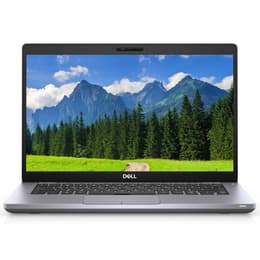
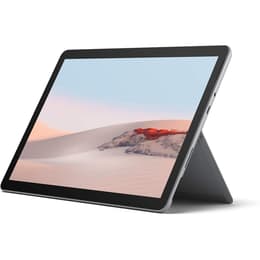

Dell Latitude 5410 14" vs Microsoft Surface Go 2 10"

Dell Latitude 5410 14"
Starting at

Refurbished price:A$640.00

Versus A$1,425.00 new

See options
Microsoft Surface Go 2 10"
See options

The Dell Latitude 5410 14-inch, released in 2020, is a business-oriented laptop designed for productivity, while the Microsoft Surface Go 2 10-inch, also released in 2020, is a compact 2-in-1 tablet-laptop hybrid focused on portability and versatility. These devices cater to different user needs, with the Latitude offering a traditional laptop experience and the Surface Go 2 providing a more flexible, tablet-first approach, both running on the Windows operating system.

Scores

Durability

When considering the long-term usability of these devices, their release timelines and design philosophies play a significant role.

  • Release Timeline and OS Support: Both devices were released in 2020, meaning they have received several years of software updates. The Dell Latitude 5410 typically ships with Windows 10 Pro and is upgradeable to Windows 11 Pro, offering a consistent update path for a business-grade laptop. The Surface Go 2 initially came with Windows 10 Home in S Mode, with a free upgrade to the full Windows 10 Home, and subsequently to Windows 11, ensuring continued software support.
  • Durability and Repairability: The Dell Latitude 5410 features a durable chassis, often incorporating carbon fiber in its design, built for the rigors of business use. It is known for good upgradeability, particularly with RAM and storage, which can extend its practical lifespan. The Surface Go 2 boasts a magnesium chassis and Gorilla Glass 3 screen protection, contributing to its robust feel for a portable device.
  • Expected Practical Lifespan: Both devices are expected to offer several more years of reliable performance for their intended use cases, especially when considering quality-assured refurbished options that ensure devices meet performance standards. The Latitude's upgradeability might offer a slight edge in extending its functional life for users who wish to enhance components.

Release year

2020

2018

Last Os Compatibility

Yes

Yes

Operating system

Windows 11

Windows 11

Performance

The performance capabilities of these two devices are tailored to their respective designs and target users, impacting how they handle daily tasks.

  • Processor Capabilities: The Dell Latitude 5410 is equipped with 10th Generation Intel Core processors (i3, i5, or i7), providing solid performance for demanding office applications, multitasking, and general productivity. Users can expect smooth operation even with multiple applications running simultaneously. The Microsoft Surface Go 2, on the other hand, uses Intel Pentium Gold or Intel Core m3 processors, which are designed for efficiency and portability. This allows it to handle everyday tasks like web browsing, email, and light document editing effectively, though it may show some lag with more intensive applications or extensive multitasking.
  • Memory and Storage: The Latitude 5410 offers flexible RAM configurations, from 4GB up to 64GB DDR4, with two SODIMM slots allowing for future upgrades. Storage options include fast M.2 PCIe NVMe SSDs up to 1TB. The Surface Go 2 typically comes with 4GB or 8GB of LPDDR3 RAM and storage options ranging from 64GB eMMC to 128GB or 256GB SSDs. While adequate for its design, the Surface Go 2's memory and storage are generally less expandable than the Latitude's.
  • Battery Behavior: The Dell Latitude 5410, with its larger battery options (42 Whr or 68 Whr), can deliver substantial battery life, with some configurations reporting up to 15-19 hours of web browsing, and 4-7 hours for mixed office work. The Surface Go 2 offers improved battery life over its predecessor, typically providing 10-11.5 hours of web browsing, making it suitable for a full day of casual use.

Memory (GB)

16 GB

8 GB

Processor

Core i5 - Gen 10 (U)

Core m3 - Gen 8 (Y)

Graphic card

Integrated Graphics

Intel UHD Graphics 615

Screen quality

The visual experience on these devices differs significantly due to their form factors and display technologies.

  • Display Technology and Resolution: The Dell Latitude 5410 features a 14-inch anti-glare LCD display, with common resolutions being HD (1366x768) or Full HD (1920x1080) IPS panels. The Microsoft Surface Go 2 has a smaller 10.5-inch PixelSense IPS LCD touchscreen with a resolution of 1920 x 1280, resulting in a higher pixel density.
  • Brightness and Clarity: The Latitude 5410's display typically offers brightness levels of 220 nits or 300 nits, which can be sufficient for indoor use but might struggle in bright outdoor conditions. Some configurations may also exhibit limited sRGB color coverage. The Surface Go 2's display is generally brighter, reaching up to 390 nits, and is praised for its crispness, good color accuracy, and comfortable viewing angles, making it suitable for various lighting environments.
  • Viewing Experience: The larger 14-inch screen of the Latitude 5410 provides more screen real estate for productivity tasks, such as working with documents or spreadsheets. The Surface Go 2's 10.5-inch touchscreen with a 3:2 aspect ratio is well-suited for content consumption, note-taking, and portability, though its smaller size might require more scrolling for document-heavy work.

Resolution

1920 x 1080

1920 x 1280

Screen type

IPS

LCD

Audiovisual

For communication and media, both devices offer integrated solutions, though with different focuses.

  • Camera System Capabilities: The Dell Latitude 5410 includes a 720p HD webcam, which is standard for business laptops and suitable for video conferencing. The Microsoft Surface Go 2 features a 5MP front-facing camera capable of 1080p video, which provides a clearer image for video calls, and an 8MP rear camera for occasional photography or document scanning.
  • Microphone and Speaker Quality: The Latitude 5410 comes with an integrated microphone and dual 2W speakers, offering adequate audio for calls and general media consumption. The Surface Go 2 is equipped with dual Studio Mics and built-in speakers with Dolby Audio, which generally provides a more enhanced audio experience for both calls and media playback.
  • Overall Audiovisual Experience: For users prioritizing clear video calls and a more immersive media consumption experience, the Surface Go 2's camera and audio setup may be more appealing. The Latitude 5410 provides functional audiovisual tools suitable for its business-centric role.

Miscellaneous

Beyond core specifications, several practical elements differentiate these two devices in terms of daily usability and connectivity.

  • Connectivity Options: Both devices support modern wireless standards, including Wi-Fi 6 and Bluetooth 5.1 (Latitude 5410) or Bluetooth 5.0 (Surface Go 2). The Latitude 5410 also includes a Gigabit Ethernet port for wired network connections, which is often preferred in business environments. The Surface Go 2 offers optional LTE Advanced connectivity, providing greater flexibility for internet access on the go without relying on Wi-Fi.
  • Port Types: The Dell Latitude 5410 provides a comprehensive selection of ports, including multiple USB-A ports, a USB-C port with DisplayPort and Power Delivery (and optional Thunderbolt 3), HDMI, and a microSD card reader, catering to a wide range of peripherals. The Surface Go 2 has a more limited port selection, featuring one USB-C port, a Surface Connect port for charging and docking, a 3.5mm headphone jack, and a microSD card reader.
  • Weight, Dimensions, and Handling: The Latitude 5410 is a traditional laptop, starting at approximately 1.47 kg, making it a portable but substantial device. The Surface Go 2 is significantly lighter and more compact, starting at 0.544 kg (tablet only), designed for ultra-portability and easy one-handed use. The Surface Go 2's integrated kickstand offers versatile viewing angles, enhancing its tablet functionality.

Weight

7500 oz

544 oz

Screen size

14

10

The Dell Latitude 5410 and Microsoft Surface Go 2 cater to distinct user profiles, each excelling in different areas. Users frequently praise the Latitude 5410 for its robust build, strong performance for business tasks, and extensive port selection, making it a reliable workhorse. Criticisms sometimes point to its display quality in base configurations and its relatively thicker design compared to some modern ultrabooks.

The Surface Go 2 is often lauded for its exceptional portability, premium design, vibrant touchscreen display, and improved battery life, making it a versatile companion for casual use and on-the-go productivity. However, some users note that its performance, especially in base models, can be a limiting factor for demanding applications, and the essential keyboard accessory is sold separately.

Users prioritizing a traditional laptop experience with strong performance, extensive connectivity, and upgradeability for professional or academic work may find the Dell Latitude 5410 more suitable. Its larger screen and comprehensive port array support a desktop-like workflow. Conversely, individuals who value extreme portability, a flexible 2-in-1 form factor, and a high-quality touchscreen for content consumption, light productivity, and travel might lean towards the Microsoft Surface Go 2. Both devices offer a solid foundation for Windows computing, and exploring quality-assured refurbished options can provide an eco-friendly alternative for acquiring either model.

See all articles

Our recent comparisons