

Asus Zenfone 9 vs Galaxy A14

Asus Zenfone 9
Asus Zenfone 9
See options
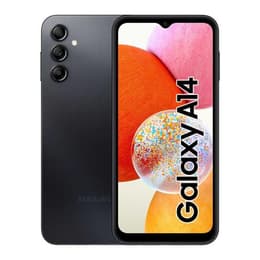
Galaxy A14
Galaxy A14
Starting at

Refurbished price:A$215.00

Versus A$390.00 new

See options

The Asus Zenfone 9, released in July 2022, and the Samsung Galaxy A14, launched in January 2023, represent distinct approaches to smartphone design. The Zenfone 9 is positioned as a compact device offering high-end specifications, while the Galaxy A14 focuses on delivering essential smartphone features within a larger form factor. Both devices operate on the Android platform, providing users with access to a wide ecosystem of applications and services.

Scores

Durability

When considering the longevity of these devices, several factors come into play, including their release timelines, software support, and physical durability.

  • Release Timeline: The Asus Zenfone 9 was released in July 2022, while the Samsung Galaxy A14 followed in January 2023. This means the Galaxy A14, being newer, may receive software updates for a slightly longer period from its launch date.
  • Software Support: Both devices typically receive a few major Android operating system updates and several years of security patches. The Zenfone 9 launched with Android 12 and is upgradable to Android 14, with Asus generally providing two major OS updates and four years of security updates. The Galaxy A14 launched with Android 13 and is also expected to receive a similar update policy, ensuring continued functionality and security over time.
  • Physical Durability: The Asus Zenfone 9 features an IP68 rating for dust and water resistance, along with Corning Gorilla Glass Victus for screen protection, contributing to its overall robustness. The Samsung Galaxy A14, on the other hand, utilizes a plastic build and does not carry an official IP rating, suggesting less resistance to environmental elements.

Release year

2022

2023

Compatible with latest Update

Yes

No

Operating system

Android

Android

Foldable

No

No

Performance

The performance capabilities of the Asus Zenfone 9 and Samsung Galaxy A14 cater to different user demands, primarily due to their internal hardware configurations.

  • Processor Capabilities: The Asus Zenfone 9 is equipped with a high-performance processor, enabling it to handle demanding applications, intensive multitasking, and graphic-heavy games with fluidity and responsiveness. The Galaxy A14 features an entry-level processor, which is well-suited for everyday tasks such as web browsing, social media, and light applications, but may exhibit slower performance with more intensive usage.
  • System Responsiveness and Multitasking: The Zenfone 9 offers configurations with up to 16GB of RAM and faster UFS 3.1 storage, contributing to quick app loading times and seamless transitions between multiple applications. The Galaxy A14 typically comes with up to 6GB of RAM and uses eMMC or UFS 2.2 storage, which provides adequate performance for general use but may not match the speed of the Zenfone 9 for heavy multitasking.
  • Battery Behavior: The Zenfone 9, despite its compact size, houses a 4300 mAh battery that users often report lasts through a full day of moderate to heavy use. The Galaxy A14 is equipped with a larger 5000 mAh battery, which, combined with its less power-intensive components, generally provides extended usage times, often lasting up to two days on a single charge for many users.

Memory (GB)

6 GB

4 GB

Screen quality

The visual experience offered by these two smartphones differs significantly, primarily due to their display technologies and specifications.

  • Display Technology and Clarity: The Asus Zenfone 9 features a 5.9-inch Super AMOLED display, which delivers vibrant colors, deep blacks, and excellent contrast, enhancing the viewing experience for photos, videos, and general content. The Samsung Galaxy A14 comes with a 6.6-inch PLS LCD screen, providing a clear and sufficiently sharp image for everyday use, though it may not offer the same level of color vibrancy or contrast as an AMOLED panel.
  • Brightness and Refresh Rate: The Zenfone 9's AMOLED display can reach higher peak brightness levels, making it more comfortable to view content outdoors or in brightly lit environments. It also boasts a 120Hz refresh rate, resulting in smoother scrolling and a more fluid user interface. The Galaxy A14's LCD panel offers adequate brightness for indoor use, but may struggle in direct sunlight. The 4G model has a 60Hz refresh rate, while the 5G model offers a 90Hz refresh rate, providing a noticeable improvement in smoothness over standard 60Hz displays.
  • Screen Size and Viewing Experience: The Zenfone 9's 5.9-inch display contributes to its compact form factor, making it easy for one-handed use. The Galaxy A14's larger 6.6-inch display offers a more expansive viewing area, which can be beneficial for media consumption and users who prefer more screen real estate.

Resolution

1080 x 2400

1080 x 2408

Screen type

Super AMOLED

PLS LCD

Audiovisual

The camera systems on the Asus Zenfone 9 and Samsung Galaxy A14 are designed to meet different photographic needs and expectations.

  • Rear Camera Capabilities: The Asus Zenfone 9 features a dual-camera setup with a 50MP main sensor that includes a 6-axis gimbal stabilization system, enhancing low-light performance and video stability. It also has a 12MP ultrawide lens. The Samsung Galaxy A14 typically comes with a triple-camera system, including a 50MP main camera, a 5MP ultrawide, and a 2MP macro lens. While capable of capturing good images in well-lit conditions, its overall performance, especially in challenging lighting, is more basic.
  • Video Recording Quality: The Zenfone 9 offers advanced video recording options, including 8K resolution at 24fps and 4K at various frame rates, benefiting from its gimbal stabilization for smoother footage. The Galaxy A14 records video at up to 1080p at 30fps, which is suitable for casual video capture.
  • Audio Experience: The Zenfone 9 includes stereo speakers and a 3.5mm headphone jack, providing a more immersive audio experience for media consumption and offering flexibility for wired headphones. The Galaxy A14 features a single speaker and also retains a 3.5mm headphone jack, offering standard audio output.

Main camera

50 megapixels

50 megapixels

Front camera

12 megapixels

13 megapixels

Miscellaneous

Beyond the core specifications, several practical elements differentiate the user experience between these two devices.

  • Connectivity Options: The Asus Zenfone 9 supports Wi-Fi 6E and Bluetooth 5.2, offering faster and more stable wireless connections. The Samsung Galaxy A14 supports Wi-Fi 5 and Bluetooth 5.1, providing reliable connectivity for most daily tasks. Both devices support 5G cellular networks (for the 5G variant of A14).
  • Port Types and Sensors: Both smartphones feature a USB-C port for charging and data transfer. The Zenfone 9 notably includes a 3.5mm headphone jack, a feature becoming less common in higher-end phones. The Galaxy A14 also retains the 3.5mm headphone jack. Both devices incorporate a side-mounted fingerprint sensor for secure unlocking.
  • Weight, Dimensions, and Handling: The Zenfone 9 is designed to be compact and lightweight, weighing around 169 grams and featuring a smaller footprint, making it comfortable for one-handed use and easy to carry. The Galaxy A14 is a larger and heavier device, weighing approximately 201 grams, which provides a more substantial feel in hand and a larger screen for viewing.

Weight

169 oz

201 oz

Screen size (in)

5.9

6.6

Network

5G

4G

SIM card

Dual Physical SIM

Physical SIM

Carrier compatibility

Unlocked

Unlocked

The Asus Zenfone 9 and Samsung Galaxy A14 cater to distinct user preferences, each excelling in different areas. The Zenfone 9 is often praised by users for its compact size, powerful performance, and capable camera system with gimbal stabilization. Its premium build quality and inclusion of a headphone jack are also frequently highlighted as positive attributes. Some users, however, note its relatively shorter software update commitment compared to some competitors and that its compact screen size might not be ideal for all types of media consumption or gaming.

The Samsung Galaxy A14 receives commendation for its large display, extended battery life, and overall value as an entry-level smartphone. Users appreciate its suitability for everyday tasks and media viewing. Criticisms often revolve around its more basic performance for demanding applications and its average camera capabilities in challenging conditions.

Users prioritizing a powerful, compact device with a high-quality camera and premium feel may find the Asus Zenfone 9 well-suited to their needs. It is an excellent choice for those who value one-handed usability and robust performance in a smaller package. Conversely, users who prioritize a larger screen for media consumption, extended battery life, and a more budget-friendly option for essential smartphone functions may lean towards the Samsung Galaxy A14. This device is ideal for casual users who need a reliable phone for daily communication and entertainment without requiring top-tier performance.

For those considering either device, exploring quality-assured refurbished options can provide an eco-friendly alternative, offering access to these technologies while supporting sustainable consumption.


See all articles

Our recent comparisons