Compare models

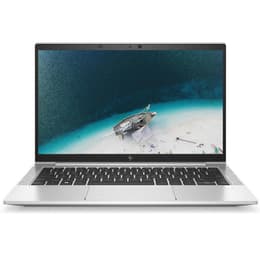
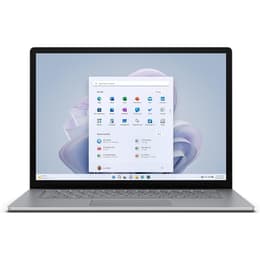
HP EliteBook 830 G7 13" vs Microsoft Surface Laptop 5 15"

  • 1-year warranty
  • Free standard shipping
  • Free 30-day returns
HP EliteBook 830 G7 13"
Starting at

Refurbished price:A$625.00

Versus A$900.00 new

See options

Differences at a glance

The HP EliteBook 830 G7 13" (2020) and the Microsoft Surface Laptop 5 15" (2022) represent distinct approaches to portable computing, balancing professional security and screen workspace. While the HP model focuses on a compact corporate design with robust connectivity, the Microsoft device offers an expansive widescreen workspace and a touch-enabled panel. Both models operate on the Windows ecosystem, ensuring familiar software compatibility for daily tasks.

Scores

Durability

When comparing practical lifespan and hardware support, these laptops reflect different release timelines and internal update cycles.

    Release timeline and OS support: The Surface Laptop 5 debuted two years after the EliteBook, giving it a more extended window for official Windows feature updates and security patches.
    Repairability and hardware longevity: The EliteBook series traditionally offers high modularity and straightforward component access, whereas the Surface line features a sealed chassis layout with soldered memory, though both utilize solid-state drives for data storage.
    Expected practical lifespan: Both machines are built to endure years of standard office or academic use, though choosing a quality-assured refurbished option provides a sustainable way to extend device lifecycles while maintaining reliable daily performance.

Release year

2020

2022

Operating system

Windows 11

Windows 11

Performance

Daily responsiveness and multitasking capabilities vary based on the internal components and generation of each laptop.

    Processor capabilities: The newer processor generation inside the Surface Laptop 5 handles demanding office applications, heavy web browsing tabs, and complex multitasking with greater speed and thermal efficiency.
    Storage and memory configurations: Both laptops support multiple configurations ranging from standard storage tiers to high-capacity options, letting users select capacities that match their document and media storage needs.
    System responsiveness: Everyday tasks such as document editing, streaming, and switching between multiple software programs run smoothly on both systems, though heavier multi-app workflows benefit from the generation-ahead architecture of the Microsoft device.

Graphic card

Integrated Graphics

Integrated Graphics

Screen quality

Visual workspace and display characteristics differ significantly between these two screen sizes and aspect ratios.

    Display technology and format: The Surface Laptop 5 features a taller 3:2 aspect ratio PixelSense touchscreen, which displays more vertical text documents at once, while the EliteBook uses a traditional widescreen 16:9 layout.
    Screen dimensions and resolution: The 15-inch Microsoft display provides a larger canvas for split-screen multitasking, whereas the 13.3-inch HP screen prioritizes overall portability and a smaller footprint.
    Brightness and clarity: Both screens offer sharp resolutions and adequate outdoor visibility for normal indoor and shaded outdoor office environments, with the Microsoft panel adding multi-touch input capabilities.

Resolution

1920 x 1080

2496 x 1664

Audiovisual

Media consumption, video conferencing, and audio output capabilities shape the multimedia experience on each device.

    Webcam performance: Both laptops feature integrated webcams suitable for daily video calls, supported by clear dual-microphone arrays for remote meetings and online classes.
    Speaker output: The Microsoft model incorporates integrated spatial audio speakers that deliver robust sound clarity for movies and music, while the HP device provides balanced audio output tuned for clear speech during voice calls.
    Media playback: Watching videos is immersive on the larger Microsoft screen, whereas the HP computer offers a compact and reliable setup for standard audio-visual tasks.

Miscellaneous

Physical design, port selections, and daily portability factors influence how easily each device travels.

    Port selection: The HP EliteBook includes a broad array of legacy and modern ports including traditional USB slots and HDMI, whereas the Surface Laptop 5 leans into streamlined connections featuring USB-C with Thunderbolt support alongside a proprietary charging port.
    Dimensions and weight: The 13-inch HP model is lighter and easier to slide into small bags, while the 15-inch Microsoft device requires slightly more room in a backpack due to its larger footprint.
    Security features: Both laptops incorporate enterprise-grade security tools such as secure login sensors or platform modules to protect user data.

Weight

1230 oz

1265 oz

Screen size

13

15

What the community thinks

User discussions across online communities highlight distinct preferences for each laptop. Owners of the HP EliteBook often praise its reliable keyboard feel, extensive port variety, and sturdy business-class chassis. Conversely, Surface Laptop 5 users frequently commend the premium aesthetic, the spacious 3:2 touchscreen workspace, and the clean integration with the Windows operating system. Frequent criticisms for the HP model point to its older processor generation, while Surface users sometimes note the limited physical port selection and non-upgradeable memory.

Users prioritizing maximum screen workspace, touch input, and modern internal performance will find the Microsoft Surface Laptop 5 15" well-suited to their workflow. Meanwhile, users prioritizing a compact footprint, physical port versatility, and traditional laptop durability may lean toward the HP EliteBook 830 G7 13". Opting for a quality-assured refurbished model provides an eco-friendly alternative that matches individual computing needs while supporting sustainable technology choices.
Our recent comparisons